
Temples, coffee, mango sticky rice, and the calm rhythm of life in Northern Thailand.
Nestled in the mountains of Northern Thailand, Chiang Mai is a city where ancient temples, misty hills, and modern café culture blend into something timeless. Known as the spiritual heart of Thailand, it’s a place that balances energy and calm — one moment you’re walking through golden pagodas, the next you’re sipping cold brew in a jungle café.
This Chiang Mai Travel Guide 2026 covers everything you need to plan your trip: the best things to do, where to stay, what to eat, and unmissable day trips into the mountains.
Whether you’re here for temples and markets, peaceful spas and cafés, or the slow rhythm of life that defines Northern Thailand, Chiang Mai will stay with you long after you leave.
Located about 700 kilometers north of Bangkok, Chiang Mai is the cultural capital of Northern Thailand — surrounded by mountains, rice fields, waterfalls, and traditional hill-tribe villages.
The city is home to over 300 Buddhist temples, including Wat Phra Singh, Wat Chedi Luang, and the mountaintop Wat Phra That Doi Suthep, whose golden chedi overlooks the valley below.
If you’re choosing where to base yourself, here’s my dedicated guide to the best areas to stay in Chiang Mai — with neighbourhood vibes and hotel picks based on real experience.

Beyond its temples, you’ll find vibrant night markets, Nimmanhaemin’s trendy cafés, and ethical sanctuaries like Elephant Nature Park — all part of the city’s calm yet creative energy.
The best time to visit Chiang Mai is between November and February, when the air is cool and clear, and the mountains are lush green after the rainy season.
Getting here is simple: daily flights, trains, and buses connect Chiang Mai with Bangkok, Pai, Chiang Rai, and other destinations across Thailand.
➡️ Planning your trip? Compare the best hotels and boutique stays in Chiang Mai
➡️ Want to explore more? See top-rated tours, day trips, and experiences in Chiang Mai


✈️ How to Get to Chiang Mai
Getting to Chiang Mai is easy and affordable, whether you’re coming from Bangkok, southern Thailand, or even abroad. The city is well connected by air, train, and bus, each offering a unique way to experience Thailand’s landscapes.
🛩️ By Air — The Fastest Option
Flying is the quickest and most convenient way to reach Chiang Mai. Chiang Mai International Airport (CNX) is located just 15 minutes from the Old City and serves both domestic and international flights.
You’ll find daily connections from Bangkok (Suvarnabhumi and Don Mueang airports) as well as direct routes from Phuket, Krabi, Kuala Lumpur, Singapore, and Hong Kong.
🛫 Find the cheapest flights to Chiang Mai on Skyscanner:
💡 Insider tip: If you fly in during the day, try to grab a window seat on the left side of the plane — you’ll get a breathtaking view of Doi Suthep mountain as you land.

🚆 By Train — A Scenic, Slow-Travel Experience
For those who love slow travel, the Bangkok → Chiang Mai train is a classic route that showcases Thailand’s countryside. The overnight sleeper trains are comfortable and affordable, with options ranging from budget seats to private AC cabins.
The journey takes around 11–13 hours, passing through rice fields, jungle, and misty mountain ranges. It’s a beautiful and nostalgic way to arrive.
➡️ Check train schedules and prices
➡️ Book Bangkok to Chiang Mai sleeper train tickets
🚌 By Bus — Budget-Friendly and Flexible
You can also reach Chiang Mai by bus from Bangkok, Ayutthaya, Sukhothai, or even Kanchanaburi. Several companies operate day and night routes, with comfortable VIP and Express buses equipped with AC and reclining seats.


➡️ Compare bus routes and book tickets online
I personally arrived by bus from Kanchanaburi, a long yet scenic ride that reached Chiang Mai Bus Terminal late at night. The city felt quiet and gentle — almost mysterious — under the soft glow of the streetlights.
🚗 Private Transfer or Car Rental
If you prefer full flexibility, consider renting a car or arranging a private transfer — especially if you plan to explore Pai, Chiang Rai, or Mae Hong Son afterwards. Driving through the mountains of Northern Thailand can be an unforgettable experience for confident drivers.
➡️ Rent a car in Chiang Mai or Bangkok
No matter how you choose to get there, the journey to Chiang Mai is part of the adventure — whether you’re watching the sunrise from a train window, flying over emerald hills, or arriving by bus as the lanterns glow above the streets.

🏡 Where to Stay in Chiang Mai
When planning your trip to Northern Thailand, choosing where to stay in Chiang Mai can shape your entire experience. The city offers everything from affordable guesthouses and stylish boutique hotels to luxury resorts and peaceful jungle retreats – perfect for any budget or travel style.
Want a deeper breakdown? Here’s the full Where to Stay in Chiang Mai guide with Old City, Nimman, Riverside, and my favourite hotels.

🕌 Old City: The Best Area for First-Time Visitors
If it’s your first time in Chiang Mai, the Old City is the most convenient base. Surrounded by ancient walls and temples, this area is packed with cafés, night markets, and Thai massage studios, all within walking distance.
Here, you’ll find a mix of budget-friendly stays and charming boutique hotels with local character.
➡️ Find the best hotels in Chiang Mai Old City
➡️ Compare Chiang Mai guesthouses and boutique stays
☕ Nimmanhaemin (Nimman): Trendy, Modern, and Perfect for Digital Nomads
For travelers seeking a more modern, creative vibe, Nimmanhaemin — often called Nimman — is the place to be. Think Instagrammable coffee shops, art galleries, co-working spaces, and stylish rooftop bars.
It’s also where you’ll find some of the city’s most design-forward boutique hotels and serviced apartments — perfect for longer stays.
➡️ See top-rated boutique hotels in Nimman
➡️ Check best hotels in Chiang Mai for digital nomads
👉 Check the best real-time hotel deals in Chiang Mai on this interactive map:
🌿 Riverside & Mountains: Peaceful Escapes Near Nature
If you’d rather trade traffic noise for birdsong, look for stays along the Ping River, or head to the mountains near Doi Suthep or Mae Rim. These areas are ideal for those wanting a romantic getaway, wellness retreat, or a nature-inspired escape.
Expect infinity pools, mountain views, and tranquility just minutes from the city center.
➡️ Book riverside resorts in Chiang Mai
➡️ Explore mountain retreats near Doi Suthep
🌸 My Favorite Mid-Range Stay: Mesa Boutique Guesthouse


During my last stay, I chose Mesa, a small but elegant boutique guesthouse that instantly felt like home. It features a serene pool, beautiful minimalist decor, and a peaceful balcony perfect for slow mornings with coffee and my laptop.
If you’re looking for a restful base with modern comfort, I can’t recommend Mesa enough. The staff are kind, the space feels tranquil, and the breakfast and coffee are absolutely to die for — perfect for slow travelers and creative souls alike.
➡️ Book Mesa Garden Villa Chiang Mai


✨ Final Tips: Choosing the Right Chiang Mai Accommodation
Whether you’re after a budget hostel in the Old City, a stylish boutique hotel in Nimman, or a mountain resort hidden among the trees, Chiang Mai has something for everyone. Every neighborhood brings a slightly different rhythm — from cultural immersion to laid-back creative energy or total relaxation in nature.
➡️ See the latest deals on hostels in Chiang Mai


🍜 Where to Eat in Chiang Mai


Chiang Mai is one of those cities where you could spend weeks just eating, and still barely scratch the surface. The food scene here is a perfect reflection of the city itself: warm, creative, and full of personality. From street-food markets and local noodle shops to plant-based cafés and family-run restaurants, every meal feels like part of the journey.
If you’re staying near Nimmanhaemin or the Old City, you’ll have endless options right at your doorstep.
Don’t miss the Chiang Mai Night Bazaar, Saturday Walking Street, or Chang Phuak Gate Market, where you can taste authentic Northern Thai dishes like khao soi (curry noodle soup), sai ua (spicy sausage), and grilled sticky rice skewers.
➡️ Join a Chiang Mai street-food tour
➡️ Book a Thai cooking class in Chiang Mai


🥢 My Favorite Spot: Kat’s Kitchen
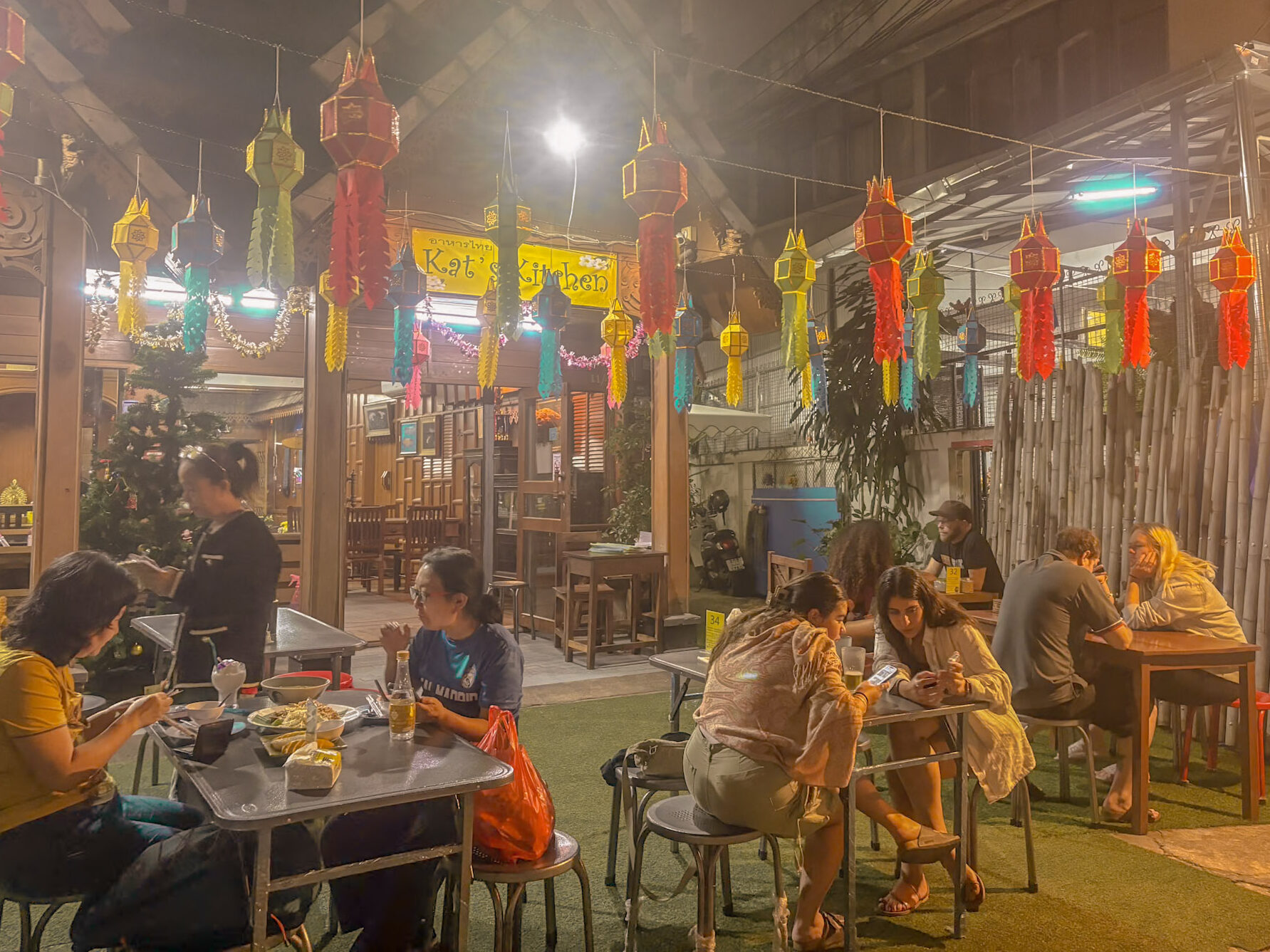
If I wasn’t at Mesa, I was at Kat’s Kitchen — a cozy, budget-friendly restaurant that quickly became my second home. From creamy curries and crispy pad Thai to what I’m convinced is the best mango sticky rice in town, everything tasted like it was cooked with genuine care. The open-air seating, relaxed atmosphere, and smiling staff made it the kind of place where you lose track of time over one more iced coffee or coconut shake.


🍽️ Don’t miss: Thai tea, Khao Soi, and Mango Sticky Rice.


It’s simple, authentic, and full of flavor — exactly what makes Chiang Mai’s food scene so special.
➡️ See top-rated restaurants in Chiang Mai
➡️ Book a Michelin Guide Street Food Tour
🛕 Exploring the Temples & Ancient City Walls

Chiang Mai is often called the spiritual heart of Northern Thailand — and for good reason. The Old City alone is home to more than 300 Buddhist temples (wats), each with its own story, rhythm, and charm. Wandering between them feels like stepping through a living museum where saffron-robed monks, crumbling brick stupas, and the scent of incense fill the air.
✨ Need to Know: Temples of Chiang Mai (Old City)
- 🛕 How many temples? Chiang Mai has 300+ Buddhist temples, with around 30–40 inside the Old City walls — all walkable.
- 🌟 Most famous temples:
- Wat Phra Singh — Lanna architecture, golden stupas, legendary Buddha image
- Wat Chedi Luang — enormous 14th-century chedi, once home to the Emerald Buddha
- Wat Chiang Man — the oldest temple in Chiang Mai, 13th-century, peaceful courtyards
- ✨ Beautiful smaller temples (don’t skip these):
- Wat Phan Tao — dark teak wood, photogenic, atmospheric
- Wat Inthakhin Sadue Muang — small but incredibly ornate
- Wat Lok Moli — ancient brick chedi + quiet garden feel
- Wat Rajamontean — giant seated Buddha statue at the entrance
- ⏰ Opening hours: Most temples open 06:00–17:00 or 08:00–17:00. Larger wats may stay open slightly longer.
- 💸 Entry fees: Many Old City temples are free (donations appreciated). Major temples usually charge a small fee.
- 👗 Dress code: Cover shoulders + knees, avoid tight or revealing clothes, and remove shoes before entering.


Start with the most iconic: Wat Phra Singh, famous for its graceful Lanna architecture and golden stupas that glow in the morning light; and Wat Chedi Luang, whose massive, time-worn chedi once housed the Emerald Buddha. Both are easily reached on foot from anywhere inside the Old City walls.


But don’t skip the smaller, lesser-known wats hidden in the narrow side streets — places like Wat Phan Tao, built entirely from dark teak wood, or Wat Chiang Man, the city’s oldest temple, dating back to the 13th century. These quiet corners often reveal the most meaningful encounters: a local offering flowers, a monk sweeping fallen leaves, or the echo of a distant bell.
💡 Insider Tips — Temples & Ancient City Walls
- 🕰️ Arrive early in the morning — before the big groups and the day’s heat, to enjoy the temples at their most peaceful.
- 🛕 Bring a sarong or light scarf to cover shoulders and knees, remove your shoes before entering, and take your time.
- 🚶♀️ Walking slowly between the ancient city walls and gilded roofs is one of the most serene experiences in Chiang Mai.


🗺 Temple-Hopping Walking Route
If you want an easy, beautiful loop through the Old City — here’s the perfect one. It flows naturally, follows the soft morning light, and hits both the iconic wats and the quiet little corners that make Chiang Mai so magical.
🗺 Temple-Hopping Walking Route (Short Version)
1) Wat Phra Singh
Golden stupas glowing at sunrise — start your loop here.
2) Wat Phan Tao
Teak-wood hall, quiet courtyards, warm textures.
3) Wat Chedi Luang
Time-worn giant chedi — one of Chiang Mai’s icons.
4) Wat Inthakhin
Small, ornate, often peaceful — a beautiful pause.
5) Wat Chiang Man
The oldest temple in the city — cool shade, quiet corners.
6) Wat Lok Moli
Ancient brick chedi + serene garden atmosphere.
⏱ Total time: 2–3 hours • Best at 7:00 AM for soft morning light
🗺 Temple-Hopping Walking Route (Full Map + Detailed Guide)
Want the full loop with a map, exact route, hidden temples, sunrise & golden hour spots? 👉 See the complete walking route here
➡️ See top cultural experiences in Chiang Mai


🏯 Climbing to Doi Suthep
No trip to Chiang Mai is complete without visiting Wat Phra That Doi Suthep, the city’s most sacred and spectacular temple. Perched high on the mountain that bears its name, Doi Suthep is both a spiritual journey and a scenic adventure — a place that captures the soul of Northern Thailand.


To reach the golden temple, you’ll climb 306 steps guarded by intricate naga serpents winding up the staircase. The ascent is peaceful and meditative, shaded by trees and punctuated by the sound of temple bells. At the top, you’ll find sweeping panoramic views over Chiang Mai, shimmering golden stupas, and locals lighting incense or offering lotus flowers in quiet devotion.


➡️ Join this top-rated sunrise tour to Doi Suthep
🚕 How to Get There
The easiest way to reach Doi Suthep from the Old City is by songthaew — the classic red shared taxi. You can usually find them waiting near Chiang Mai Gate or Wat Phra Singh. Expect to pay around 60–100 THB per person for the one-way ride, depending on how full the vehicle is and your negotiation skills.


If you prefer more flexibility, you can rent a motorbike and drive up yourself — the road is winding but scenic, offering plenty of viewpoints along the way. Alternatively, book a half-day tour that includes Wat Pha Lat, a serene forest temple tucked halfway up the mountain.
✨ Need to Know: Doi Suthep
- 🕔 Open: Daily from 6:00 AM to 6:00 PM (sunrise visits allowed slightly earlier; evenings vary seasonally).
- 📍 Location: Wat Phra That Doi Suthep, on Doi Suthep mountain — about 25–35 minutes from Chiang Mai Old City.
- 💸 Entrance: Foreigners: 100 THB adults (50 THB children) for temple area; cable car is an additional small fee if you skip the stairs.
- 🚶♀️ Getting there: Easiest by Grab, private driver, or red songthaew (shared or chartered). The shared songthaews leave from Chiang Mai Zoo area and cost around 60 THB each way.


💡 Insider Travel Tip
💡 Insider tip: Try to visit early in the morning or just before sunset to avoid the crowds and experience a more peaceful atmosphere. On clear days, the golden chedi glows in the sunlight, and as the monks chant softly, it’s easy to understand why Doi Suthep holds such deep spiritual significance for locals.
🛍️ Chiang Mai’s Sunday Night Market

Every Sunday evening, the heart of Chiang Mai’s Old City bursts to life as Rachadamnoen Road transforms into the Sunday Walking Street Market — one of the most vibrant and beloved markets in all of Thailand. As the sun sets, the streets glow with lanterns, sizzling woks, and the soft hum of musicians playing traditional Lanna melodies.


It’s a feast for every sense. Rows of stalls overflow with handmade crafts, textiles, jewelry, local art, wood carvings, herbal products, and street-food delights ranging from khao soi and grilled skewers to coconut pancakes and fresh fruit smoothies. The air smells of lemongrass, incense, and sweet sticky rice.


I wandered slowly through the maze of colors and sounds and ended up buying just one thing — a simple fabric bag embroidered with the Chiang Mai Gate. Somehow, it felt like the perfect souvenir, a small reminder of the city’s warmth and creativity.
➡️ Book a local craft or souvenir-making workshop


💡 Insider Tips
💡 Insider tip: Bring plenty of cash, arrive early (around 6 PM) to beat the crowds, and come hungry — this market is as much about tasting as it is about shopping. Wear comfortable shoes, move slowly, and let the energy of the crowd guide you.
If you prefer a more relaxed experience, consider booking a guided evening market tour that includes street-food tastings and cultural insights from a local guide.
➡️ Find hotels near Chiang Mai Gate for easy access
🌸 Self-Care in Chiang Mai
Chiang Mai is one of the best places in the world to slow down, unwind, and give your body the care it deserves. The city is famous for its traditional Thai massage, herbal spa treatments, and gentle, grounding energy that seems to invite relaxation at every corner. Whether you prefer luxurious spa experiences or simple, no-frills massages after a long day of temple-hopping, Chiang Mai makes self-care easy and affordable.

After hours of walking through markets and temples, I treated myself to a soothing traditional foot massage — the kind that somehow resets your entire body. On another day, when the afternoon rain started falling, I found myself in a small, peaceful salon getting my nails painted while sipping tea and listening to the storm outside.


For something truly special, book a treatment at Fah Lanna Spa, one of Chiang Mai’s most loved wellness centers. Their signature Thai-oil fusion massage and aromatherapy rooms are the definition of relaxation. But sometimes the simplest pleasures are the best — you’ll also find dozens of street-side massage stalls scattered around the Old City, where a one-hour massage costs less than a café brunch and feels twice as good.
➡️ Book a spa package at Fah Lanna Spa
➡️ Compare top-rated massage and wellness experiences in Chiang Mai
➡️ See best hotels in Chiang Mai with spa & pool

💆♀️ Insider Tip
💡 Insider tip: Try visiting a spa or massage studio in the late afternoon, when the city slows down and the air cools. Pair it with a smoothie bowl, herbal tea, or a quiet walk through the Old City afterwards — a perfect end to a day of exploring.
🌿 Cafés & Slow Moments in Chiang Mai
Some of the most beautiful memories in Chiang Mai aren’t the grand sights or temples — they’re the quiet, ordinary moments that reveal the city’s soul. Afternoons spent in tiny cafés tucked down leafy lanes. Evenings in local parks, where students study under the trees, monks stroll in saffron robes, and children chase pigeons as the light fades.


Chiang Mai has a special rhythm — one that invites you to slow down and simply notice life. Between the scent of coffee beans roasting, the buzz of scooters, and the sound of temple bells in the distance, it feels like the whole city breathes at an easier pace.


I spent hours just sitting in open-air cafés, sipping iced coffee, petting street cats, or watching the rain come and go. Every corner seemed to offer a glimpse of real life unfolding — vendors arranging flowers, locals chatting over lunch, travelers journaling by a window.
If you love café culture, Chiang Mai is heaven. The Nimmanhaemin area is filled with beautiful design cafés serving specialty brews and smoothie bowls, while the Old City has dozens of cozy spots hidden behind temple walls.
➡️ See the best cafés in Chiang Mai
➡️ Join a Chiang Mai coffee tour


🌿 Insider Travel Tips
💡 Insider Tips — Cafés & Slow Moments Chiang Mai
- 🌴 Take your time here. Don’t rush from place to place — let your days unfold naturally.
- ☕️ Sit somewhere new every morning, try a different local coffee shop, and let the city show you its gentle, human rhythm.
- ✨ The magic of Chiang Mai truly lives in these simple, everyday moments.
🥊 Muay Thai at Thapae Stadium
For a taste of Thai culture that’s both ancient and electric, spend an evening at Thapae Boxing Stadium, one of Chiang Mai’s best-known Muay Thai venues. Watching a live Muay Thai fight here is more than a sporting event — it’s a glimpse into centuries of tradition, discipline, and respect that form the heart of Thailand’s national martial art.

The atmosphere is unforgettable: rhythmic Thai music echoing through the air, fighters performing the Wai Kru ritual to honor their teachers, and a crowd that’s excited but deeply respectful. The movements are fast, graceful, and full of power — every strike and bow charged with purpose.


I visited one night after sunset, and the experience felt raw and beautiful at the same time. Under the lights, the ring became a stage where athleticism and ceremony met perfectly. The audience — locals and us travelers alike — was completely absorbed.
➡️ Book Muay Thai tickets at Thapae Stadium


🎟️ Insider Tips
💡 Insider Tips — Chiang Rai Night Bazaar
- 🥊 Book your seat in advance, especially on weekends when the stadium fills quickly.
- 🥊 Ringside seats are worth the extra cost if you want to feel the energy up close — you’ll hear every drumbeat, every cheer, and see the grace and focus in each fighter’s movement.
- 🥊 If you’re feeling adventurous, some schools even offer introductory Muay Thai classes where you can learn basic techniques and training rituals firsthand.
➡️ Join a beginner Muay Thai training class in Chiang Mai
➡️ Find hotels near Thapae Gate & Night Bazaar

🌄 Day Trips & Nature Escapes from Chiang Mai
Beyond its temples and old streets, Chiang Mai opens into a world of waterfalls, misty mountains, and forest villages waiting to be explored. The region is filled with natural beauty and authentic rural life — perfect for travelers who want to balance city wandering with time in nature.
Whether you prefer hiking to hidden waterfalls, visiting ethical elephant sanctuaries, or discovering nearby mountain towns, there are endless day trips from Chiang Mai that reveal another side of Northern Thailand.

🏔️ Doi Inthanon National Park – Thailand’s Highest Peak
A visit to Doi Inthanon, known as “the Roof of Thailand,” is one of the most rewarding day trips from Chiang Mai. The park is home to Thailand’s highest mountain (2,565 m), lush cloud forests, waterfalls like Wachirathan and Sirithan, and the twin royal pagodas that overlook the valley below.
The cool mountain air and sea of mist at sunrise make it an unforgettable escape.
➡️ Book a full-day Doi Inthanon National Park tour
🐘 Elephant Nature Park – Ethical Wildlife Experience
For an experience that touches the heart, spend a day at Elephant Nature Park, a sanctuary that rescues elephants from logging and tourism industries. Visitors can feed, bathe (non-riding), and walk alongside these gentle giants while learning about their rehabilitation.
This is one of the most respected ethical elephant sanctuaries in Thailand, and visiting supports real conservation work.
➡️ See top-rated ethical elephant tours in Chiang Mai
💦 Bua Thong “Sticky” Waterfalls
An hour’s drive north of Chiang Mai lies Bua Thong Waterfalls, better known as the Sticky Waterfalls — a natural limestone formation where you can actually climb up the cascading rocks without slipping. It’s fun, refreshing, and perfect for a hot day.
Bring swimwear, a towel, and a sense of adventure — this is a local favorite.
➡️ Book a day trip to the Sticky Waterfalls
🏞️ Chiang Rai & the White Temple
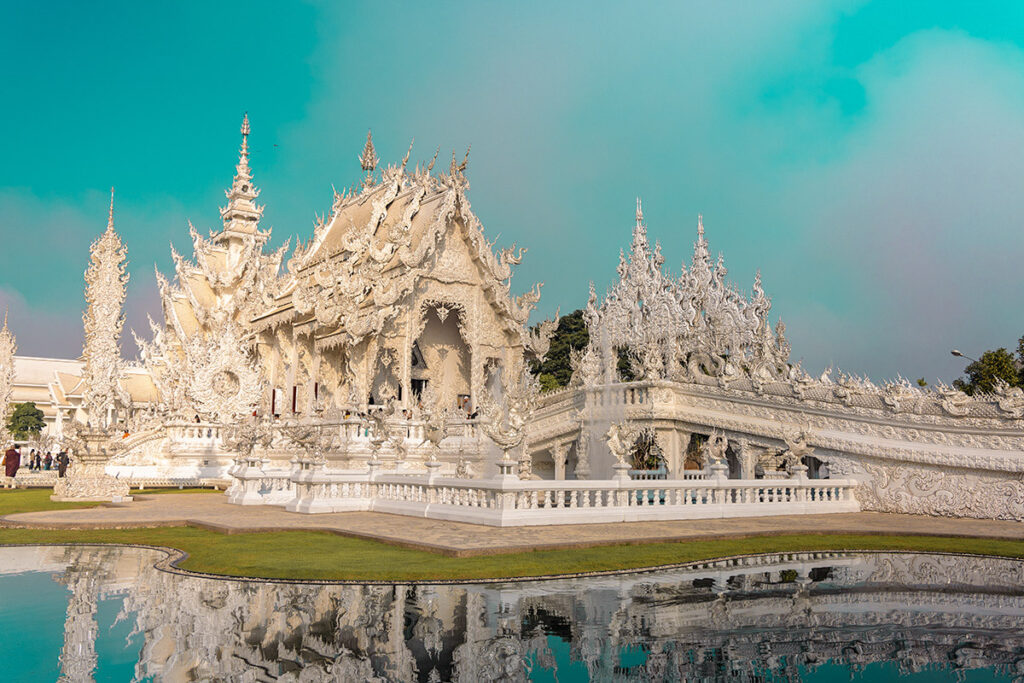
If you’re craving a bit of art and architecture, take a day trip from Chiang Mai to Chiang Rai, home to the world-famous temples: Wat Rong Khun (White Temple), the Blue Temple (Wat Rong Suea Ten), and the Black House (Baan Dam Museum). The journey through rice fields and hills is long but beautiful — and the temples are among the most striking in Southeast Asia.
➡️ Book a Chiang Rai private day tour from Chiang Mai
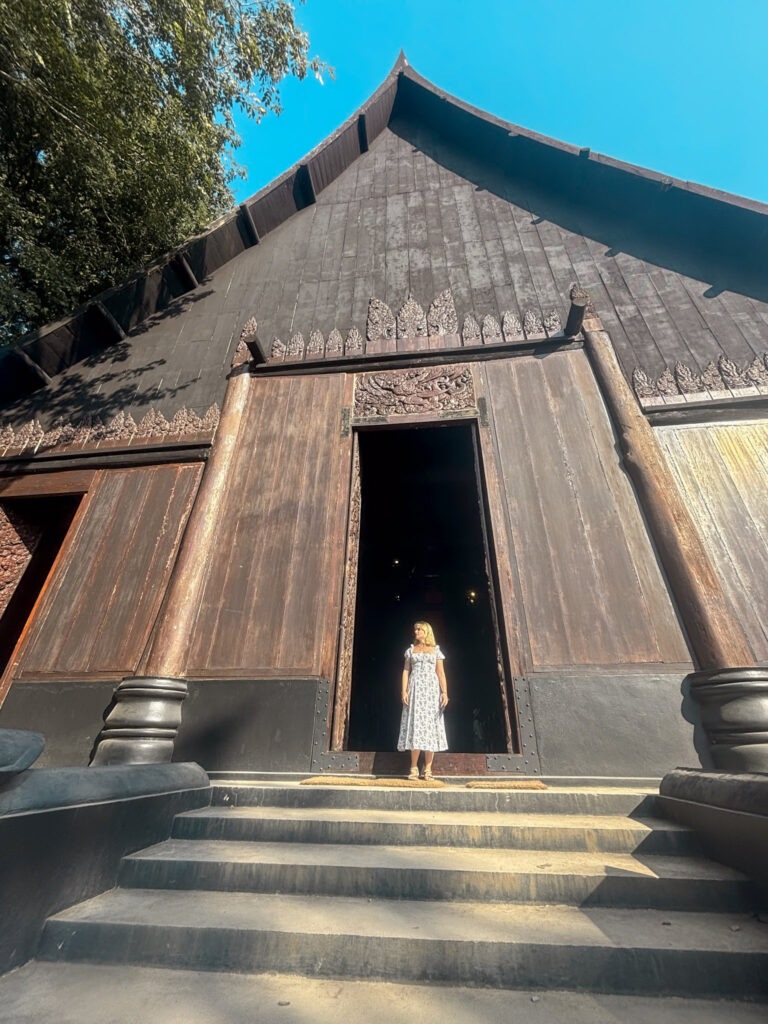
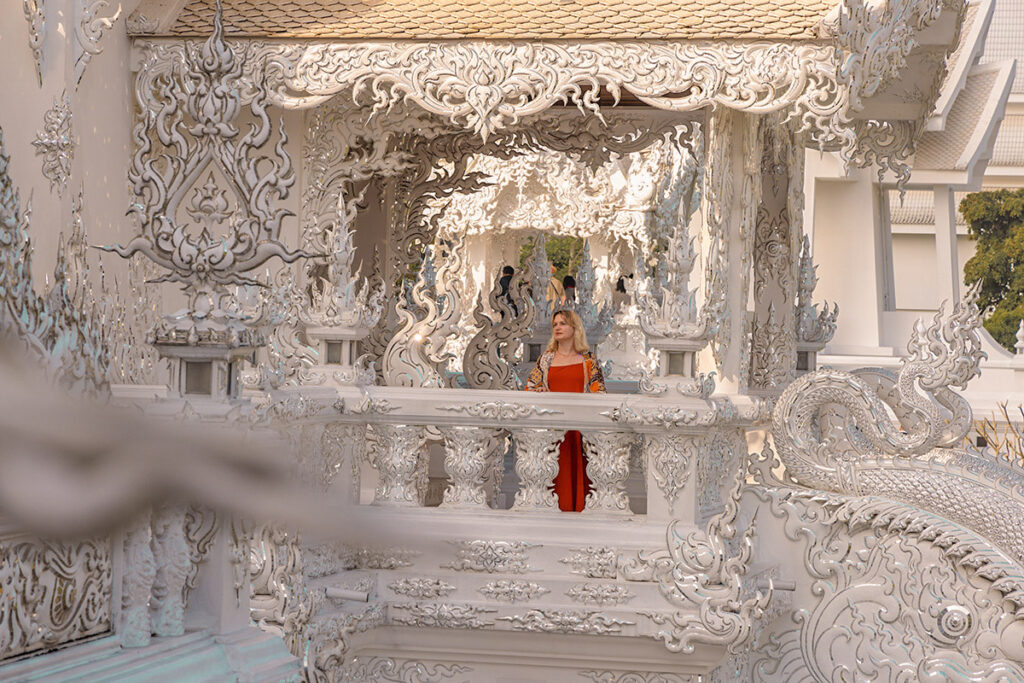
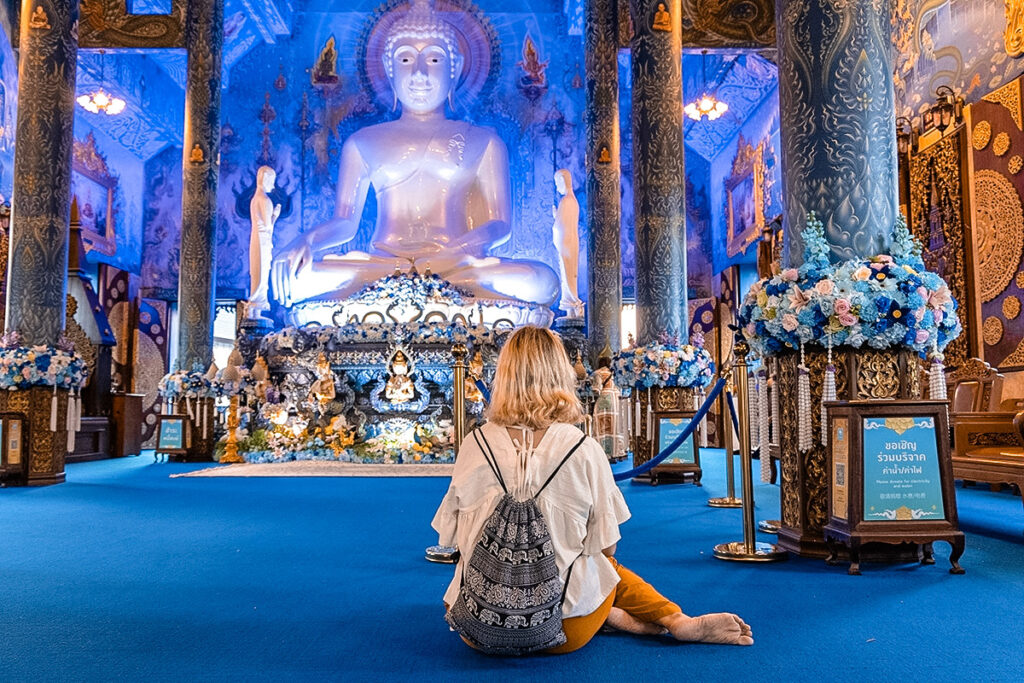
💡 Insider tip: If you have more time, it’s worth spending a few days in Chiang Rai to explore beyond the main temples — visit the Golden Triangle, tea plantations, waterfalls, and local night markets that reveal the region’s authentic charm.
✨ Planning to stay longer? Read my Complete Chiang Rai Travel Guide for detailed itineraries, local tips, and the best places to stay.
🚗 Getting Around

Most day trips can be done with an organized tour or private driver, but if you prefer independence, renting a car or scooter gives you the freedom to explore at your own pace.
➡️ Rent a car in Chiang Mai
➡️ Book a private driver for day trips
🌺 Final Thoughts on Chiang Mai
Chiang Mai is a city that gently teaches you how to slow down. It’s where ancient temples meet café culture, where jungle hills rise just beyond your balcony, and where every day feels balanced between adventure and calm. From sunrise hikes at Doi Suthep to quiet afternoons spent in local cafés, Chiang Mai invites you to notice the small, beautiful details of travel — the rhythm of monks’ chants, the scent of coffee roasting, the glow of lanterns at dusk.


Whether you’re here for a few days or a few weeks, you’ll quickly see why so many travelers fall in love and stay longer than planned. This is more than a destination — it’s a feeling, one that stays with you long after you’ve left the city walls.


✨ Continue your journey north — read my complete travel guides to Mae Hong Son and Pai for more inspiration, hidden gems, and practical insider tips.
💡 Still deciding on the right area to stay? Read the full Chiang Mai hotel & neighbourhood guide to compare the best areas and hotels.
❓ FAQ Chiang Mai:
🕐 What is the best time to visit Chiang Mai?
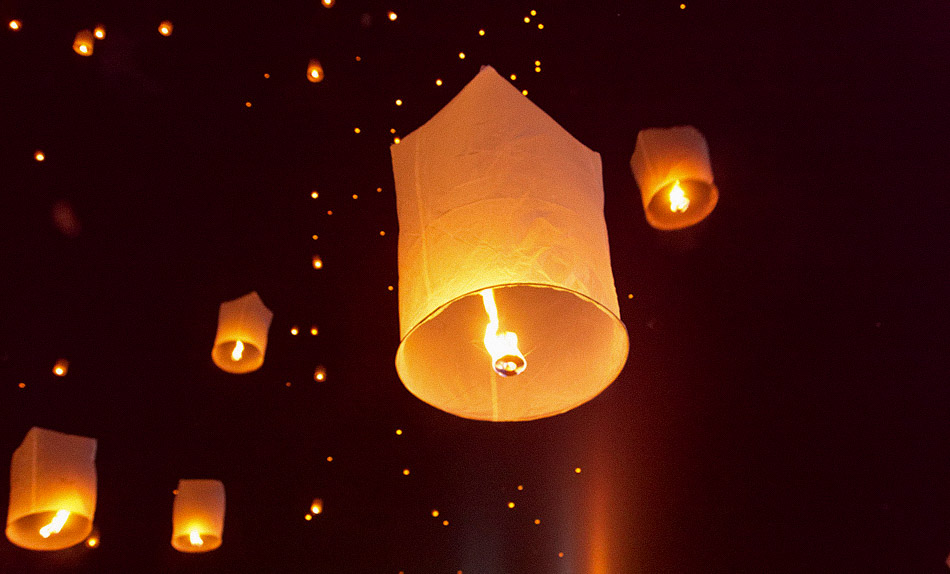
The best time to visit Chiang Mai is between November and February, when the weather is cool, dry, and perfect for exploring temples, night markets, and the surrounding mountains. This is also festival season, with Yi Peng Lantern Festival and Loi Krathong lighting up the city in November.
🧭 How many days do you need in Chiang Mai?
Spend at least 3 to 4 days in Chiang Mai to experience the highlights — the Old City temples, Doi Suthep, and the Sunday Night Market. If you want to explore the countryside or visit places like Chiang Rai, Pai, or Elephant Nature Park, plan 5 to 7 days for a more relaxed trip.
🛕 What are the top temples to visit in Chiang Mai?
Chiang Mai is home to more than 300 temples. The most famous are Wat Phra Singh, Wat Chedi Luang, and Wat Phra That Doi Suthep on the mountain overlooking the city. For something quieter, visit Wat Umong or Wat Pha Lat, both surrounded by forest and meditation paths.
🚕 How do you get around Chiang Mai?
Getting around Chiang Mai is easy. Use songthaews (shared red trucks), Grab taxis, or rent a scooter if you’re confident driving. The Old City is very walkable, and many cafés and temples are within a short distance.
🧘♀️ Is Chiang Mai safe for solo travelers?
Yes — Chiang Mai is one of the safest cities in Thailand for solo travelers. Locals are friendly and helpful, and the city has a large community of expats, digital nomads, and backpackers. Just use common sense at night, especially around markets and bus stations, as you would anywhere else.
🥢 What food is Chiang Mai known for?
Chiang Mai is famous for khao soi (coconut curry noodles), sai ua (spicy sausage), and mango sticky rice. Don’t miss the street food at Chiang Mai Gate Market or Sunday Walking Street, and try local cafés in Nimmanhaemin for modern Thai fusion.
🏞️ What are the best day trips from Chiang Mai?
Popular day trips include Doi Inthanon National Park, Elephant Nature Park, Bua Thong (Sticky) Waterfalls, and Chiang Rai’s White Temple. These can be done as guided tours or private trips.

📍 This post is part of my Northern Thailand travel series:
→ Chiang Mai Travel Guide (you are here)
→ Chiang Rai Travel Guide
→ Golden Triangle Travel Guide
→ Mae Hong Son Travel Guide
→ Pai Travel Guide
→ Thailand Travel Guide (main overview)
Did you know? Some of the links on this page are affiliate links. That means if you book or buy something through them, I may earn a small commission — at no extra cost to you.
It helps me keep creating detailed, independent travel guides and share new stories from the road.
Thank you so much for your support! 🩷


