
Travel Guide to Ubud, Bali
Welcome to Ubud, the cultural heart of Bali! Imagine waking up to the sound of rustling leaves, starting your day with a floating breakfast in your private villa, and ending it with a traditional Balinese dance under the stars. Ubud is where nature, culture, and serenity unite to create a little slice of heaven.
✈️ Planning your trip to Bali? Start with my complete Bali Travel Guide for visas, smart tips, and location ideas — then dive deeper into Ubud below.
🗓️ Planning your days? I’ve also created a complete 3, 5 and 7-day Ubud itinerary, including the best order to visit everything and bookable tours for each day.
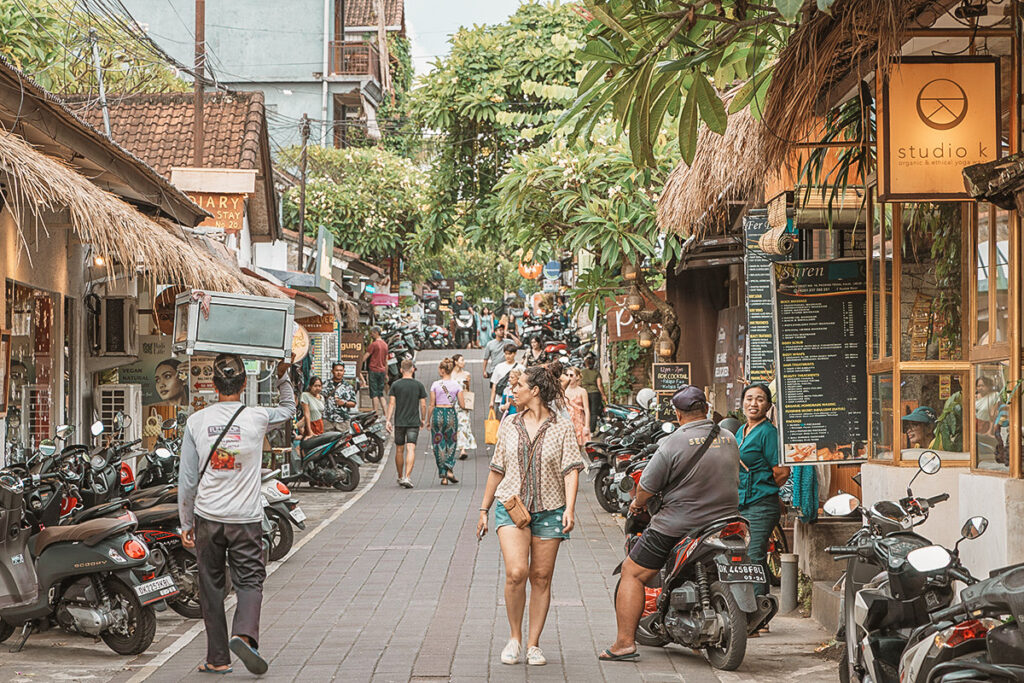
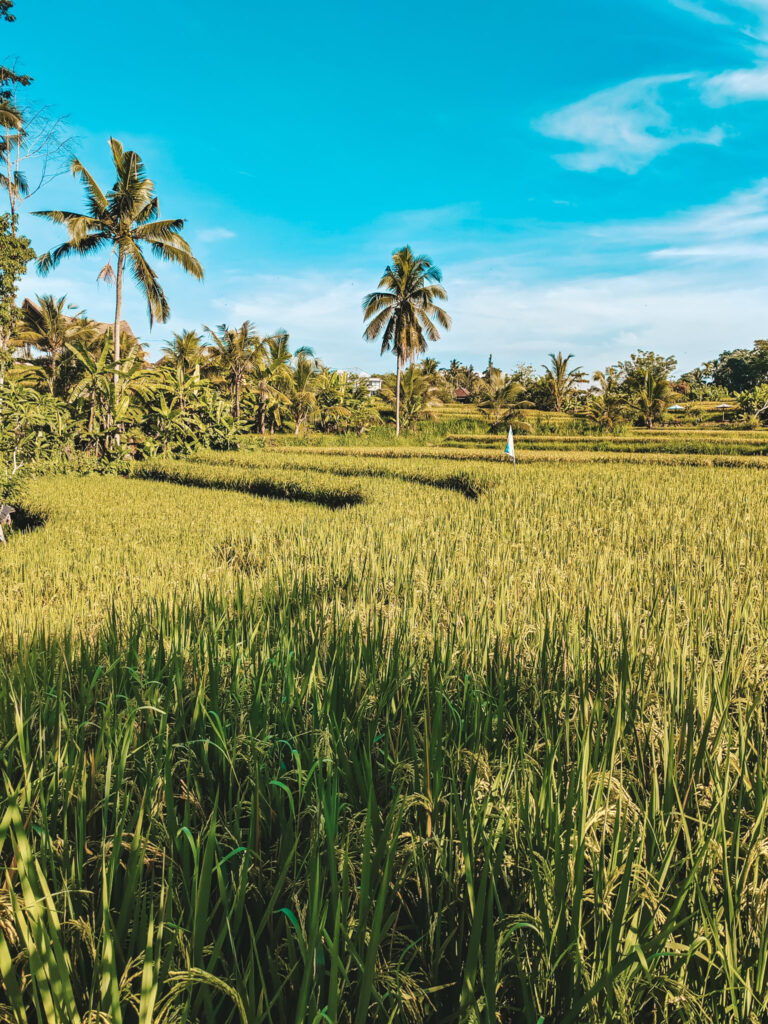
When I first arrived in Ubud, I couldn’t believe the beauty surrounding me – towering palm trees, vibrant markets, and serene temples tucked into the jungle. It’s no surprise that Ubud is one of Bali’s top travel destinations. Nestled in the heart of Bali, Ubud offers a tranquil escape from the island’s busier hubs like Seminyak and Kuta. Its central location makes it the perfect base for exploring Bali’s breathtaking waterfalls, vibrant markets, and cultural landmarks.
Whether you’re chasing waterfalls, exploring lush rice terraces, or indulging in yoga retreats and spa treatments, Ubud has it all. This Ubud Bali travel guide will take you through all the top things to do, must-see attractions, the best places to stay and eat, and all the insider tips for planning your perfect trip.
📌 Save this guide for later
Pin it to your Bali travel board 💗
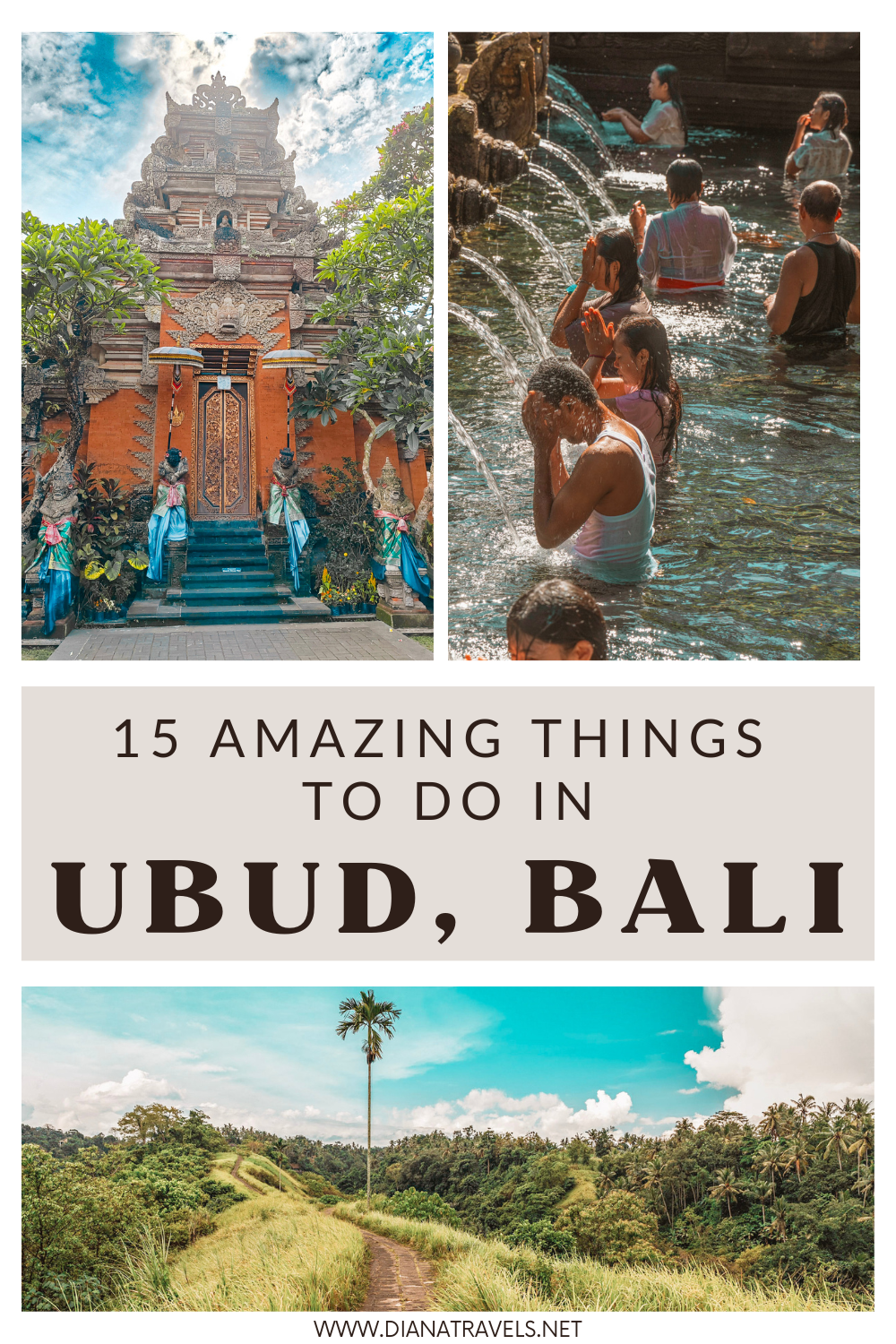
Best Things to Do in Ubud
Ubud’s unique charm lies in how effortlessly it connects you to Bali’s vibrant culture and breathtaking landscapes. During my time here, I found myself completely immersed in its magical blend of nature, culture, and adventure. If you’re planning your itinerary, these must-visit attractions and activities should absolutely be at the top of your list. Trust me, you’ll leave with stories and memories you’ll treasure forever.
1. Sacred Monkey Forest Sanctuary
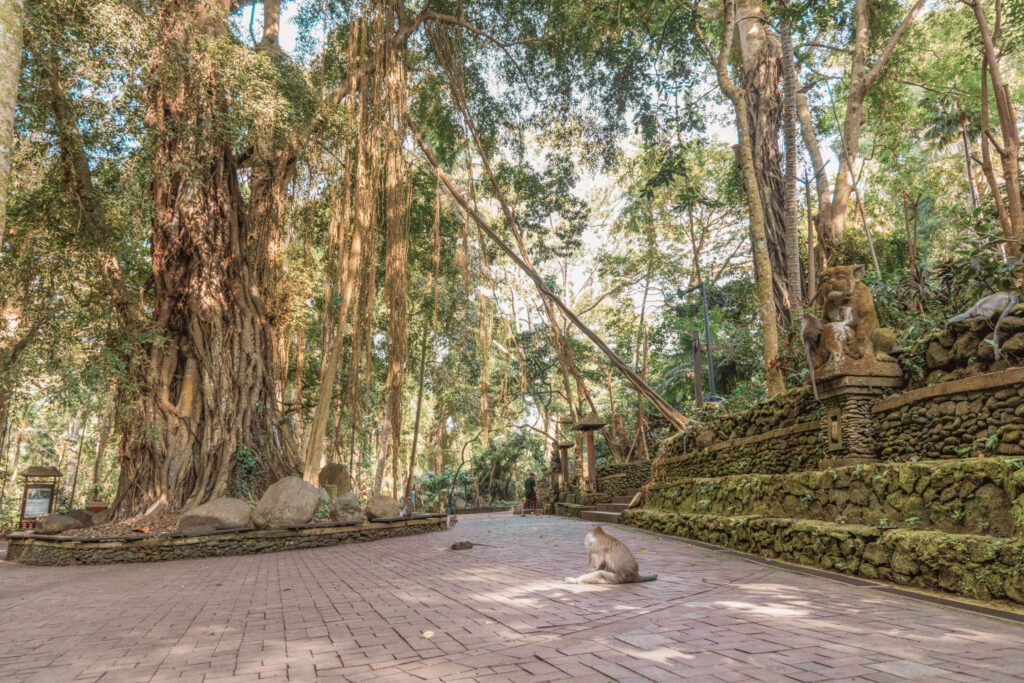
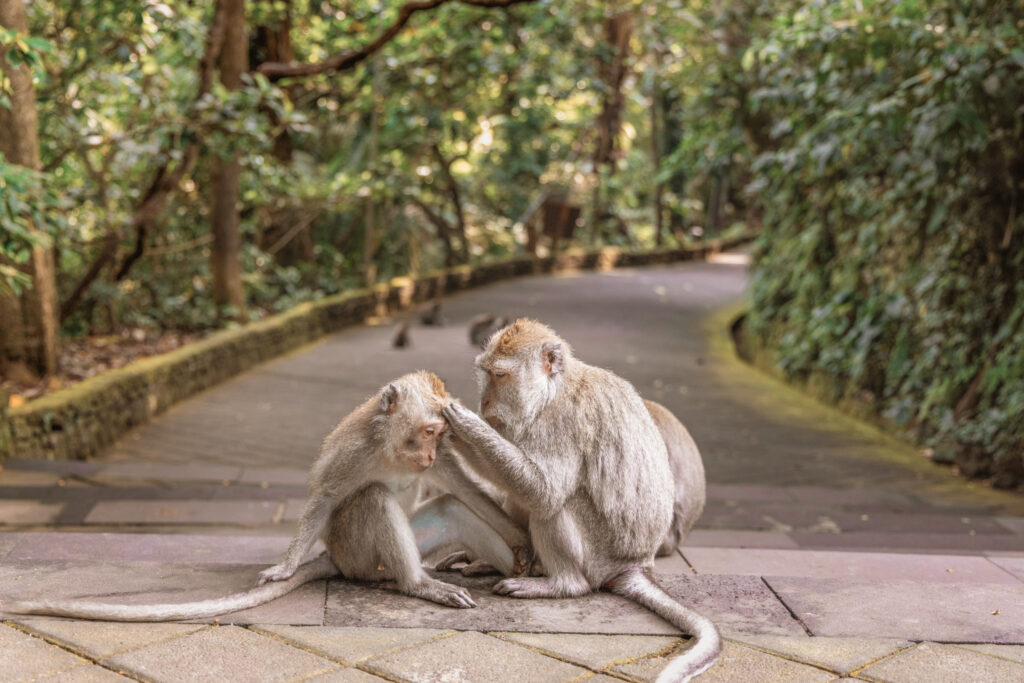
The Sacred Monkey Forest Sanctuary is one of Ubud’s most enchanting places — a living temple complex hidden beneath a canopy of banyan trees. Within its moss-covered walls, you’ll find three ancient Hindu temples dating back to the 14th century, stone guardians wrapped in vines, and hundreds of long-tailed macaques that rule the forest with playful charm.
Walking through the shaded pathways feels like stepping into another world — where nature, spirituality, and mythology intertwine. The monkeys roam freely, bathing in streams and lounging among temple ruins, offering endless photo moments (and sometimes, surprises!).
🐒 Join one of the best-rated Monkey Forest tours — book your spot here.
💡 Insider tip: Visit early (before 9 am) when the forest is quiet and the light filters softly through the trees. Avoid bringing snacks — the monkeys can smell them even inside bags.
💡 Tips for visiting:
- Entry fee: around 80,000 IDR (updated 2025).
- Time needed: 1–1.5 hours to explore slowly.
- Keep belongings zipped — these cheeky monkeys love sunglasses, phones, bottles, and snacks.
- The best entrance is via Jl. Monkey Forest, just south of the Ubud Palace.
🐒 Planning your visit?
Don’t miss my detailed Sacred Monkey Forest Ubud travel guide – with entry fees, rules, and insider advice.
🎫 Plan your Ubud experiences:
- 🐒 Ubud Monkey Forest Tour & Transfer
- 🌾 Tegalalang Rice Terraces & Swing
- 💆♀️ Top Spas in Ubud for Relaxation
Affiliate disclosure: some links are affiliate, meaning I may earn a small commission — at no extra cost to you. 💛
2. Campuhan Ridge Walk
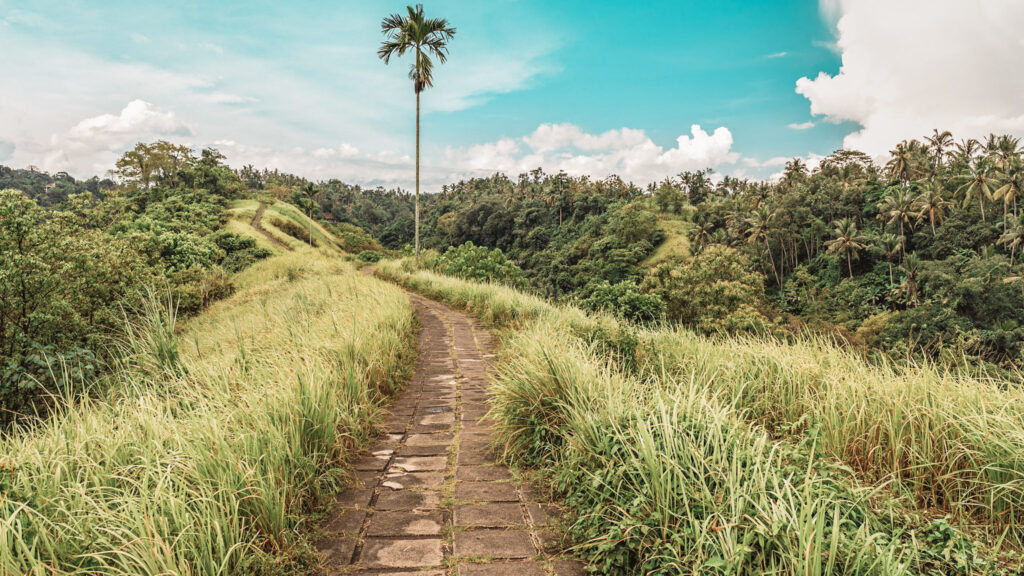
Few places capture the peaceful side of Ubud like the Campuhan Ridge Walk.
This narrow path winds gently over green hills, framed by swaying tall grass and palm trees that shimmer in the morning light. The air feels cooler here, carried by a soft breeze from the valley below, and the hum of scooters fades into the distance — replaced by the rustle of leaves and the rhythm of footsteps.
It’s one of Ubud’s simplest pleasures: completely free, open all day, and endlessly photogenic. Early mornings or golden afternoons are best, when the ridge glows under soft light and the rice fields on both sides seem to breathe. You’ll pass locals on scooters heading to hidden cafes, a few joggers, and maybe a couple of friendly dogs who know every turn of the trail.
At the end of the walk, stop at one of the cafés overlooking the valley for a fresh coconut or smoothie — a perfect slow-travel reward.
💡 Insider tip: Start the walk just after sunrise, around 6:30 a.m., to enjoy the softest light and almost empty paths. Bring water, sunscreen, and wear comfortable shoes — the ridge has no shade after mid-morning.
📍 How to Find Campuhan Ridge
The trail begins near the Warwick Ibah Luxury Villas, only a few minutes from Ubud Palace. Look for the small “Campuhan Ridge Walk” sign beside the bridge. The path is about 2 km one way, easy to follow, and suitable for all ages.
3. Kanto Lampo Waterfall
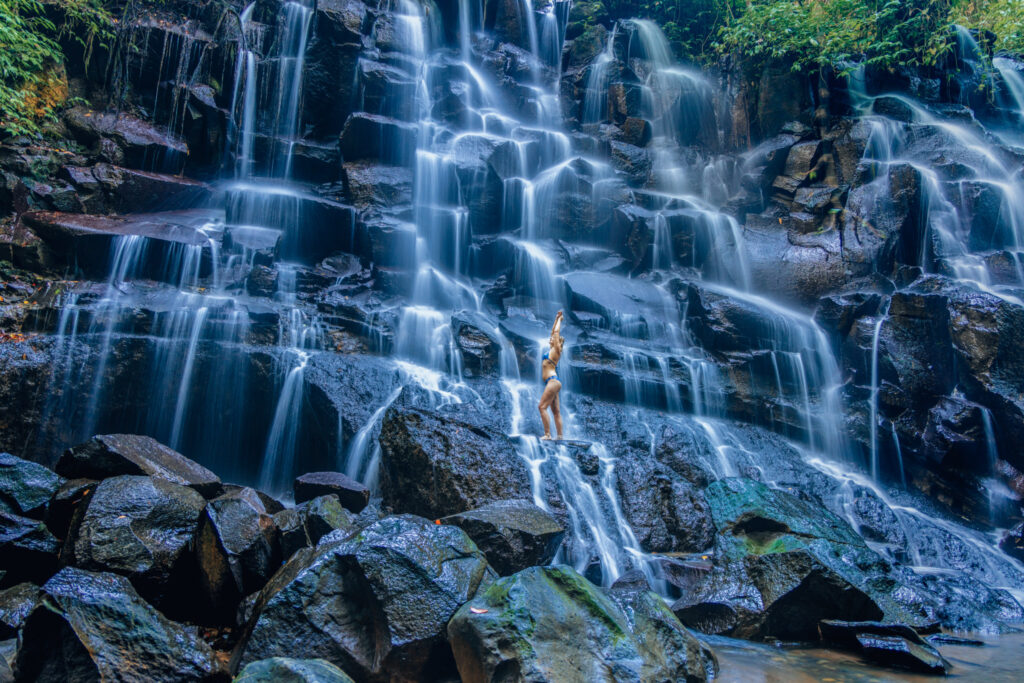
Hidden in the lush Gianyar jungle, Kanto Lampo Waterfall is one of Bali’s most magical natural spots — a place where sunlight filters through the trees and cascades dance down dark volcanic rock.
The waterfall doesn’t drop in one long stream but instead spills gently over layered stones, creating natural steps where you can climb, cool off, and pose for some of the most iconic photos in Bali.
What makes Kanto Lampo special isn’t just its beauty, but how accessible it is — just a 40-minute drive from Ubud and a short 5-minute walk down stone steps from the parking area. The air grows cooler as you descend, and the sound of rushing water replaces the hum of scooters.
At the bottom, local guides often help visitors navigate slippery rocks or take pictures for a small tip — a warm reminder of Balinese hospitality.
Although many visitors say it’s one of Bali’s most crowded waterfalls, I arrived early in the morning and had the place completely to myself — just the sound of water echoing through the forest. The soft morning light shimmering over the rocks made it feel peaceful and almost sacred, a side of Bali that’s easy to miss if you come later in the day.
💡 Insider tip: Visit before 8 a.m. for the best light and no crowds. Bring water shoes or sandals with grip — the rocks get slippery. Avoid visiting right after heavy rain when the current is strong and the water muddy.
📍 Visiting Info
- 🗺️ Location: Beng village, 40 minutes from Ubud
- 💰 Entrance fee: Around 25,000 IDR
- ⏰ Time needed: 45–60 minutes
- 📸 What to bring: Swimsuit, towel, waterproof bag, and small cash for parking & local guides
🌺 Make it a day trip:
- 🏞️ Tibumana & Tukad Cepung Waterfalls Tour
- ☕ Best of Ubud – All Inclusive Day Tour
- 🚗 Private Driver for Ubud Waterfalls
Affiliate note: Some links may be affiliate — they help support my work at no extra cost to you. 💛
4. Tegallalang Rice Terraces
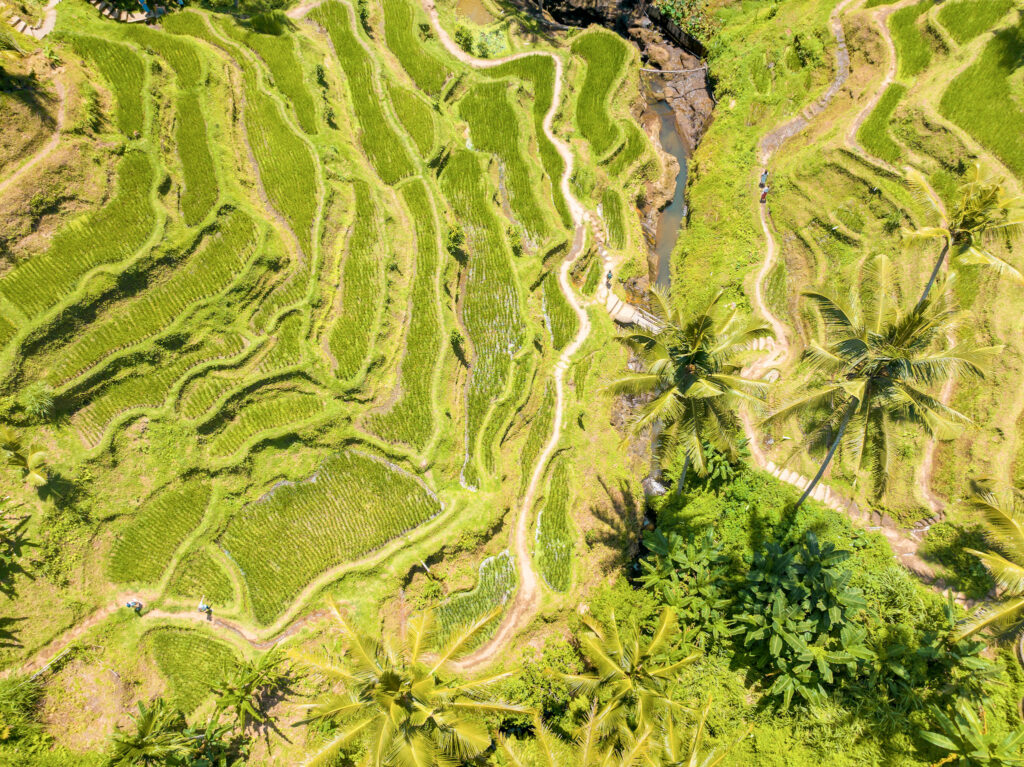
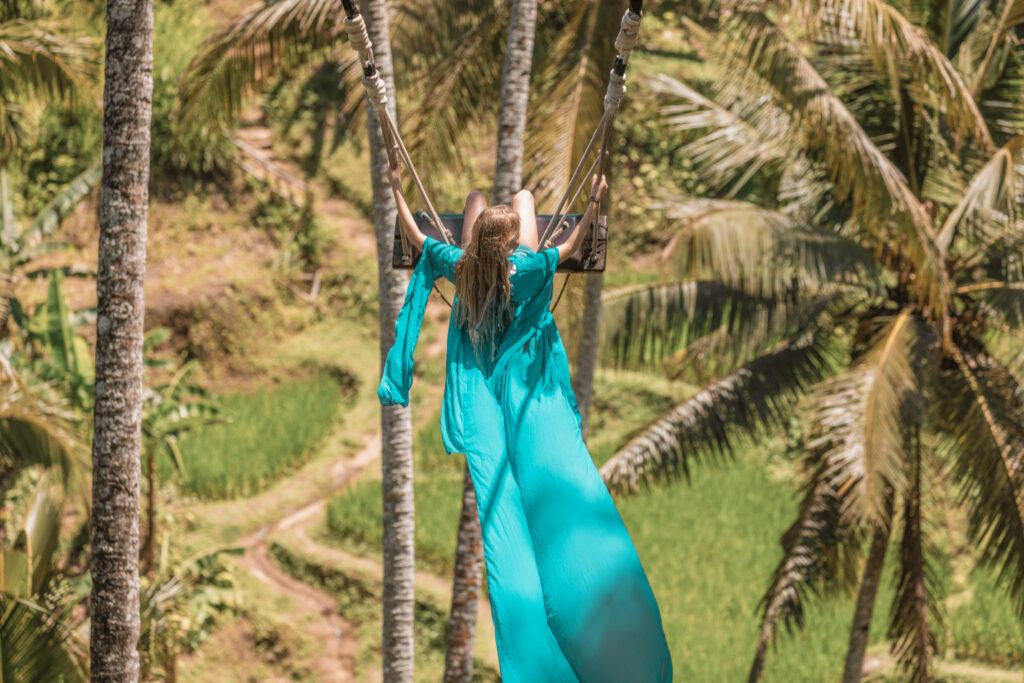
The Tegalalang Rice Terraces are one of the most photographed landscapes in Bali — a maze of emerald steps carved into the hillsides just north of Ubud.
Here, generations of Balinese farmers have shaped the land using the subak irrigation system, an ancient cooperative tradition that turns water into a symbol of harmony between people, nature, and the divine.
As you wander down deep the paths between terraces, the sound of running water and distant roosters mixes with the smell of damp earth and freshly cut grass. The light changes constantly — morning mist softens the greens, while late afternoon turns them gold.
You’ll meet farmers tending the fields, families selling coconuts, and a few curious dogs guarding their favorite viewpoints.
If you want to explore beyond the main entrance, walk deeper into the valley — the crowds thin out, and you’ll often have entire terraces to yourself.
💚 Experience the magic of Bali’s rice terraces — book the top-rated Tegalalang Rice Terrace & Swing tour here.
💡 Insider tip: Arrive before 8:00 a.m. or after 4:30 p.m. for the best light and fewer visitors. Bring small change for local farmers — the small “donation boxes” support the upkeep of the terraces.
🎟️ Visiting Tegalalang Rice Terraces Info:
- 📍 Location: 20 minutes north of central Ubud
- 💰 Entrance fee: Around 25,000 IDR (plus small donations if you walk further)
- ⏰ Best time: Morning or golden hour before sunset
- ☕ Nearby: Many cafés with rice field views — try one for a fresh coconut or iced coffee after your walk. If you’re feeling adventurous, try the famous Tegallalang jungle swing for a thrilling ride with stunning views.
Unique Cultural Experiences in Ubud
Ubud is the beating heart of Balinese tradition — a place where art, dance, and spirituality are woven into everyday life. Beyond the temples and markets, you’ll find unique experiences that invite you to participate, not just observe: from joining a canang sari offering workshop or watching a graceful Legong dance performance, to participating in holy purification rituals. These encounters reveal the soul of Ubud — creative, sacred, and deeply human.
5. Ubud Palace (Puri Saren Agung)
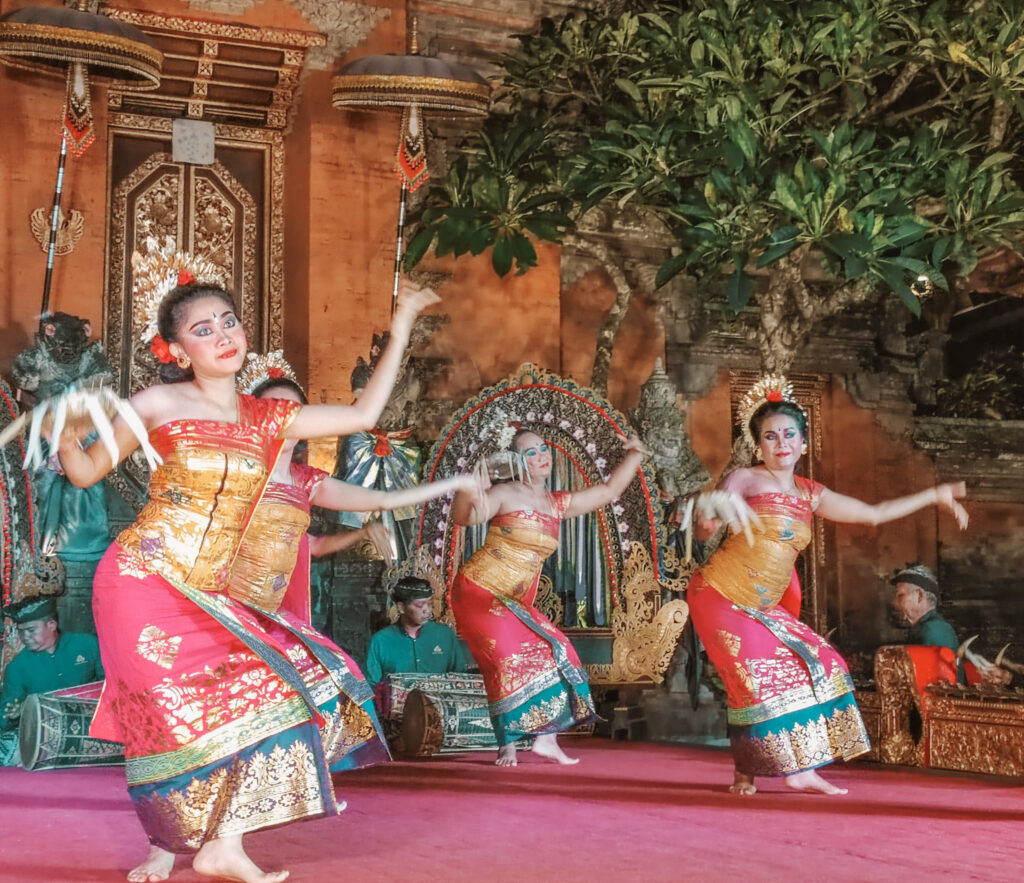
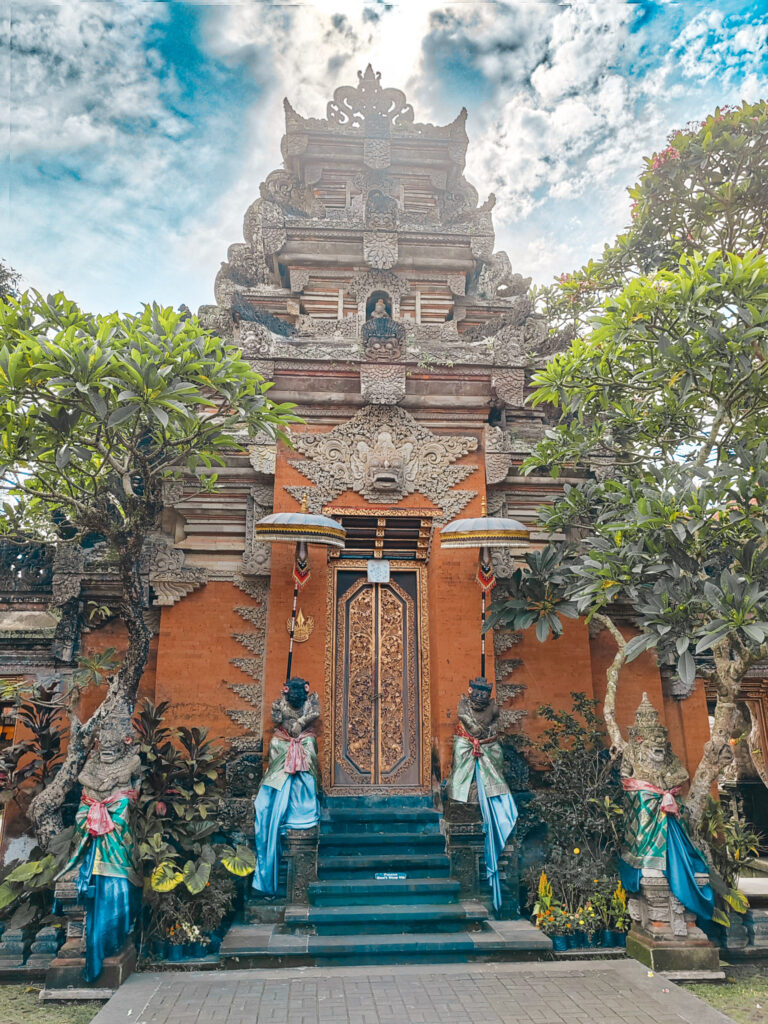
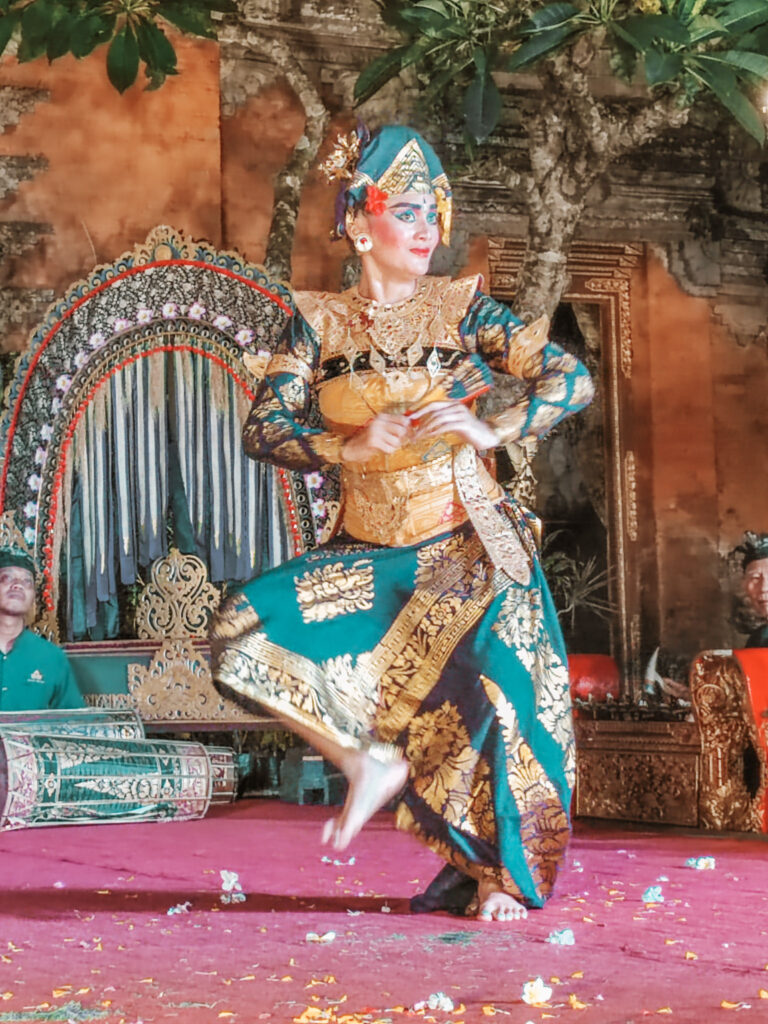
Located in the center of town, Ubud Palace (Puri Saren Agung) is a masterpiece of traditional Balinese architecture. Built in the early 19th century, it once served as the royal residence of the Ubud king and remains one of the town’s most important cultural landmarks.
The palace complex features intricately carved stone gates, lush courtyards, and elegant pavilions surrounded by frangipani trees — a peaceful contrast to the busy streets outside.
During the day, you can wander through its open courtyards and admire the ornate details that showcase classic Balinese artistry.
In the evening, the palace transforms into a vibrant stage, hosting mesmerizing traditional dance performances, including the world-famous Legong Dance, accompanied by live gamelan music that fills the night air with rhythm and magic.
💡 Insider tip: Arrive around 6:30 p.m. to get front-row seats for the Legong dance. Bring a light scarf or jacket — the evening breeze in the courtyard can get surprisingly cool.
📍 Visiting Info
- 🕍 Location: Central Ubud, right next to Ubud Market
- 💰 Entrance fee: Free during the day
- 🎭 Legong dance tickets: Around 100,000 IDR, sold at the palace gate from 5 p.m., or online
- ⏰ Show time: 7:30 p.m. daily (subject to change)
🎭 See the magic of Balinese dance:
Affiliate note: Some links may be affiliate — this means I may earn a small commission if you book, at no extra cost to you. 💛
💃 Planning to see the Legong Dance?
Discover its graceful movements, ancient meaning, and the best places to watch in Ubud —
Read my complete Legong Dance guide here.
6. Balinese Offerings: Canang Sari
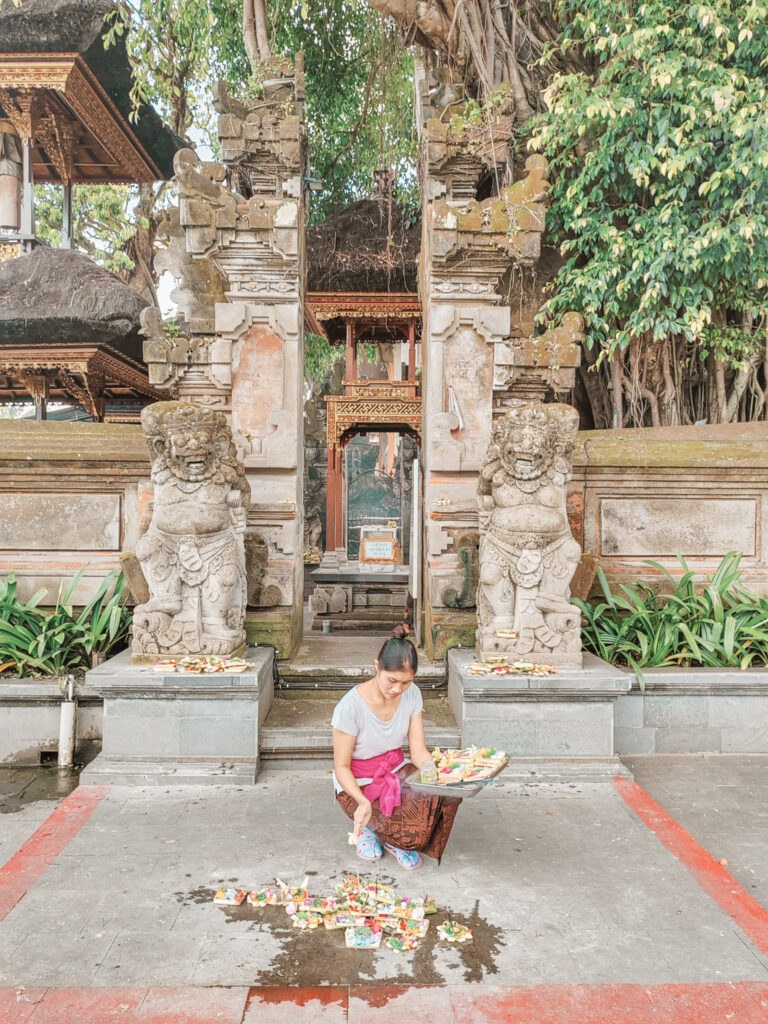
Everywhere in Ubud, you’ll notice colorful Balinese offerings called canang sari — small woven palm-leaf baskets filled with flowers, rice, and incense. These delicate offerings are placed each morning at temples, shrines, shops, and even on sidewalks, symbolizing gratitude and harmony between the spiritual and material worlds.
As the scent of incense drifts through the air and the first sunlight touches the petals, the whole town feels wrapped in quiet reverence. Watching locals prepare canang sari at dawn — often in silence, with grace and intention — offers one of the most authentic glimpses into Balinese Hindu culture. It’s a ritual that turns everyday moments into an act of mindfulness and devotion.
💡 Insider tip: If you see locals placing canang sari on the ground, avoid stepping over them — it’s considered disrespectful. Walk around the offerings and take a moment to simply observe this daily ritual in silence
✨ Did you know?
Each color and element in a canang sari represents a different Hindu deity — white petals for Shiva, red for Brahma, and yellow for Vishnu — symbolizing harmony between divine forces that guide the world.
🌺 Experience it yourself: For a deeper connection with this tradition, you can even join a local workshop to learn how to create your own canang sari and understand its spiritual meaning — a peaceful and meaningful way to experience Balinese culture firsthand.
7. Pura Tirta Empul
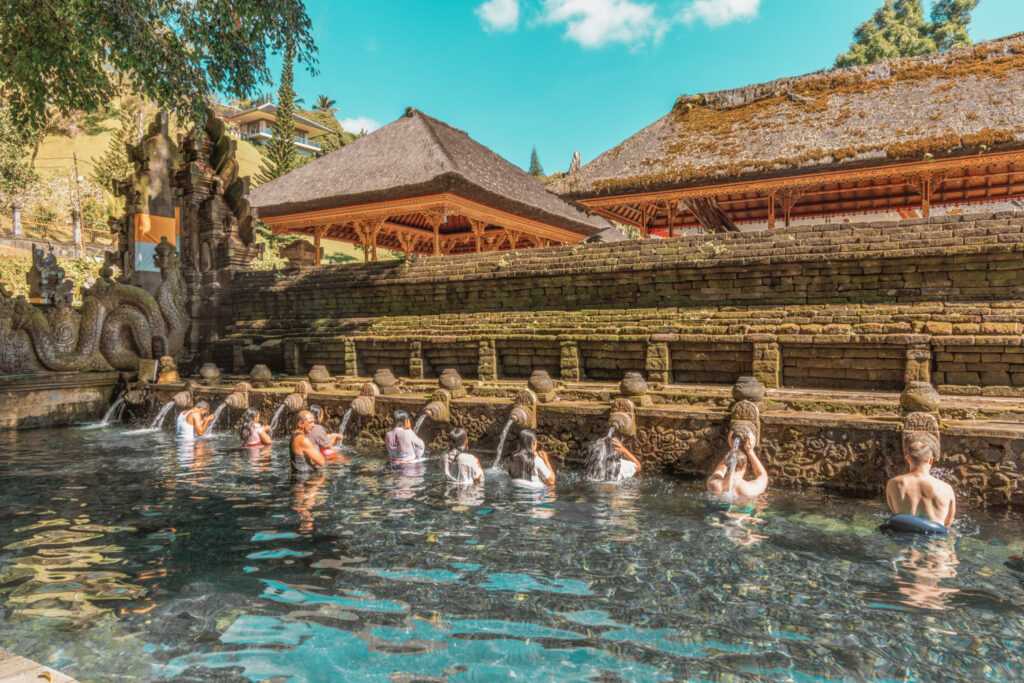
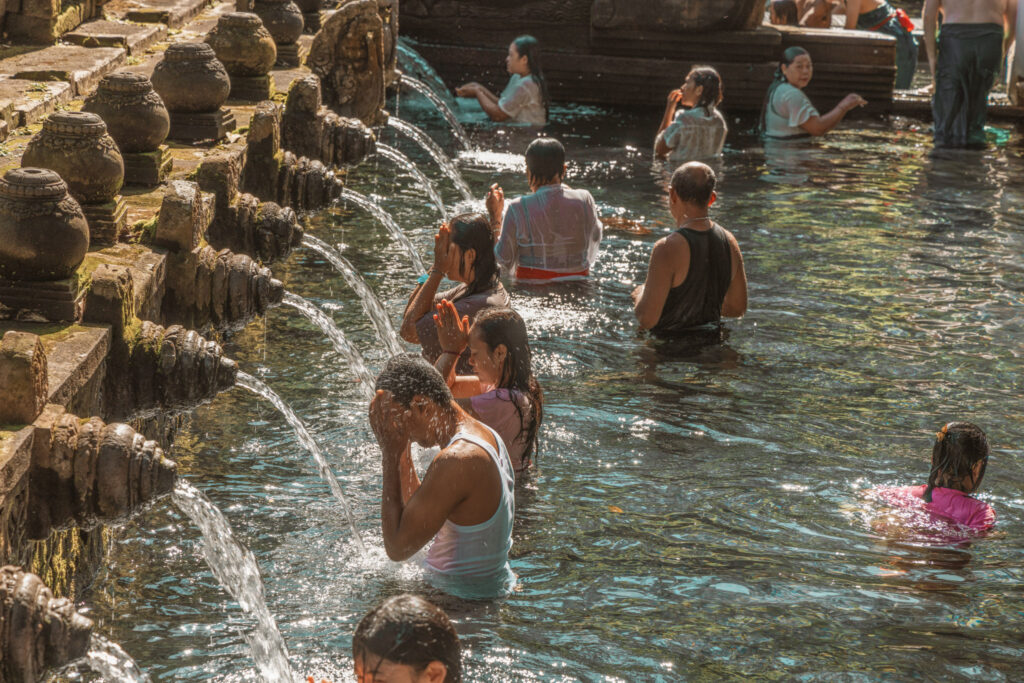
Just north of Ubud, near the village of Tampaksiring, lies one of Bali’s most sacred sites — Pura Tirta Empul, the Temple of Holy Water. For over a thousand years, Balinese Hindus have come here to cleanse their body and spirits in its cool mountain spring, believed to have been created by the god Indra himself.
As you step inside the temple courtyard, the scent of incense and frangipani fills the air. Sunlight dances across the stone carvings, and pilgrims dressed in sarongs move slowly through the purification pools. The sound of flowing water and quiet prayers creates a sense of peace that feels timeless.
Visitors are welcome to take part in the ritual — melukat — moving from fountain to fountain in prayer and reflection — guided by locals who will gently explain each step and its symbolism.
If temples are one of the main reasons you’re visiting Ubud, I’ve put together a separate guide to the best temples in and around Ubud, including Tirta Empul, Gunung Kawi, quieter water temples and the easiest routes to combine them.
✨ Did you know?
The spring that feeds Tirta Empul never dries, even during the dry season, and the water is used in ceremonies across central Bali. The temple’s layout follows ancient Tri Mandala principles, symbolizing the journey from the outer to the inner world of the spirit.
💡 Insider tip: Arrive early — around 8 a.m. — to experience the purification ritual before the big tourist groups arrive. Sarongs are provided at the entrance, but it’s best to bring a change of clothes and a small towel if you plan to enter the water.
📍 Visiting Info
- 📿 Location: Tampaksiring, about 30–40 minutes north of Ubud
- 💰 Entrance fee: Around 50,000 IDR (sarong included)
- 🕓 Opening hours: 7:00 a.m. – 5:00 p.m.
- ⏰ Time needed: 1–1.5 hours for the visit and purification
For a more meaningful experience, consider joining a guided purification ceremony at Tirta Empul, led by a Balinese shaman. They’ll share the legends behind the spring and help you take part respectfully — a beautiful way to understand Bali’s living spirituality.
Adventure Activities in Ubud
Ubud isn’t just about relaxation and culture—it’s also an adventurer’s dream! If you’re craving excitement, there are plenty of thrilling activities that will get your heart racing while immersing you in Bali’s stunning natural beauty. From rafting through jungle rivers to climbing an active volcano in the middle of the night, these adventures will leave you with unforgettable memories.
8. White Water Rafting on the Ayung River
If you’re craving a burst of adrenaline surrounded by lush jungle and cascading waterfalls, white water rafting on the Ayung River is one of Ubud’s most thrilling adventures. The river winds through a deep tropical gorge lined with vines, palms, and hidden carvings etched into the stone cliffs — scenes that feel straight out of a lost world.
Rafting here is less about extreme rapids and more about pure joy — a mix of gentle drops, refreshing splashes, and breathtaking scenery that unfolds around every bend. Local guides make the experience even more memorable with laughter, playful water fights, and stories about the river’s mythology and wildlife.
🛶 Ready to explore Bali’s wild side?
Experience the thrill of white water rafting on the Ayung River — guided by locals, surrounded by rainforest, and complete with hotel pickup and lunch.
Affiliate note: This link may earn a small commission at no extra cost to you — thank you for supporting my work. 💛
💫 Did you know?
The Ayung River is Bali’s longest river, flowing over 75 kilometers from the northern mountains to the sea near Sanur. Many stretches near Ubud remain untouched, making it one of the island’s most pristine ecosystems.
💡 Insider tip: Bring a change of clothes, water shoes, and a waterproof phone case. Morning tours are best for cooler air and softer light in the jungle. Most tours include transport, towels, and a buffet lunch overlooking the valley.
9. Night Hike to Mount Batur

Long before dawn, the road from Ubud winds quietly through sleeping villages toward the misty highlands of Mount Batur, an active volcano. At the trailhead, torches flicker in the dark, and the air smells faintly of roasted coffee from nearby stalls. As you begin to climb, the world feels hushed — just the crunch of volcanic gravel beneath your feet and the occasional sparkle of flashlight beams tracing the path uphill.
Reaching the summit in time for sunrise is one of those experiences that stays with you forever. The first light reveals Lake Batur shimmering far below and Mount Agung rising in the distance, its silhouette painted in gold and lavender hues.
As the sky brightens, you’ll enjoy a simple mountain breakfast — banana sandwiches, boiled eggs, and a steaming cup of coffee or tea. With that view stretching endlessly before you, it will taste like a million dollars.
🚙 Getting There
- 📍 Location: Kintamani, about 1.5 hours from Ubud
- ⏰ Start time: Around 2:30 a.m. (hotel pickup)
- 🧗♀️ Duration: 1.5–2 hours to the summit, moderate difficulty
- 💰 Entrance + local guide: ~350,000–550,000 IDR (varies by operator)
🌋 Catch Bali’s most breathtaking sunrise:
Join a climb under the stars , watch the first light spill over Lake Batur, and enjoy a warm meal above the clouds.
Affiliate note: Some links may be affiliate — booking through them helps support my work at no extra cost to you. 💛
💫 Did you know?
Mount Batur is one of Bali’s most active volcanoes, last erupting in 2000, and its caldera — now home to Lake Batur — was formed by a massive ancient explosion nearly 30,000 years ago. The fertile soil around it nourishes coffee plantations, orange groves, and mountain villages.
💡 Insider tip: Pack a light jacket — it’s chilly before sunrise — and wear shoes with good grip for the rocky descent. Most treks start around 2:00–3:00 a.m., so plan an early night and confirm pickup details with your guide the evening before
Relaxation and Yoga in Ubud
Ubud is more than a destination — it’s a state of calm. Among jungle hills and rice terraces, travelers come here to slow down, reconnect, and breathe again. From sunrise yoga classes surrounded by birdsong to flower baths and sound-healing ceremonies, Ubud offers endless ways to relax and realign body and mind. Whether you’re a seasoned yogi or just craving stillness, this is where Bali’s spiritual heartbeat feels closest.
10. Floating Breakfast in a Private Villa
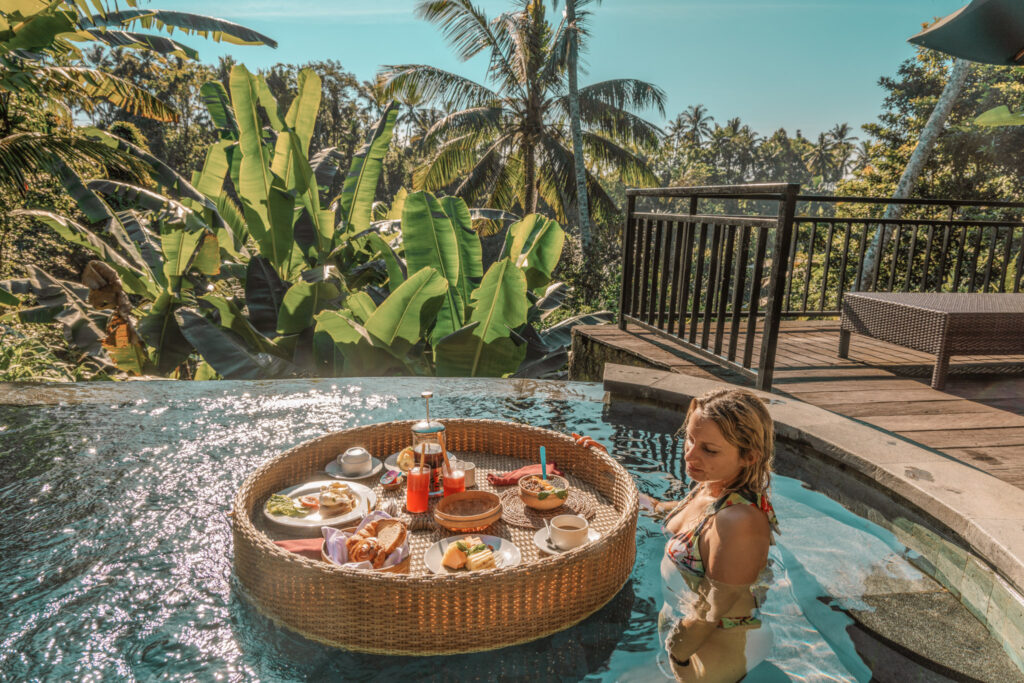
Start your day with the ultimate indulgence — a floating breakfast served right in your villa pool. Sip on fresh juice, taste tropical fruits, and watch morning light dance across the water. As sunlight filters through palm leaves and steam rises from your coffee, time seems to slow down — and Bali’s quiet magic takes over.
Whether it’s a romantic morning for two or a peaceful solo ritual, this experience captures the essence of Ubud’s laid-back luxury. Many villas offer customizable trays with pancakes, smoothie bowls, and edible flowers — transforming breakfast into a gentle celebration of the moment.
💡 Where to try: Many private villas in Ubud offer floating breakfasts, including my personal favourite Mandana Ubud villa and Alila Ubud.
11. Yoga Retreats and Classes
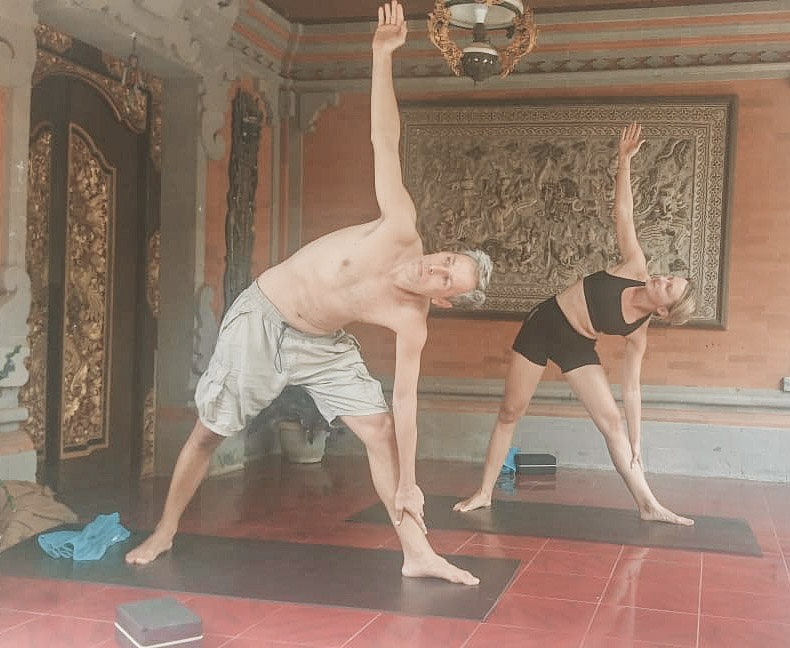
Ubud is a global hub for yoga and wellness, attracting seekers and travelers from all over the world. Studios like The Yoga Barn and Radiantly Alive offer everything from gentle beginner sessions to immersive multi-day retreats focused on mindfulness, movement, and healing.
Practicing yoga surrounded by lush greenery, birdsong, and the scent of incense is a truly transformative experience — one that connects body and spirit with the natural rhythm of Bali itself.
💡 Insider tip: Arrive at your class a little early — studios often have serene cafés and gardens where you can enjoy a smoothie or ginger tea before practice. Bring your own reusable water bottle and wear light, breathable clothes — Bali’s heat makes even gentle yoga a deep detox.
Beyond yoga, Ubud also offers sound healing sessions, breathwork workshops, and holistic spas, making it the perfect place to slow down, reset, and reconnect with yourself.
Most studios offer drop-in classes, so you can join even if you’re only in Ubud for a few days. If you prefer a more personal experience, private yoga sessions are also widely available — many teachers will even come to your villa for a sunrise or sunset flow.
🧘♀️ Recommended experience:
Book a yoga class or wellness retreat in Ubud and feel the calm, grounding energy that makes this town one of Bali’s most healing destinations.
*Affiliate note: Some links may be affiliate — this means I may earn a small commission if you book, at no extra cost to you. 💛*
12. Traditional Balinese Spa Treatments
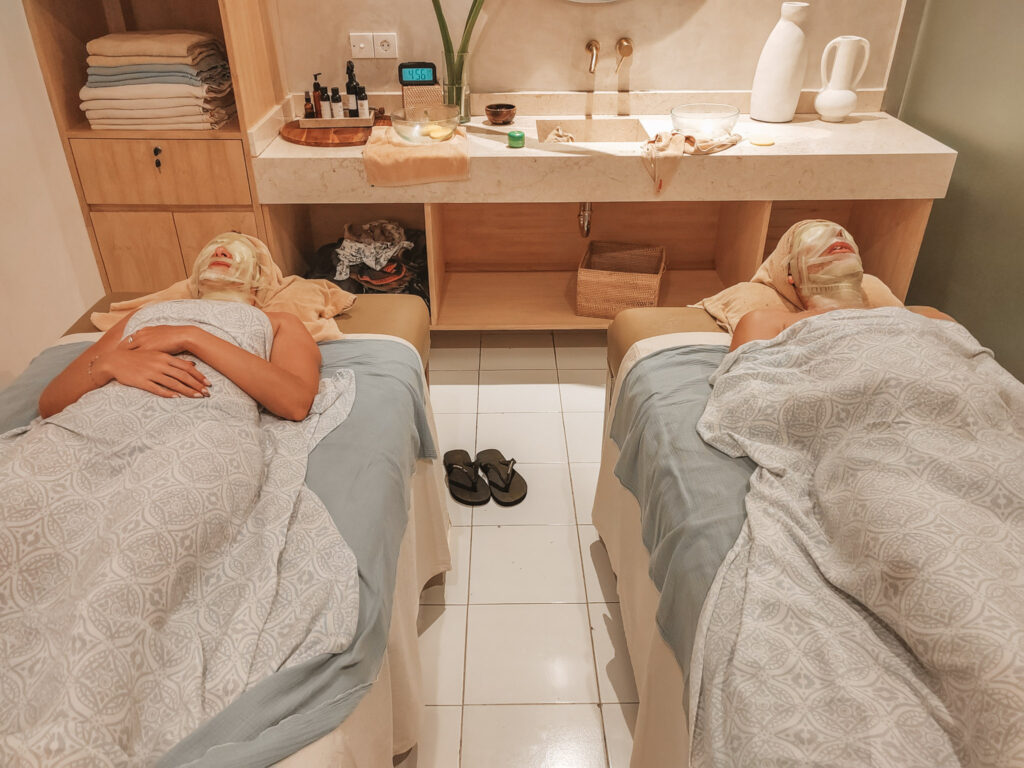
Ubud’s spas are legendary — tranquil sanctuaries surrounded by rice terraces, jungle, and the soft rhythm of running water. Whether you’re craving a simple foot massage after a day of exploring or a full-day wellness ritual, the town offers an endless choice of treatments designed to relax body and spirit.
Among the most loved are Karsa Spa, hidden along the Campuhan Ridge Walk with open-air rooms and views of the rice fields, and Jaens Spa, known for its warm service and deeply rejuvenating Balinese massages. Many spas also offer flower baths, where you soak in petals and essential oils as incense drifts through the air — a ritual that feels like pure serenity.
💡 Insider tip: Book your spa treatment at least a day in advance, especially during high season or weekends. Morning sessions are usually quieter and come with softer light — perfect for photos if your spa includes a flower bath.
Beyond massages, many Ubud spas now blend traditional Balinese healing with modern wellness — think herbal scrubs, energy-balancing rituals, and sound healing sessions. Afterward, unwind with herbal tea in a garden pavilion while the sounds of water and nature surround you.
For travelers seeking more than just relaxation, some wellness centers also offer holistic treatments, like chakra balancing or reflexology, helping you leave not just rested, but renewed.
💆♀️ Want to plan the ultimate spa day in Ubud?
🪷 Read my full guide to the Top 5 Spas in Ubud — discover tranquil jungle retreats, flower baths, and traditional Balinese massages.
🌺 Or treat yourself right away: Book a spa experience in Ubud and let Bali’s natural calm do the rest.
*Affiliate note: Some links may be affiliate — booking through them helps support my work at no extra cost to you. 💛*
Where to Eat in Ubud, Bali
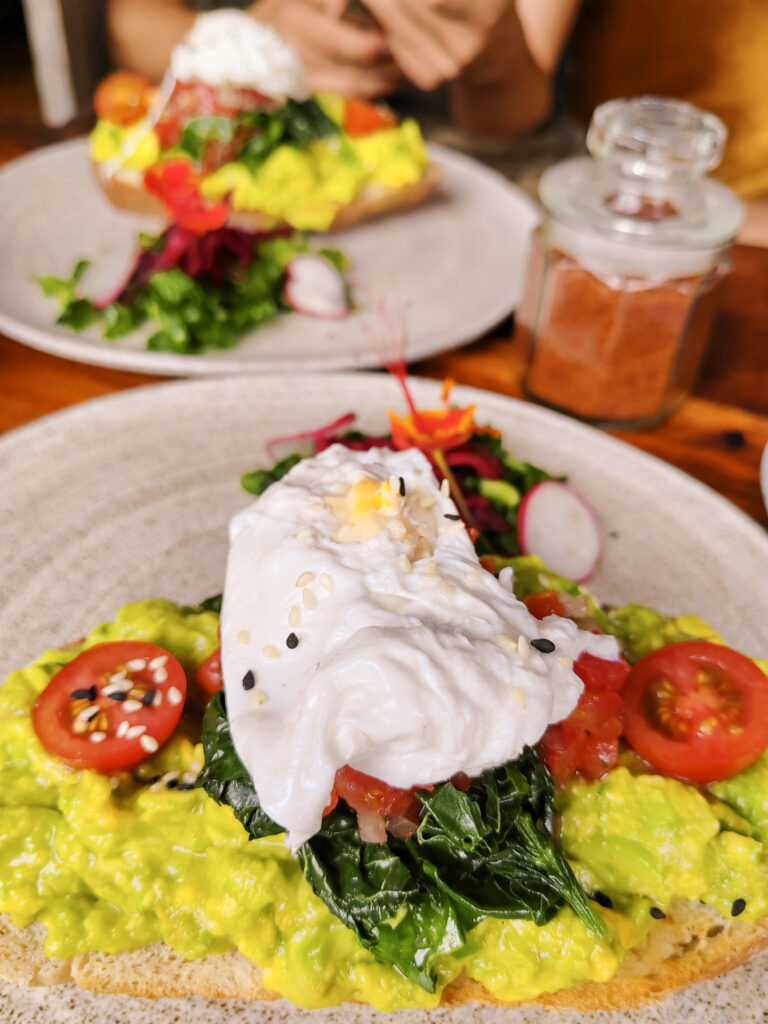
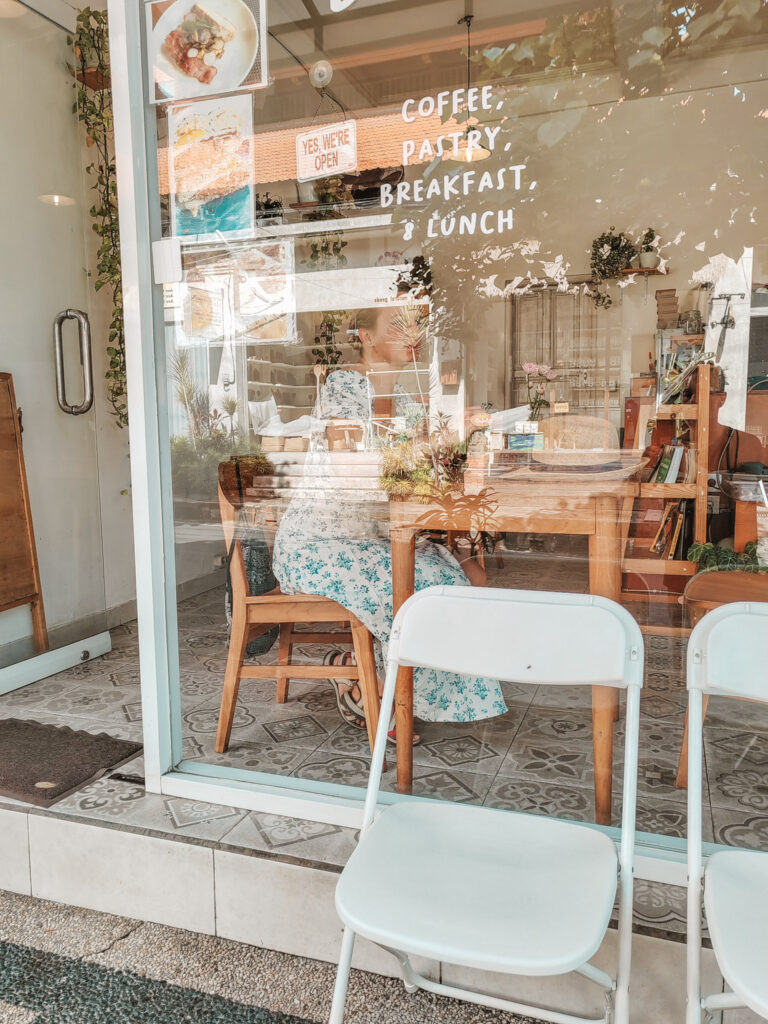
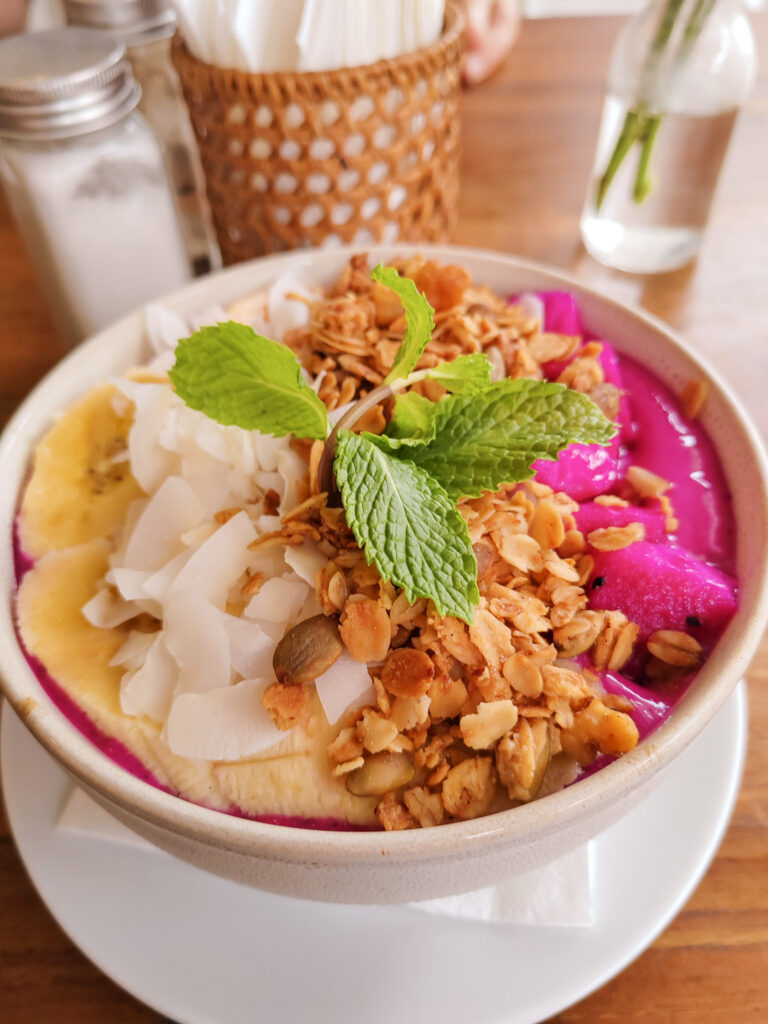
Ubud is a food lover’s paradise — a place where traditional Balinese flavors meet modern creativity. From cozy warungs serving fragrant nasi campur to jungle-view cafés offering smoothie bowls and locally roasted coffee, Ubud’s food scene celebrates both authenticity and innovation. Here are some of the best places to eat in Ubud, whether you’re craving local specialties or plant-based gourmet dining.
13. Local Warungs in Ubud
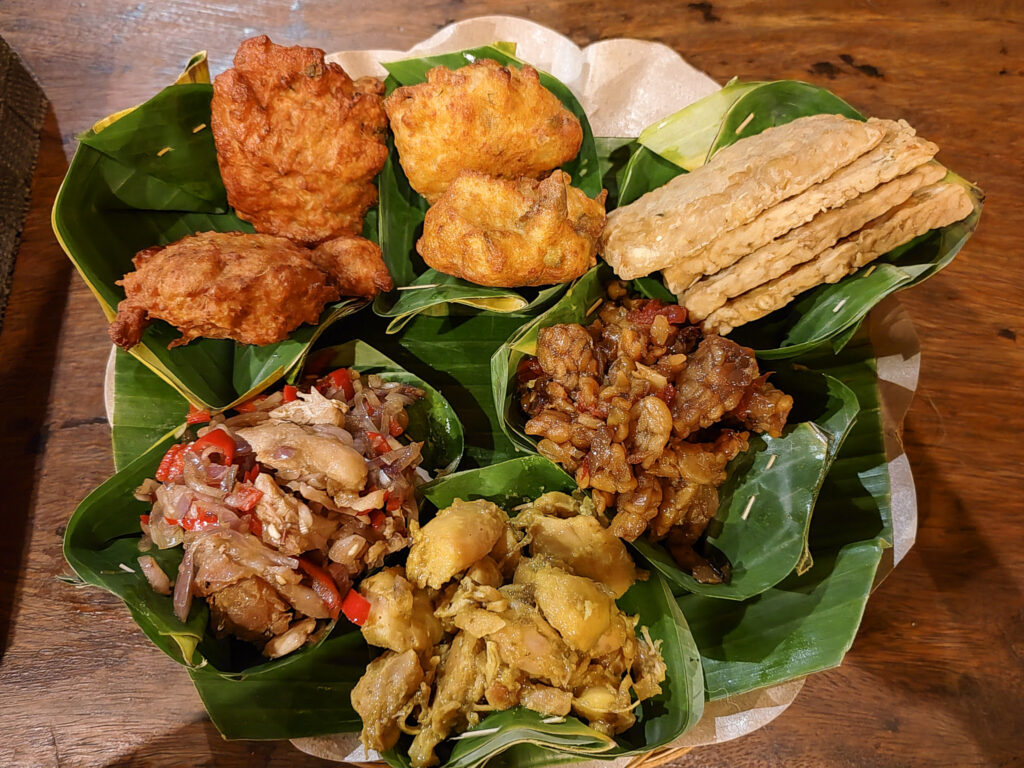
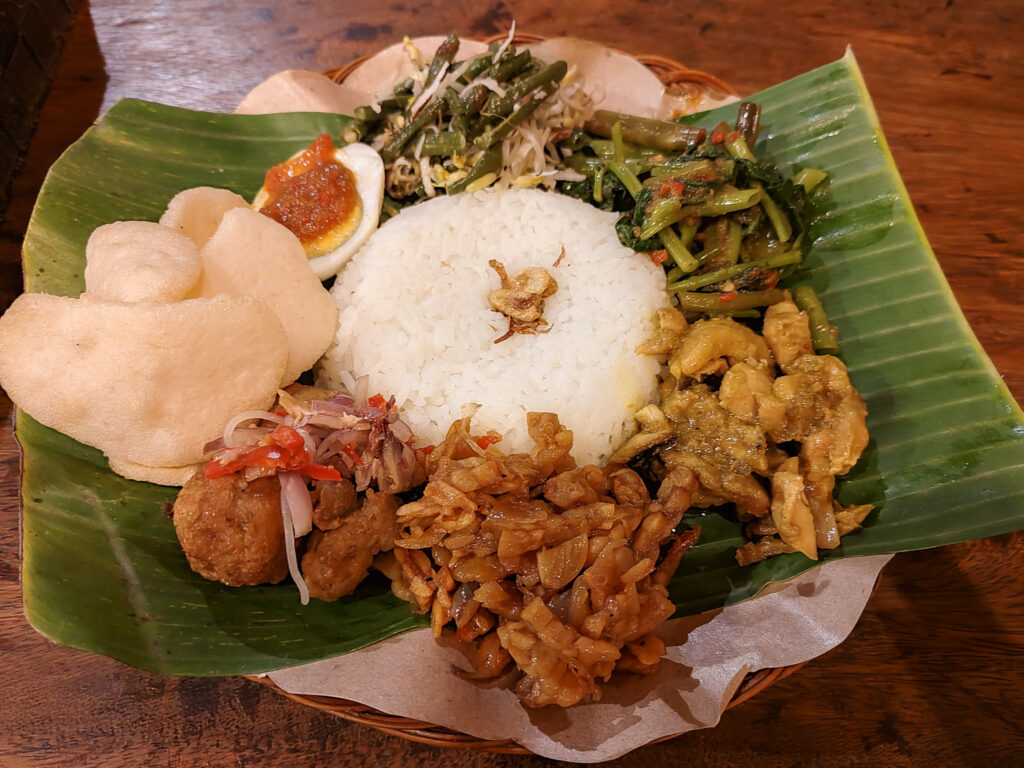
For authentic Balinese food, skip the fancy restaurants and head straight to a warung — a small, family-run eatery where recipes are passed down through generations. These humble kitchens are the heart of Bali’s food culture, serving fragrant rice, spiced vegetables, grilled satay, and curries cooked slowly over charcoal.
Meals are simple but deeply satisfying: a plate of nasi campur (mixed rice with vegetables, tempeh, and sambal), or babi guling, the island’s famous roast pork seasoned with turmeric and lemongrass. Most warungs still prepare everything fresh each morning, and eating here is both delicious and a glimpse into daily Balinese life.
💡 Insider tip: Look for warungs that are busy with locals — that’s always the best sign. Arrive early for lunch; some close once the food runs out. Don’t skip the sambal matah (spicy shallot relish) — it’s a flavor you’ll remember long after leaving Bali.
🥢 If you love local flavors, take a short drive to the Gianyar Night Market — or read my Street Food in Bali guide to find authentic stalls and what to try near Ubud.
🍽️ Top Picks
- Warung Biah Biah – Affordable, authentic, and always lively. Try their nasi campur and tempeh satay.
- Ibu Oka – Ubud’s most famous babi guling spot; go early, it often sells out before noon.
- Warung Pondok Madu – Great for grilled chicken and local-style ribs with homemade sambal.
- Warung Bu Nani – Hidden gem near the rice fields with home-cooked flavors and friendly smiles.
👩🍳 Recommended experience:
Learn to cook authentic Balinese dishes with a traditional Ubud cooking class — visit a local market, pick fresh ingredients, and prepare a full meal from scratch with a local chef.
*Affiliate note: Some links may be affiliate — booking through them helps support my work at no extra cost to you. 💛*
14. Cafés & Brunch Spots in Ubud
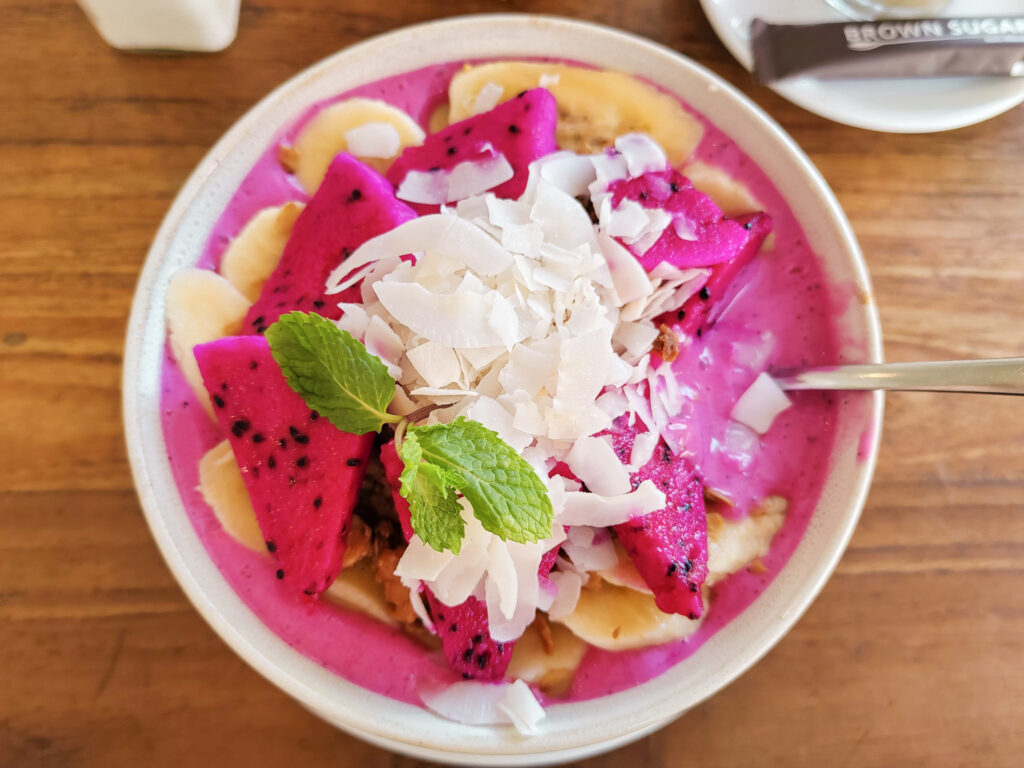
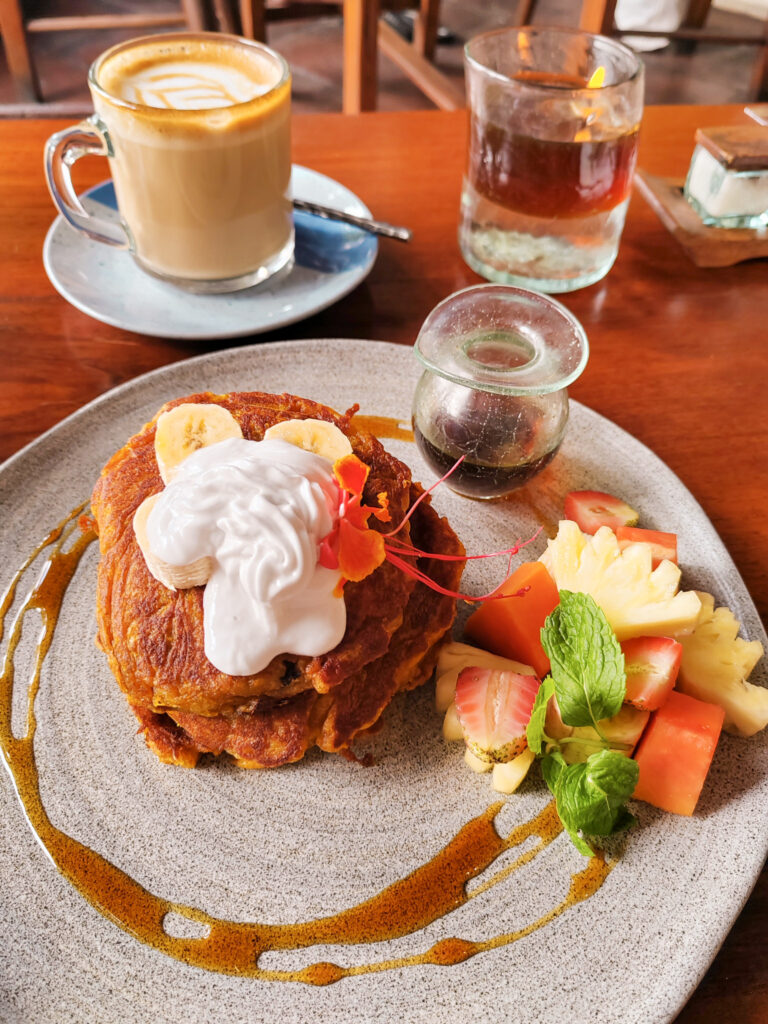
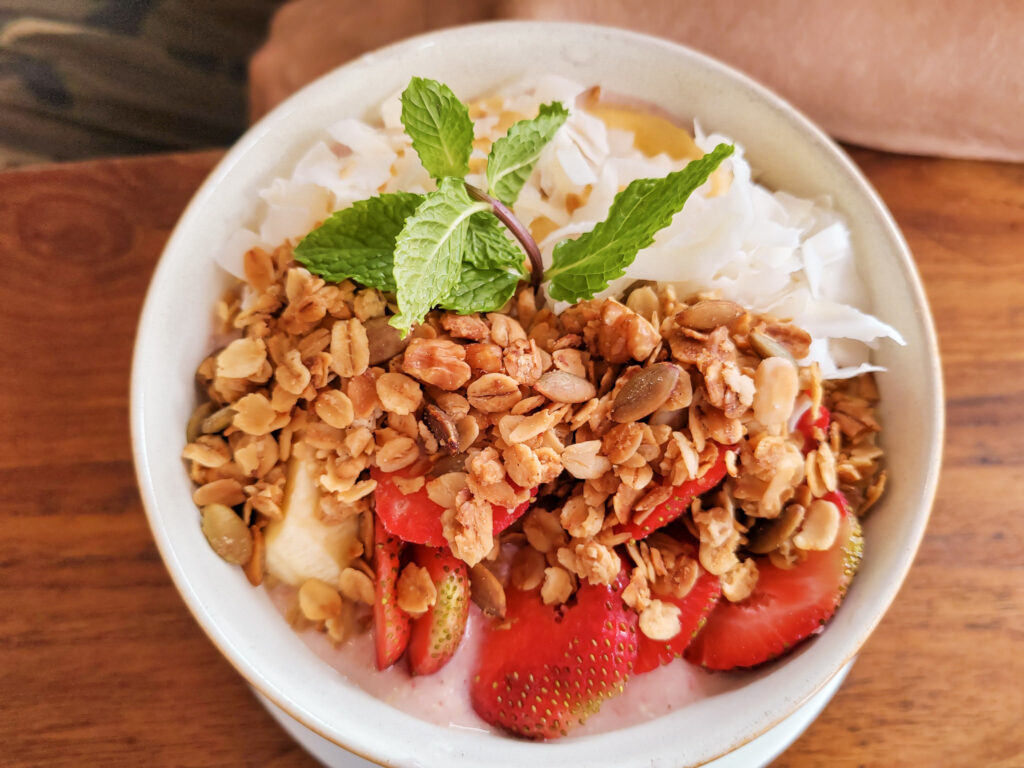
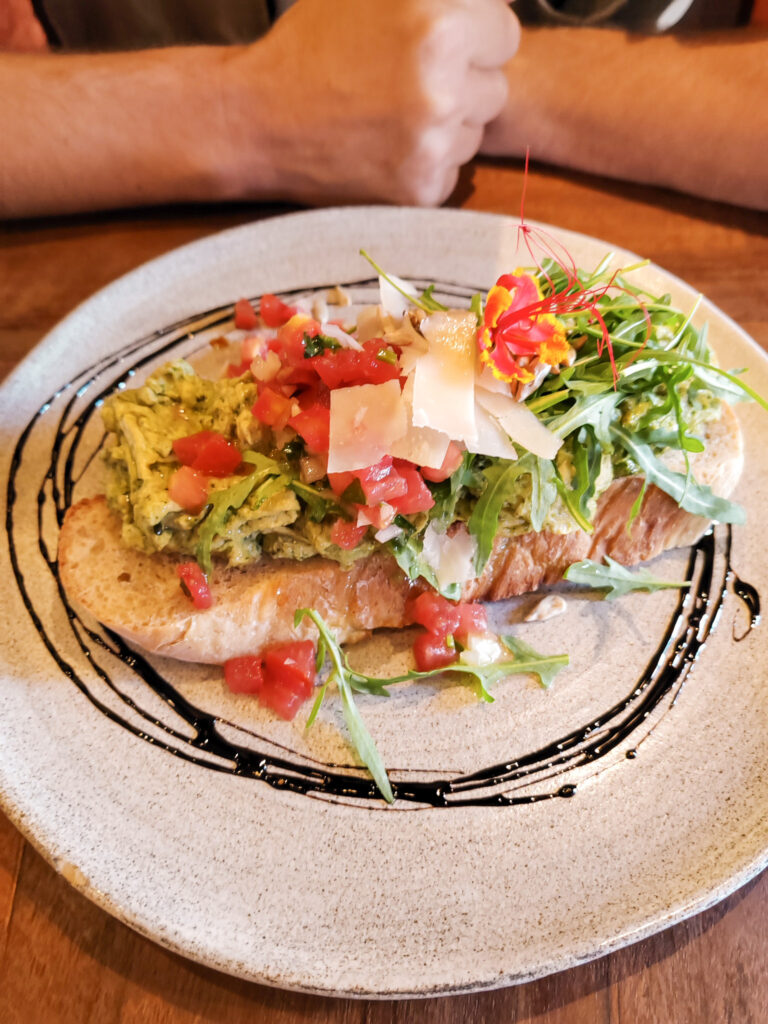
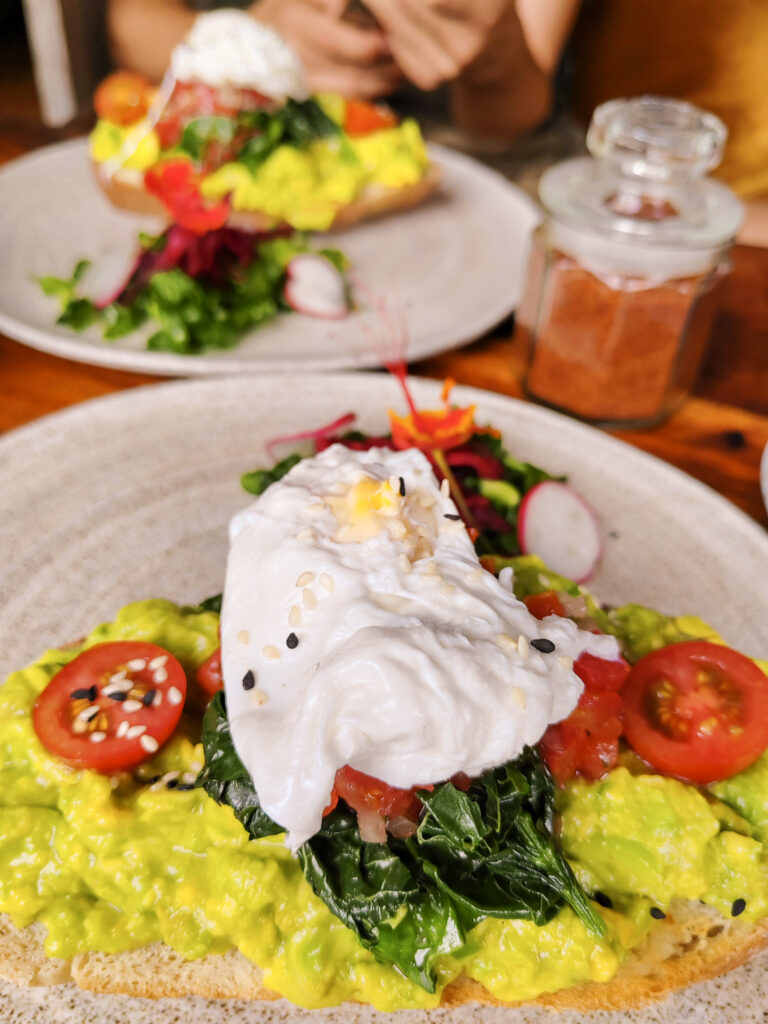
Ubud’s café scene is one of the best in Southeast Asia — a mix of jungle-view hideaways, stylish co-working cafés, and plant-based restaurants serving dishes that look as good as they taste. Whether you’re starting the day with a colorful smoothie bowl, sipping locally roasted coffee, or lingering over brunch surrounded by greenery, Ubud makes slowing down feel delicious.
Many of these cafés focus on organic, vegan, and sustainable ingredients, reflecting the town’s creative, conscious spirit. Expect menus filled with smoothie bowls, avocado toast, vibrant salads, and coconut-based desserts — all plated like art.
💡 Insider tip: Most cafés open around 7–8 a.m. and fill up quickly by late morning. For the best photos (and quieter vibes), visit early when sunlight streams through the windows and the coffee aroma fills the air.
🍽️ Top Picks
- Clear Café – Known for its unique bamboo decor, peaceful vibe, and nourishing smoothie bowls.
- Sage Ubud – A cozy, plant-based café offering creative vegan comfort food and friendly service.
- Kafe Ubud – One of Ubud’s originals (and my personal favourite!) — perfect for brunch, coffee, and people-watching along Jalan Hanoman.
- Zest Ubud – A jungle-view favorite with raw desserts, wood-fired vegan pizzas, and a vibrant spiritual energy.
- Folk Pool & Gardens – Ideal for a lazy brunch by the pool, smoothies, and relaxed tropical vibes.
15. Jalan Goutama Ubud – The Food Street of Ubud
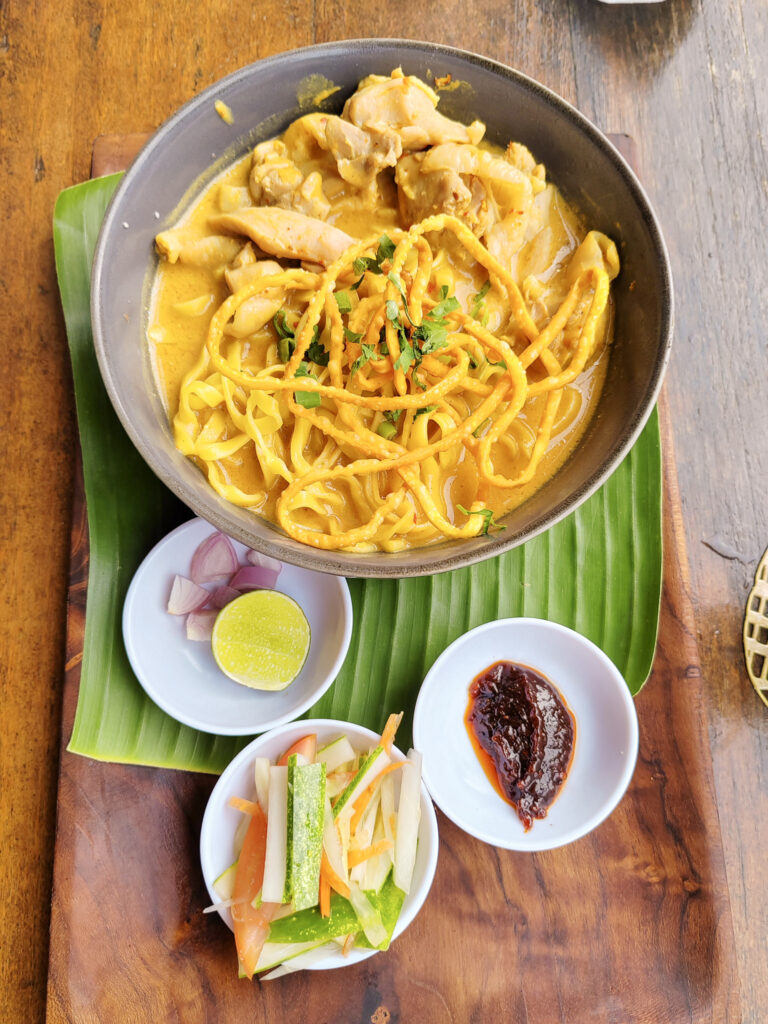
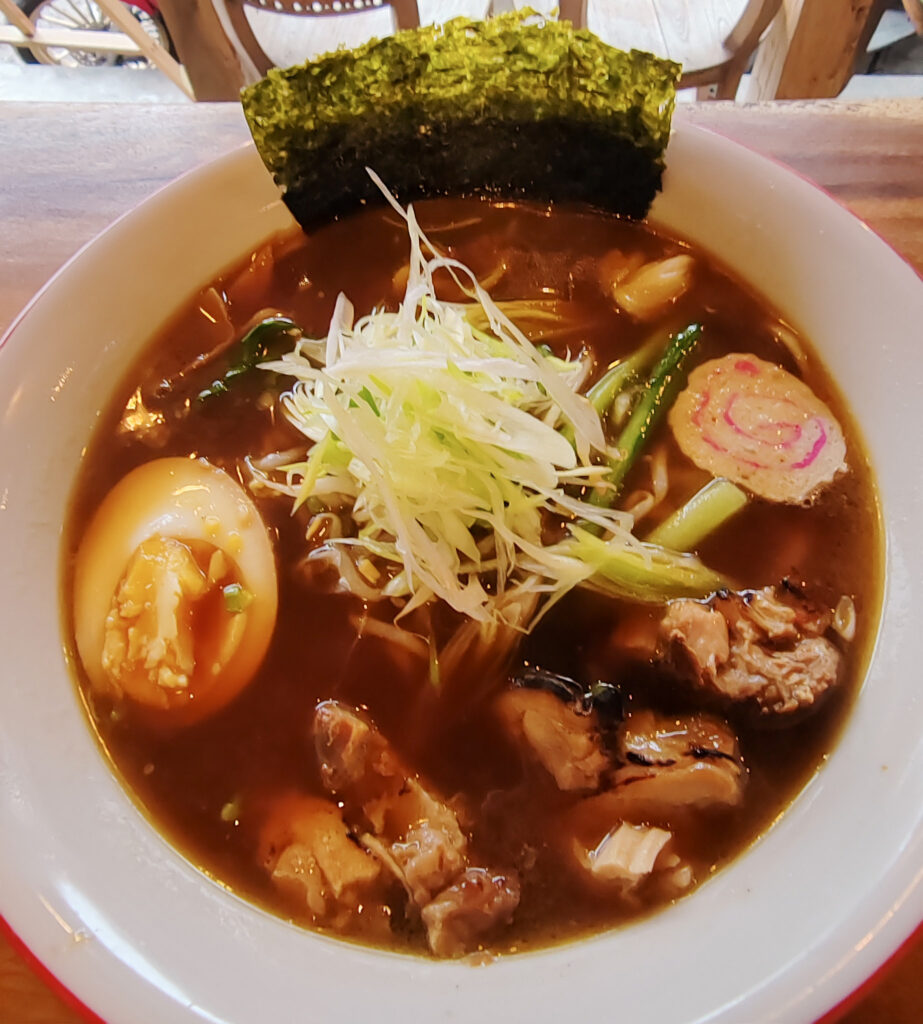
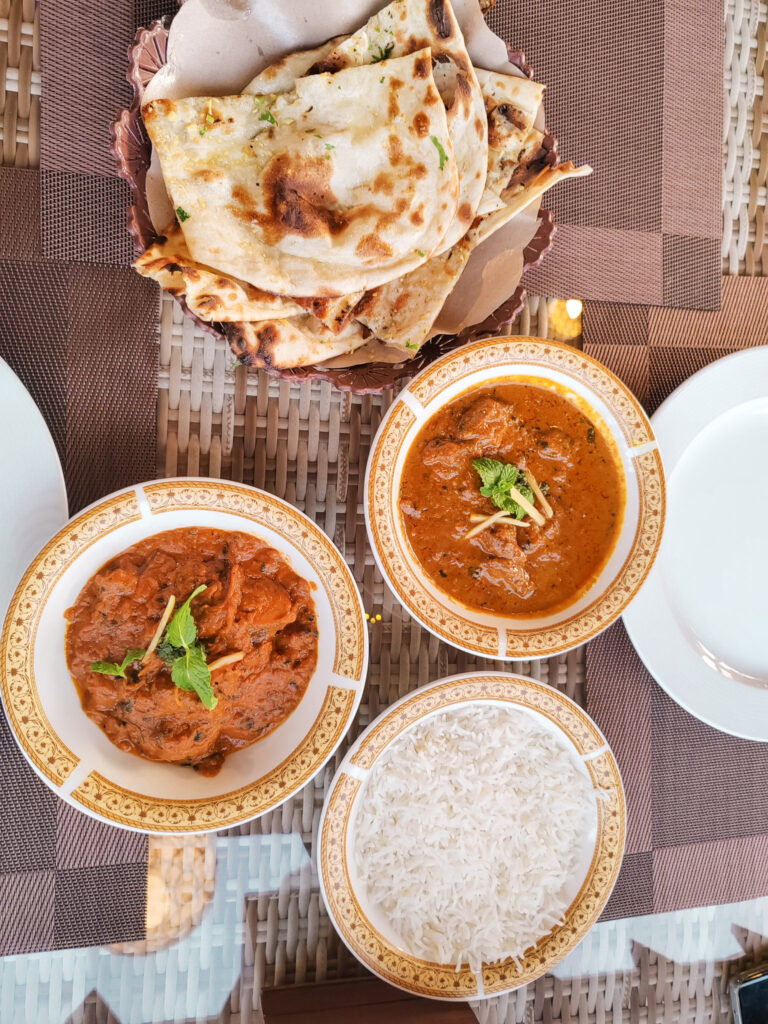
In the very heart of town lies Jalan Goutama, Ubud’s most famous food street — a short, colorful lane packed with restaurants, cafés, and warungs from around the world. By day, it’s calm and sun-dappled. By night, fairy lights glow above the cobblestones, live music drifts from open doors, and the air fills with the scent of lemongrass, pizza dough, and grilled satay.
Here you can sample dishes from every corner of the globe — Balinese curries, Italian pasta, Thai stir-fries, Latin fusion plates, and vegan feasts. It’s the perfect place to wander without a plan, following your senses from one kitchen to the next. Whether you sit on a candlelit terrace or grab a seat at a lively bar, every meal on Jl. Goutama Ubud Food Street feels like part of the island’s creative rhythm.
💡 Insider tip: Go after sunset — the street is pedestrian-friendly and comes alive with lights and music around 6:30 p.m. Most restaurants here don’t take reservations, so arrive early if you want an outdoor table.
🍽️ Top Places to Try
- Melting Wok Warung – Fusion curries and friendly local hosts — a true Ubud favorite.
- L’Osteria Ubud – Homemade pasta, good wine, and a warm Italian vibe.
- Kebun Bistro – Mediterranean flavors with Balinese flair.
- Pica South American Kitchen – Lively Latin energy and creative plates.
- Casa Luna – A long-loved Ubud institution perfect for dinner and cocktails.
🍸 Recommended experience:
Join a Ubud Traditional Night Market Food Tour — taste local specialties, meet friendly chefs, and soak in the lively night atmosphere.
*Affiliate note: Some links may be affiliate — booking through them helps support my work at no extra cost to you. 💛*
16. Ubud Nightlife & Evening Spots
When the sun dips behind the jungle hills, Ubud comes alive in a softer way. Instead of neon lights or loud clubs, nights here hum with gentler music, glowing lanterns, and the scent of incense floating through warm evening air. It’s a kind of nightlife that fits perfectly with Ubud’s spirit — soulful, slow, and full of charm.
You’ll find live acoustic music echoing through cozy bars and garden cafés, rooftop lounges serving cocktails under the stars. Night markets where locals sell satay, handmade jewelry, and sweet coconut pancakes. Jalan Goutama and Jalan Monkey Forest are the most atmospheric areas to wander after dark — close enough to everything, yet still relaxed.
For a dose of culture, nothing compares to watching a traditional Legong Dance or Kecak Fire Show, where hypnotic chants and graceful movements bring Bali’s mythology to life.
And if you’re craving something quieter, head to a rooftop bar for a glass of wine overlooking the jungle, or end your evening with herbal tea in a candlelit garden café — the perfect ending to a day in Bali’s creative heart.
💡 Insider tip: Most live music starts around 7:30 p.m., with mellow jazz, acoustic, or Balinese fusion. Arrive early to grab a seat — the best spots fill fast! For a cultural evening, catch a Legong Dance performance at Ubud Palace or the Kecak Fire Dance.
🌺 Recommended Evening Spots
- CP Lounge – Laid-back garden bar with cocktails, and live music.
- Laughing Buddha Bar – Iconic spot for nightly bands and happy-hour energy.
- The Night Rooster – Stylish cocktail bar above Locavore, creative drinks with local twists.
- No Más Bar – Cozy lounge for live entertainment every night.
- Ubud Night Market – Late-night bites, desserts, and souvenirs from local vendors.
Planning drinks while you’re here? My Drinking Alcohol in Bali guide covers prices, local rules and what tourists should know.
Where to Stay in Ubud
Whether you’re dreaming of a private jungle villa or a cozy guesthouse near Ubud’s cafés and temples, this town has something for every traveler and budget. The right area depends on what you value most — peace and nature, local life, or easy access to everything.
🏨 Where to Stay in Ubud (Best Areas & Hotels)
A clear, experience-based guide to the best neighbourhoods in Ubud — from Central Ubud’s walkability to Penestanan’s cafés, Nyuh Kuning’s calm, Sayan’s jungle luxury, and Tegallalang’s rice terraces. Find your perfect area and hotel — quickly, beautifully, and stress-free.
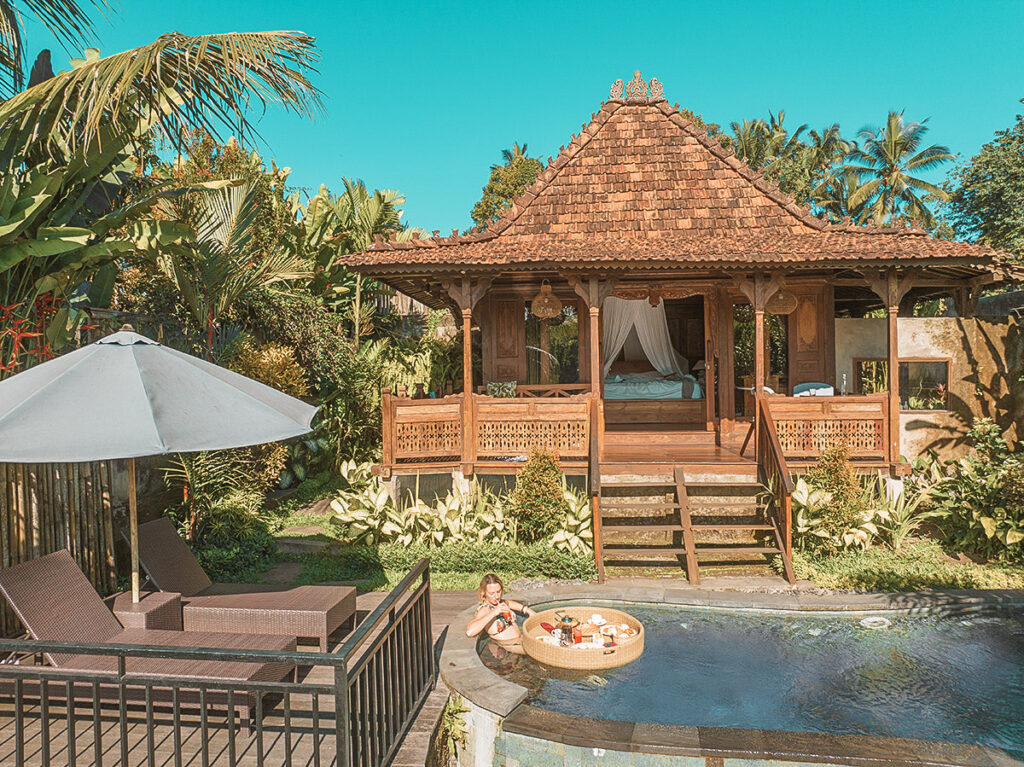
🌴 Jungle Retreats & Riverside Villas
For those seeking serenity, stay in one of Ubud’s luxury jungle retreats or riverside villas. These peaceful hideaways are surrounded by rice terraces, banana trees, and birdsong — perfect for couples, honeymooners, or remote workers craving tranquility.
Many feature private pools, open-air bathrooms, and panoramic views of Bali’s lush valleys. Popular areas include Sayan, Keliki, and Tegallalang, just a short drive from the center but worlds away in atmosphere.
💛 Personal Top pick: Mandana Ubud Villa – elegant design, infinity pool, and dreamy jungle views.
💡 Insider tip: For a peaceful stay, look for villas in Penestanan or Sayan, just outside the center — surrounded by rice terraces yet close enough to walk or scooter into town. If you prefer cafés and shops right at your doorstep, Central Ubud and Jalan Monkey Forest are perfect bases.

🛏️ Budget Guesthouses & Homestays
If you want to stay local and affordable, Ubud’s guesthouses and homestays offer genuine Balinese hospitality. Most are family-run, providing home-cooked breakfasts, tropical gardens, and insider tips on hidden gems nearby.
You’ll find great value in Central Ubud, Jalan Hanoman, and Jl. Raya Ubud, where you can walk to markets, cafés, and yoga studios.
💛 Personal Recommendation: Khun Khun Guesthouse – comfortable rooms, kind hosts, and unbeatable location for exploring on foot.
💡 Insider tip: If you plan to stay longer than a week, ask your host directly for a discount — most villas and guesthouses in Ubud offer reduced rates for extended stays, especially in the rainy season (Nov–Mar).
📍 Best Areas to Stay in Ubud
Choosing the right neighborhood can make all the difference. Here’s a quick guide to the best areas in Ubud depending on your travel style:
- Central Ubud – perfect for first-timers; walking distance to Ubud Palace, cafés, and art markets.
- Penestanan – artistic and peaceful, full of boutique guesthouses and local studios; ideal for yoga lovers.
- Nyuh Kuning – green village near the Monkey Forest with charming paths, organic cafés, and quiet atmosphere.
- Sayan & Kedewatan – luxurious and scenic, famous for jungle-view villas overlooking the Ayung River Valley.
🏡 Find your perfect stay in Ubud:
Compare prices and reviews on this interactive Ubud accommodation map — from boutique resorts and riverside villas to local homestays and jungle lodges.
*Affiliate note: Some links may be affiliate — booking through them helps support my work at no extra cost to you. 💛*
💡 Practical Tips for Traveling to Ubud, Bali
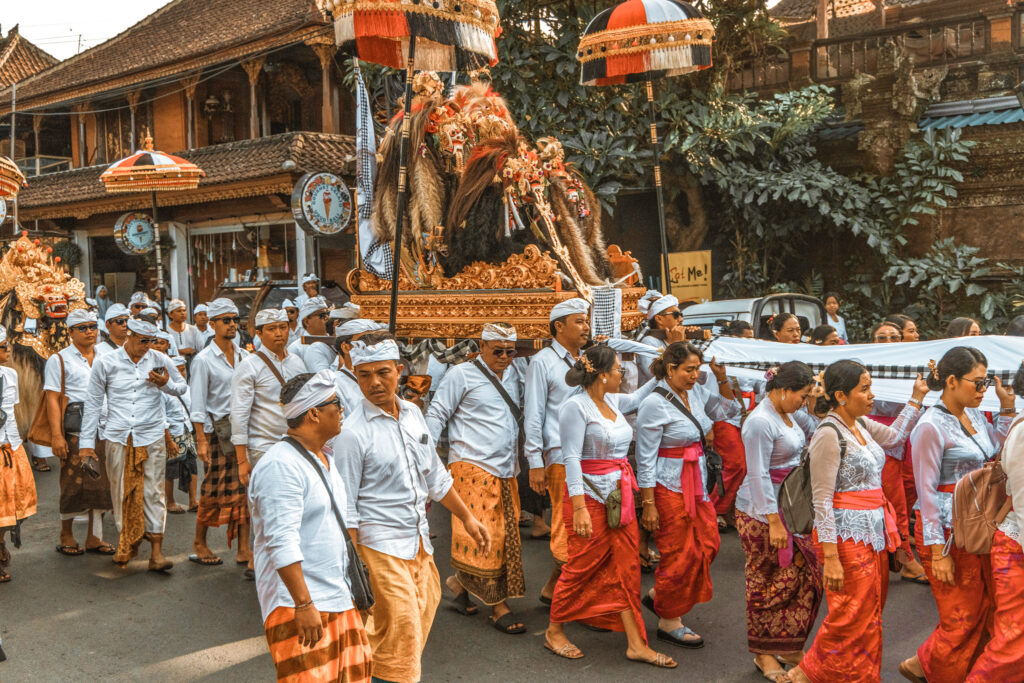
Ubud may be known for its calm and creativity, but a few insider insights can make your stay even smoother. Whether you’re coming for adventure, culture, or slow travel, these quick tips will help you experience the best of Bali’s heart.
🌤️ Best Time to Visit
April to October (dry season) is perfect for sunny days, outdoor adventures, and clear skies — ideal for trekking Mount Batur, exploring temples, or relaxing by the pool.
November to March (rainy season) brings fewer crowds, greener landscapes, and Bali’s most spectacular waterfalls — making it a magical time for photographers and peace seekers.
Visiting during the wet season? Read my full guide to Bali in rainy season for what the weather is actually like.

🧭 How to Get to Ubud from Bali Airport
Getting to Ubud from Ngurah Rai International Airport (Denpasar) is easy, but the journey can take anywhere from 1.5 to 2 hours, depending on traffic. The road winds through the southern towns and lush central hills, giving you a first glimpse of Bali’s beauty.
Private Transfer (Best Option):
Book a private airport transfer for a smooth, stress-free arrival — your driver will meet you at the terminal, help with luggage, and take you directly to your hotel in Ubud. It’s comfortable, reliable, and costs around IDR 300,000–400,000 ($15–25).
Taxi or Grab:
You’ll find official taxis outside the terminal, but rates can vary. For a more transparent price, use Grab (Bali’s ride-hailing app) — it’s convenient and usually cheaper.
💡 Insider tip: Avoid touts inside the airport — politely decline and walk to the official taxi counter or pre-book a driver online. Arriving before 3 p.m. is ideal, as heavy traffic between Denpasar and Ubud can double travel time after sunset.
Shuttle Bus (Budget Option):
Several companies run shared shuttles from Kuta, Canggu, or the airport to Ubud. It’s the most affordable choice if you’re traveling solo and don’t mind a slower ride.
🛵 Getting Around
Renting a scooter gives you the most freedom to explore Ubud’s rice fields, cafés, and hidden temples at your own pace. For longer trips, use Grab (Bali’s local ride-hailing app) or hire a private driver for a full-day tour — it’s surprisingly affordable and the easiest way to see the island safely.
🙏 Cultural Etiquette
- Always dress modestly when visiting temples — cover your shoulders and knees.
- Never step on or over canang sari (daily offerings) placed on the ground.
- Use your right hand to give or receive items, as the left hand is considered impolite.
- A friendly smile goes a long way — Balinese people deeply value kindness and respect.

🚿 Tap water in Ubud is not safe to drink, even in hotels — always use bottled or filtered water.
Learn how to stay hydrated and eco-friendly in this Bali tap water safety guide.
🎒 What to Pack for Ubud
Packing for Ubud is all about staying comfortable, light, and respectful of the local culture. Days are warm and humid, so bring breathable clothing, comfortable sandals or sneakers for temple visits and rice-field walks, and a light rain jacket if you’re traveling between November and March.
A sarong is essential — you’ll need it to enter temples — along with a reusable water bottle to stay hydrated and reduce plastic waste. Evenings can invite a few mosquitoes, so pack repellent or citronella balm. And don’t forget a Type C/F power adapter for your electronics, plus a small daypack for carrying water, sunscreen, and your camera while exploring Ubud’s markets and jungle trails.
💡 Insider tip: You don’t need to overpack — laundry services in Ubud are quick and affordable, with most guesthouses offering same-day wash and fold. Pack light, rewear your favorites, and save space for souvenirs from the art market.
Ubud Itinerary Ideas
You can see Ubud’s main highlights in 3 days, but if a friend asked me how long to stay, I would recommend 5 days.
That gives you enough time for temples, waterfalls, the Monkey Forest, Mount Batur or rafting, while still leaving room for the side of Ubud I enjoy most — slow mornings, yoga, cafés, spa afternoons and evenings without a packed schedule.
If you have a full week, even better. You can use the extra days for North Bali, workshops, more temples and a little more time simply living in Ubud rather than rushing through it.
I’ve put together a complete 3, 5 and 7-day Ubud itinerary, with the exact order I would do everything, alternative activities and booking links for each day.
→ Read my complete Ubud Itinerary: 3, 5 or 7 Days

Ubud is more than just a destination — it’s an experience that stays with you forever. Whether you’re exploring waterfalls, indulging in a floating breakfast, or practicing yoga in the jungle, Ubud has something magical for everyone.
FAQ Ubud
Most travelers spend 2–4 days in Ubud to explore temples, rice terraces, and markets at a relaxed pace.
If you prefer slow travel or wellness experiences, plan for 5–7 days.
The town center is walkable, with cafés, shops, and yoga studios close together.
For attractions like Tegalalang Rice Terraces or Kanto Lampo Waterfall, rent a scooter or hire a private driver.
Ubud is Bali’s cultural and spiritual heart, famous for temples, yoga retreats, Balinese art, lush landscapes, and vibrant local food.
The dry season (April–October) brings sunshine and clear skies, perfect for exploring.
The rainy season (November–March) offers lush landscapes, dramatic waterfalls, and fewer crowds.
May and September are ideal shoulder months.
Ubud is about 1.5–2 hours from Ngurah Rai International Airport.
The easiest way is to book a private transfer; budget travelers can use Grab or shared shuttles.
No — tap water in Bali isn’t safe to drink.
Always choose bottled or filtered water, and use it for brushing your teeth.
Many cafés and hotels offer refill stations to reduce plastic waste.
Pack light, breathable clothing for warm days and a light layer for evenings.
Bring a sarong for temples and dress modestly (cover shoulders and knees).
Comfortable sandals or sneakers are perfect for walking.
Ubud fits any budget — from luxury jungle villas to affordable homestays and local warungs.
Eating local and staying in family-run guesthouses helps keep costs low.
Absolutely! Ubud is safe and welcoming for solo travelers (many classes and cafés), and romantic for couples with spas, villas, and jungle views.
They offer different vibes:
Ubud is ideal for nature, culture, and wellness,
while Seminyak and Canggu are better for beaches, surfing, and nightlife.
Many travelers combine both for the full Bali experience.
✨ Read Next
Planning more of your Bali trip? These guides will help with where to stay, what to eat, when to visit and what to explore beyond Ubud. 🌺
🌴 Plan Your Bali Trip
Ready to turn your Bali dreams into reality? Here are my favorite trusted resources — all personally tested and loved from my own travels.
- ✈️ Flights to Bali (DPS) – Search best flight deals →
- 🏨 Where to Stay – Find hotels & villas → or explore on Interactive map →
- 🚗 Getting Around – Rent a car with DiscoverCars →
- 🧘 Tours & Experiences – Book Bali tours on GetYourGuide →
- 🌍 Travel Insurance – Get a quote with VisitorCoverage →
- 📱 Stay Connected – Buy a Bali eSIM on Airalo →
💡 Some of these are affiliate links, meaning I may earn a small commission — at no extra cost to you. It helps me keep creating detailed, independent travel guides. Thank you for your support 💛
Did you know? Some of the links on this page are affiliate links. That means if you book or buy something through them, I may earn a small commission — at no extra cost to you.
It helps me keep creating detailed, independent travel guides and share new stories from the road.
Thank you so much for your support! 🩷


