
Sigiriya likes to appear slowly. First, it’s just a flat line on the horizon, then, as your car or tuk-tuk rolls past rice fields and little corner shops, this huge block of rock suddenly rises out of the jungle, with birds circling the top and morning mist caught around its edges. Down at ground level, the mood is gentler: sandy lanes, lakes rimmed with lotus, kids cycling to school, and the occasional monkey watching you eat breakfast. This is Sigiriya, and that rock is Lion Rock – the reason most people first pin this place on their map.
For a long time, Sigiriya had a reputation as a one-night stop with “one dusty road and three restaurants”. That version of Sigiriya doesn’t really exist anymore. I stayed here for five days, and it felt more like a small, easy-going travel hub: guesthouses tucked into the palms, new cafés and bakeries, a wider choice of midrange hotels, and enough to do that you don’t feel like you’re just killing time between rock climbs. This is where people come for Lion Rock, of course – but also for sunrise hikes on Pidurangala, quieter viewpoints like Mapagala, lakes, village walks, safaris and day trips deeper into Sri Lanka’s Cultural Triangle.
Lion Rock is expensive, and the ticket price can be a shock if you’re travelling on a budget – but you absolutely don’t have to climb it to enjoy Sigiriya. In this guide I’ll walk you through what’s changed in recent years, how to choose between Lion Rock, Pidurangala and Mapagala (or combine them), where to stay and eat, and how to use Sigiriya as a base for Dambulla, Polonnaruwa, safaris and more – with honest, practical notes from my own five days on the ground here.
🌸 Plan Your Sigiriya Trip
These are the exact tools and bookings I use myself when travelling Sri Lanka – feel free to open a few tabs and build your Sigiriya base while you read.
Some of the links above are affiliate links – at no extra cost to you, they help support this blog and all the free guides you’re reading.
Sigiriya at a Glance
Sigiriya is right in the middle of Sri Lanka’s Cultural Triangle, surrounded by Dambulla, Habarana and Polonnaruwa. On the map, it looks like a simple dot between bigger names, but on the ground, it feels like a small jungle town wrapped around that huge rock and a handful of lakes.

It’s a great base if you’re a first-timer to Sri Lanka, a culture and history lover, a sunrise chaser or a slow traveller who prefers staying a few nights instead of repacking every morning. You can climb Lion Rock, hike Pidurangala or Mapagala, visit cave temples and ruins, go on an elephant safari, and still come back to the same guesthouse pool at the end of the day.
Most people stay 2–3 nights in Sigiriya: long enough to do one or two rock climbs, Dambulla or Polonnaruwa, and at least one lazy afternoon by the lake or pool. If you’re really short on time, you can squeeze it into a single night, but it will feel like a box-tick rather than a pause.
Older guides still describe Sigiriya as a one-street village with a couple of restaurants. That used to be closer to the truth. Now there are more cafés, bakeries and midrange hotels, a few “Instagram cafés” mixed in with simple rice-and-curry spots, and a generally easier setup for travellers who want to stay more than one night without feeling stuck.
📍 Sigiriya Snapshot
Nearest hubs
Dambulla (buses), Habarana (train and junction town), plus easy road links to Kandy and Trincomalee.
Elevation & climate
Lowland and hot year-round – expect strong sun, high humidity and very warm midday temperatures.
Wi-Fi & SIM
4G signal is generally good around town. Most guesthouses offer Wi-Fi; I travel with an eSIM and a local SIM as backup.
2026 update
More cafés, bakeries, ATMs and midrange hotels than older blog posts suggest – Sigiriya now works well as a 2–3 night base.
How Sigiriya Has Changed (and Why Older Blog Posts Feel Outdated)
If you’ve been researching Sri Lanka for a while, you’ve probably seen Sigiriya described as a place you “have to” stop for Lion Rock, but not somewhere you’d actually want to stay. The classic version is always the same: one dusty road, three guesthouses, nothing to do once you’ve climbed the rock. That might have been close to the truth a decade ago, but it doesn’t match what Sigiriya feels like in 2026.

When I stayed here for five days, it felt more like a small, relaxed travel hub than a sad overnight stop. There are still sandy lanes, palm trees and roadside fruit stalls – but now they sit alongside new guesthouses and boutique stays, cafés and tea shops, simple bakeries, smoothie-bowl cafés, massage places and small Ayurveda centres, plus more midrange hotels with pools and jungle views. You can climb Lion Rock at sunrise, wander through a spice garden, book a massage, sit with a pot of tea on a quiet terrace, or join one of those gentle “village life” tours.

What’s also changed is the logistics. It’s easier to arrange day tours, safaris, private drivers and transfers directly from Sigiriya, more places accept card payments, and there’s simply more choice – of food, stays and experiences – than most older guides mention. You can now base yourself here for 2–3 nights and mix rock climbs with Dambulla, Polonnaruwa, elephant safaris, spice farms, Ayurveda treatments and slow lake walks, without feeling like you’re killing time.
That’s why so much content about Sigiriya feels slightly “off”: the village has quietly grown up, but the internet hasn’t fully caught up yet. I honestly expected Sigiriya to be a quick “see it and leave” stop – and was pleasantly surprised by how much I wanted to stay.

From One Dusty Street to a Small Travel Hub
When you arrive in Sigiriya now, you can roughly think of it in three little zones rather than one vague “strip”:
- The main road: this is where you’ll see most signboards for guesthouses, tour desks, tuk-tuk drivers, rice-and-curry places, kottu spots and simple bakeries. It’s still low-rise and a bit chaotic, but it’s where you’ll grab snacks, ATMs and quick dinners after a hike.
- The side lanes and backroads: follow almost any lane away from the main road and you end up in greener, quieter pockets with small homestays, “jungle view” rooms, pools and rice fields. A lot of the nicer midrange and boutique stays are tucked in here, so don’t panic if your hotel doesn’t look central on the map – that’s often a good thing.
- Around the lakes: a little further out you’ll find guesthouses and small hotels near the water, with softer views, birdlife, and more of that countryside feel. These aren’t ideal if you want to walk everywhere, but they’re lovely if you don’t mind using tuk-tuks and want quieter evenings.
So instead of one sad road with nothing to do, you now get a compact village with a few distinct pockets – enough variety to actually choose your vibe: practical and central, green and quiet, or lakeside and dreamy.


💭 Is Sigiriya Still Worth Visiting in 2026?
Short answer: yes. Sigiriya makes the most sense when you treat it as a 2–3 night base instead of a rushed one-night stop. That gives you time for one big rock climb (Lion Rock or an alternative viewpoint), another sunrise or sunset on Pidurangala or Mapagala, and at least one slow afternoon by a lake or pool.
You’re not just coming here to tick off a staircase. In a small area you get ancient history on the rocks and cave temples, wide-open jungle views, nearby wildlife on elephant safaris, plus spice gardens, Ayurveda spots and village life just outside town. For most first-time trips to Sri Lanka, Sigiriya still earns its place on the map.
Where is Sigiriya & How It Fits Into Your Sri Lanka Route
On the map, Sigiriya sits in the middle-north of Sri Lanka, roughly between Kandy, Dambulla, Habarana, Polonnaruwa and Anuradhapura. This whole area is often called the Cultural Triangle – a cluster of ancient cities, cave temples, rock fortresses and endless rice fields that connects much of the island’s history in one region. Sigiriya itself is the smallest name on the list, but it’s the place with the most dramatic silhouette: that huge rock rising straight out of the jungle.

In practical terms, Sigiriya is an easy stop between the beaches, the hill country and the east coast. Buses and private drivers usually funnel through Dambulla or Habarana, then peel off to Sigiriya for the last stretch. That makes it a really handy “pause point”: you can come up from the south coast or Colombo, drop in after Kandy or Ella, or swing across from the east coast (Trincomalee / Nilaveli / Passikudah) without needing any strange detours.

When I map out Sri Lanka trips, Sigiriya almost always becomes the “culture anchor” in the middle of the route – the place where you swap sea or tea fields for rocks, ruins, elephants and lakes, then decide whether you want to drift back to the beaches, sink deeper into temples and history, or head for the quieter east.
Sigiriya in the Classic Cultural Triangle
When people talk about Sri Lanka’s Cultural Triangle, they usually mean a rough loop between Kandy, Dambulla / Sigiriya, Polonnaruwa and Anuradhapura. Kandy holds the famous Temple of the Tooth and a more “city” feeling; Anuradhapura is all about huge white stupas and one of the most important sacred cities in the country; Polonnaruwa is the quieter ruined capital with stone Buddhas and crumbling temples you can cycle between. Sigiriya and nearby Dambulla sit right in the middle of all of that – close enough to reach everywhere, small enough to still feel like the countryside.


For an overnight base, Sigiriya is usually the most scenic choice: you wake up with Lion Rock on the horizon, rice fields and lakes nearby, and easy access to sunrise hikes, cave temples and safaris. Dambulla (about 20–30 minutes away) feels more like a busy junction town – great for buses and local markets, less pretty for slow evenings. Habarana leans more resorty, with bigger hotels and a good position for safaris, but without the “rock in your backyard” feeling.
If you want the classic Cultural Triangle experience with a bit of jungle magic built in, Sigiriya is the spot that makes most sense to actually sleep.
How Sigiriya Fits Into Most Routes (In One Glance)
Most Sri Lanka routes just drop Sigiriya into the middle of a bigger loop. It usually plays the role of your “rocks + ruins + elephants” pause between beaches and tea fields:
- Beach → Culture: South Coast → Kandy → Sigiriya → Trincomalee or back to Colombo
- Hill Country → Culture: Ella / Nuwara Eliya → Kandy → Sigiriya → East Coast or Colombo
- Culture-heavy: Colombo → Anuradhapura → Sigiriya → Polonnaruwa → Kandy
If you already have a rough plan in mind, Sigiriya almost always slots in as your Cultural Triangle base for a couple of nights – you just decide whether you’re arriving from the sea, the hills, or another ancient city.

How Many Days in Sigiriya?
Sigiriya is one of those places that looks like a simple day trip on the map, but feels very different once you’re actually there. Between Lion Rock, Pidurangala or Mapagala, Dambulla Cave Temple, safaris, lakes and slow village evenings, trying to cram everything into a single night can start to feel like a race.
If you’re really short on time, you can get away with 1 night in Sigiriya – arrive in the afternoon, hike for sunset, climb the rock at sunrise and move on. It works, but it’s intense, and you won’t see much beyond staircases and your hotel. For most first-time trips, 2 nights is the sweet spot: enough to do one big rock climb, one sunrise or sunset viewpoint, and add either a cave temple or a safari without rushing every hour of the day.


If you like to travel slower, love photography, or want to mix a bit of Ayurveda, massages, spice gardens and village walks into your culture days, 3 nights in Sigiriya starts to feel really good. That’s when you can spread things out, catch your breath between climbs, and have a couple of those quiet mornings with coffee and Lion Rock in the distance instead of dashing to the next bus.
⏱️ How Many Nights in Sigiriya? (Quick Answer)
- 1 night – “tick the box”: arrive, hike once for sunset or sunrise, climb one rock and move on. Works if you’re very tight on time, but feels rushed.
- 2 nights – “see the highlights without rushing”: one big rock climb (often Lion Rock), one sunrise or sunset viewpoint (Pidurangala or Mapagala), plus either a cave temple or a short safari.
- 3+ nights – “slow, meaningful Cultural Triangle base”: space to combine rocks, Dambulla, a safari or Polonnaruwa, and still have quiet mornings, pool time and village walks.
One Night (Express Version)

If you only have one night in Sigiriya, you’ll need to treat it like an express stop. The classic flow looks something like this:
You arrive in the early afternoon, drop your bags, grab a quick late lunch or tea, and head straight out for a sunset hike – usually Pidurangala, because you get that iconic view of Lion Rock glowing in the last light. You come back down in the blue hour, eat somewhere simple on the main road, sleep, and set your alarm again.
The next morning you’re up very early for Lion Rock at sunrise (or as close as opening hours allow), climb, explore the ruins at the top, and come back down before the worst heat and crowds. Then it’s breakfast, shower, check-out – and straight on to your next stop.
✅ Pros – 1 Night in Sigiriya
- You still see the main highlights (Lion Rock + one viewpoint).
- Works if you have a very tight schedule or packed itinerary.
- Simple logistics: arrive, hike, sleep, climb, move on.
⚠️ Cons – 1 Night in Sigiriya
- Feels very back-to-back – almost no downtime.
- You miss lakes, village walks, Dambulla, safaris and slower evenings.
- If you arrive tired or the weather turns, the plan falls apart quickly.
Two Nights (Recommended for Most)
With two nights in Sigiriya, everything suddenly feels more human. You’re not trying to squeeze sunrise, sunset and a big rock climb into a single 24-hour window, and you actually have space to notice the lakes, the light and the village in between.

A very relaxed version looks like this:
- Day 1: arrive around midday or early afternoon, check in, have lunch or a tea, and head out for a sunset hike on Pidurangala or Mapagala. Come back down in the blue hour, dinner on the main road, sleep.
- Day 2: early wake-up for Lion Rock (or your chosen main rock) before the worst heat and crowds, late breakfast or brunch, then a slow afternoon: pool time, a lake walk, a massage, a small Ayurveda treatment or a simple village / spice garden visit.
- Day 3: after breakfast you move on – towards Kandy, the east coast, the hill country or back to the beach – without feeling like Sigiriya was just a blur of stairs.
If you’d rather skip Lion Rock for budget or crowd reasons, two nights also works perfectly for Pidurangala or Mapagala + Dambulla Cave Temple + one short safari instead. You still get the mix of views, temples and wildlife, just without the most expensive ticket.
✅ Pros – 2 Nights in Sigiriya
- Enough time to see the highlights without rushing.
- Space for one big rock climb, one viewpoint and one extra activity (Dambulla, safari, lake walk, massage).
- You actually get an evening or morning to feel the place, not just pass through.
⚠️ Cons – 2 Nights in Sigiriya
- Still a fairly full schedule if you try to fit in Lion Rock, a viewpoint, Dambulla and a safari.
- If you prefer ultra-slow travel, it may feel like you’re leaving just as you settle in.
3+ Days in Sigiriya (Slow Base in the Triangle)
Once you give Sigiriya 3 or more days, it stops being “that rock stop” and starts feeling like an actual base. This is where you can breathe a little, space things out and not care if one sunrise gets clouded over – because you still have another morning.

A slow version might look something like this (you can shuffle days around):
- Day 1: arrive, check in, lazy lunch, sunset viewpoint (Pidurangala or Mapagala), dinner on the main road.
- Day 2: Lion Rock (or your main rock) early, long breakfast/brunch, afternoon by the pool or lake, maybe a massage or small Ayurveda treatment, sunset wander.
- Day 3: Dambulla Cave Temple in the morning, snack or lunch in town, easy afternoon walk or tea shop time, quiet evening.
- Day 4: Elephant safari (Minneriya / Kaudulla / Hurulu Eco Park, depending on season) or a day trip to Polonnaruwa, back to Sigiriya for one last dinner.
- Day 5: slow pack, one more coffee with the rock in the distance, then move on when you’re actually ready.
You don’t have to do all of that, of course. With 3+ days you can pick and choose: maybe you skip Lion Rock and focus on Pidurangala + Mapagala, Dambulla and a safari, or you stay closer to the lakes and spice gardens and only climb once. When I stayed for five days, what I liked most was this feeling that I didn’t have to rush every viewpoint; there was always another soft morning or golden hour coming.

✅ Pros – 3+ Days in Sigiriya
- Plenty of time to spread things out – no need to stack sunrise, sunset and big climbs.
- Easy to combine rocks, Dambulla, a safari, Polonnaruwa and still have empty mornings or pool time.
- Perfect if you like slow travel, photography, Ayurveda or just having a “home base” for a few days.
⚠️ Cons – 3+ Days in Sigiriya
- Not ideal if you only have a very short trip to Sri Lanka and need to prioritise beaches or hill country.
- A few extra days here means less time somewhere else, so it’s best for longer routes or slow travellers.
When to Visit Sigiriya (Seasons, Heat & Best Time of Day)
Sigiriya sits in Sri Lanka’s dry-zone lowlands, so the weather here is a little more stable than on the coasts – but it’s also hotter and more exposed. You don’t get the same dramatic swings between “perfect beach season” and “solid rain week”, but you do get a lot of strong sun, heavy humidity and short, moody showers that roll through and disappear again.

Two different monsoon systems brush past this part of the island, which is why you’ll see slightly conflicting advice online. In practice, that means you can visit Sigiriya most of the year if you’re flexible and don’t expect blue skies every hour. The bigger question isn’t so much which month you choose, but whether you’re ready for climbing in the heat, planning your rock days for the coolest hours, and having a backup plan (tea shops, massages, Dambulla caves) for the odd rainy spell.
From a traveller’s point of view, I’d think of Sigiriya’s weather as: warm to very hot, often sunny, sometimes stormy – and plan your climbs for early mornings or late afternoons rather than worrying too much about finding the “perfect” week.
Weather & Seasons Around Sigiriya
The main thing to know about Sigiriya’s weather is that it’s warm, humid and climbable most of the year. Daytime highs usually sit around 28–32°C (82–90°F), nights drop to roughly 23–25°C (73–77°F), and humidity often lives in the 70–85% range. You don’t usually get week-long rain like on some coasts, but you do get strong sun, sticky air and sudden heavy showers that blow in, soak everything and move on.

Instead of obsessing over exact monsoon dates, it’s easier to think in four loose seasons:
- Jan–Mar: generally drier and sunnier, with warm days and more stable conditions – this is the classic “safe” time to visit.
- Apr–Jun: feels hotter and heavier, with more thunderstorms in the afternoons and evenings; great skies and fewer crowds if you can handle the heat.
- Jul–Sep: still warm, with a mix of sun and cloud; often a good time for elephant safaris as water levels drop and animals gather near lakes.
- Oct–Dec: the wettest and most changeable stretch, with more frequent rain and storms; you can still come, but you’ll need flexible plans, good rain cover and a bit more patience.
Because of the humidity, the rock climbs feel hotter than the numbers suggest. Even on overcast days, the combination of steep steps, metal staircases and reflected heat from the rock can be intense – planning your climbs for early mornings or late afternoons matters more than finding the “perfect” week on a forecast app.
🌤️ Best Time to Visit Sigiriya – at a Glance
Think of this as a quick heatmap for the year in Sigiriya.
How to read it: each row shows one factor. Paler blocks mean softer / lower for that factor, deeper blocks mean stronger / higher: air temperature (cool → hot), rain (drier → wetter), humidity (lower → heavier), crowds (quieter → busier).
In short: it’s hot and humid all year. For the most stable weather aim for January–March. If you prefer fewer people and don’t mind heat and showers, April–June and September often feel like a sweet spot.
Best Time of Day for Each Rock
For all the rocks around Sigiriya, the rule is basically the same: go early or go late – never plan your main climb for midday. Between about 10:30 and 15:30 the sun is high, the rock radiates heat back at you, and those metal staircases turn into little ovens.

I’d time it like this:
- Do your “big” rock (often Lion Rock) as close to opening time in the morning as you can.
- Save your “viewpoint” rock (Pidurangala or Mapagala) for sunrise or golden hour / sunset, when the light is soft and the air is a bit kinder.
- Keep the middle of the day for shade, pools, tea shops, Dambulla caves, naps and massages, not more exposed climbs – your body will thank you.
☀️ Heat & Dehydration Warning
The climbs around Sigiriya are shorter than mountains, but the mix of steep steps, metal railings, exposed rock and high humidity can still hit hard – especially late morning and midday.
- Wear a hat or cap, high SPF sunscreen and light, breathable clothes that cover your shoulders.
- Carry at least 1–2 L of water per person for each climb; add electrolytes if you sweat a lot.
- Take it slow on the stair sections, use shade for mini breaks and don’t be afraid to pause if you feel dizzy or nauseous.
- Avoid planning your main climb for the hottest hours (roughly 10:30–15:30) whenever you can.
If you have heart, blood pressure or other health issues, talk to your doctor before your trip and be extra kind to yourself in the heat.
Sigiriya vs Pidurangala vs Mapagala – Which Rock is for You?


Around Sigiriya, you don’t just have “the rock” – you actually have three different rock experiences that all get mixed together in blog posts and Instagram captions. On the ground, they feel very different in terms of price, crowds, effort and vibe, so it’s worth choosing on purpose instead of just copying someone’s Reel.
Sigiriya Lion Rock is the famous one: a UNESCO-listed rock fortress with palace ruins on top, ancient frescoes, mirror walls and formal gardens at the base. It’s also by far the most expensive ticket, with the most rules and the biggest crowds – you’re paying for the archaeology, the history and the status as much as the view.
Pidurangala Rock is the classic sunrise hike just opposite Lion Rock. You climb through a little temple, scramble over rocks near the top, and then sit facing Lion Rock itself with the plains opening up behind it. The ticket is much cheaper, the hike feels a bit more adventurous, and the main reward is the postcard view of Sigiriya rather than the ruins.
Mapagala Rock sits a little further out and still feels half-forgotten in most itineraries. It’s free to access, quieter, with a more wild, DIY feel: fewer people, softer paths, stunning views of Lion Rock and 360-degree views of the surrounding plains, and a sense that you’ve stepped slightly off the script. There’s less infrastructure, so you need to be more confident with directions and timing, but you get a lot of atmosphere in return.
🪨 Sigiriya vs Pidurangala vs Mapagala – Quick Comparison
| Rock | Price* (foreign adult) | Time needed (return) | Difficulty | Best time of day | Vibe | Best for |
|---|---|---|---|---|---|---|
| Sigiriya Lion Rock | LKR 10,500 (≈ US$35) | ~3–4 hours incl. ruins, viewpoints & photo stops | Moderate many steps, exposed metal stairs | Early morning as close to opening as possible | UNESCO showpiece palace ruins, frescoes, formal gardens, big crowds | First-timers, history lovers, travellers with budget for a “once in a lifetime” site |
| Pidurangala Rock | LKR 5,000 | ~2–3 hours incl. hike, photos & a sit at the top | Moderate rock scramble near the summit | Sunrise or sunset pre-dawn start or golden hour | Viewpoint hike Lion Rock framed in front of you, more backpacker feel | Budget travellers, photographers, anyone who wants “the view” more than the ruins |
| Mapagala Rock | Free | ~2–3 hours depending on route & photo stops | Easy–moderate paths + gentle rock, more “DIY” feel | Morning or golden hour avoid harsh midday sun | Quiet & wild almost 360° plains views, very few people | Slow travellers, repeat visitors, anyone who likes off-the-script places |
*Prices can change quickly – always double-check current fees with your guesthouse or at the ticket counter.
Recommended Combinations
If you’re not planning to climb three different rocks on one short trip (fair), here’s how I’d pair them depending on your time, energy and budget:
- Short on time, bigger budget
Make Sigiriya Lion Rock your non-negotiable, then add a quick Pidurangala for either sunrise or sunset if you have the energy. If you’re truly exhausted or only have one climb in you, do Lion Rock only and enjoy the views of it from the ground the rest of the time. - On a tighter budget
Skip the Lion Rock ticket and focus on Pidurangala + Mapagala instead. You still get huge views of Lion Rock, sunrise or sunset light, and that quieter, wilder feel on Mapagala. Use the money you save for a safari or a day trip to Dambulla or Polonnaruwa. - Slow & curious (2–3+ nights in Sigiriya)
Spread things out: Lion Rock one cool morning, then Pidurangala or Mapagala on another day for a softer hike and a different perspective. Keep one midday free for Dambulla Caves, a massage, a pool afternoon or a little village-life tour, instead of trying to squeeze all the climbs into one sweaty day.
💭 My Honest Take
I used Sigiriya as a 5-day base, and that extra time changed how I see the rocks completely. With more than one morning to play with, there was no pressure to “do it all” in 24 hours and I could watch how the light and heat actually feel at different times of day.
If a friend came for the first time with a comfortable budget, I’d still tell them to do Lion Rock once – for the frescoes, the story and the feeling of standing on top of that famous fortress. I’d then pair it with one viewpoint rock (Pidurangala or Mapagala) on a separate sunrise or sunset, not on the same hot morning.
If someone is really watching their costs, I’d be honest and say: it’s completely valid to skip Lion Rock and pour your energy into Pidurangala, Mapagala and a good day trip instead. The views are still incredible, and you don’t walk away feeling like you “missed” Sigiriya – especially if you stay a couple of nights and let the area sink in slowly.
In other words: don’t climb rocks just to tick boxes. Choose the combo that fits your budget, heat tolerance and energy, and let Sigiriya be a base, not just a checkpoint.
Climbing Sigiriya Lion Rock
Climbing Sigiriya Lion Rock is the moment most people build their entire trip around – and for good reason. It’s not just “a viewpoint”: you’re walking through formal water gardens, past mirror-smooth rock walls and up into the remains of a 5th-century royal fortress, with jungle stretching out in every direction. The closer you get to the top, the more it feels like you’re peeling back layers of history, one staircase at a time.

From the ground Lion Rock can look a bit brutal in the heat, but for anyone with average fitness it’s very manageable if you time it well, take it slow and give yourself plenty of little pauses. Expect lots of steps, some narrow staircases and a bit of crowd shuffling, not technical hiking. The reward is the combination of story + setting: palace ruins under your feet, infinite green plains ahead, and that feeling of standing somewhere you’ve seen in photos for years.
Because I stayed in Sigiriya for five days, I could treat Lion Rock as one deliberate morning instead of a rushed checklist item – and that’s how I’d recommend you approach it too: as a slow, layered experience rather than another thing to “get done” between buses.


Sigiriya Lion Rock in a Nutshell
Long before it was an Instagram icon, Sigiriya was a 5th-century rock fortress and royal palace, built by King Kashyapa on top of an older Buddhist monastic site. The complex blends palace ruins, water gardens, frescoes and carved lion paws into one of Sri Lanka’s most impressive archaeological sites.
Today it’s recognised as a UNESCO World Heritage Site and a key piece of Sri Lanka’s cultural story – not just for the view from the top, but for its early urban planning, engineering and art wrapped around a single volcanic plug of rock.
Tickets, Opening Hours & New Rules
Sigiriya Lion Rock is run by Sri Lanka’s Central Cultural Fund, so the ticket system is a bit more formal than at smaller sites. The site is usually open daily from early morning until late afternoon, with ticket counters operating roughly from around 7:00 AM to late afternoon and last entry in the mid–late afternoon. Exact times can shift slightly, so I always double-check with my guesthouse or driver the day before.
The foreign adult ticket is one of the most expensive cultural site entries in Sri Lanka. You’re paying for access to the full archaeological complex: gardens, rock fortress, frescoes, Mirror Wall and the summit, plus the Sigiriya Museum, which is included in the same ticket.

You can buy tickets on-site at the official ticket office near the museum, or pre-order through the Central Cultural Fund e-ticket system, then show your voucher at the counter to collect the physical ticket. A passport is required only if you’re claiming certain reduced rates (SAARC discounts, student cards, residence visas); for a standard foreign ticket you usually won’t be asked, but I still carry mine.
Payment is in Sri Lankan rupees. Card terminals are increasingly common, but they’re not 100% reliable, so I’d go with enough cash for all tickets in your group, just in case the machine is down or the connection is slow.
Once you enter, your ticket is valid for a single entry that day only – there’s no popping out for lunch and coming back. Staff may check tickets again at key points on the rock (near the frescoes and Lion’s Paws), so keep it somewhere easy to reach, not buried at the bottom of your backpack. Photography is not allowed at the frescoes, and drones are prohibited in the site.
✨ Need to Know: Lion Rock Tickets
- 🕖 Opening hours: open daily from early morning until late afternoon. Ticket counters usually operate roughly around 7:00 AM–late afternoon, with last entry in mid–late afternoon (check locally for the current exact time).
- 🎟️ What’s included: one ticket covers the Sigiriya Rock Fortress + archaeological gardens + Sigiriya Museum.
- 🔁 Single entry only: once you exit the complex, there is no re-entry on the same ticket.
- 🧾 Keep your ticket handy: you’ll be asked to show it again at checkpoints on the way up (near the frescoes and Lion’s Paws).
- 💳 Payment: tickets are paid in LKR. Card is sometimes possible, but bring enough cash in case the machine or connection is down.
- 🛂 ID: passport is only needed if you’re claiming a discounted rate (SAARC, student, resident); for a standard foreign ticket it’s usually not checked, but it’s good to have it with you.
- 📵 Rules: no drones, and no photography is allowed at the frescoes section.
Route Overview & How Hard Is the Climb?

The classic route up Lion Rock is simple to follow: you enter through the formal water and boulder gardens, walk along broad paths and gentle ramps, then start climbing a mix of stone steps and metal staircases that wind up the rock. About halfway, you reach the fresco gallery and Mirror Wall, then continue to the famous Lion’s Paws terrace. From there, one final set of steeper metal stairs takes you to the summit plateau with palace ruins and wide views over the plains.

In real time, most people take roughly 3–4 hours for the whole visit: walking through the gardens, climbing up with photo stops, spending a bit of time on the top, and then slowly making their way back down. It’s not a technical hike, but it is a lot of stairs. If you can comfortably handle a few flights of stairs at home (and you’re sensible with breaks, water and timing), you should be fine.


Safety-wise, there are railings on the exposed sections and the staircases feel sturdy, but the combination of narrow steps, people stopping suddenly for photos, wind and heat means you still need to pay attention. Going slowly, using the handrails and stepping aside when you want to take pictures makes the climb feel much calmer – especially on the way down, when legs are more tired and the views are distracting.
🎒 What to Wear & Pack for the Lion Rock
Lion Rock is all about stairs, sun and humidity, so keep things light, breathable and practical.
- 👚 Clothing: airy T-shirt or light top that covers shoulders, plus light shorts or thin trousers you can move in.
- 🧢 Sun protection: hat or cap that won’t fly off in the wind, high SPF sunscreen and SPF lip balm.
- 👟 Shoes: trainers or sturdy sandals with grip. Skip flip-flops and anything slippery on metal stairs.
- 🙏 Modesty: no strict temple dress code on Lion Rock itself, but it’s still a village and cultural site – ultra-tiny shorts or bikini tops are better left for the pool.
- 💧 Water: at least 1–1.5 L per person in a refillable bottle; more if you’re sensitive to heat.
- 🥜 Snacks: a small energy bar, nuts or fruit so you’re not relying only on stalls near the entrance.
- 🩹 Nice-to-haves: small microfibre towel or bandana, a couple of plasters/blister patches, and a light rain layer in wetter months.
Best Time to Visit Lion Rock in a Day
If you remember just one thing about timing Lion Rock, let it be this: climb in the coolest light you can get.

For most trips, the sweet spot is as close to opening time as possible. Early morning means:
- cooler air and softer sun,
- slightly fewer people on the first staircases,
- better chance of moving at your own pace instead of shuffling in a hot queue.
A late-afternoon start can also be beautiful: the plains turn golden, the rock glows warm, and the light is gentler for photos. It’s still hot on the way up, but usually less brutal than midday, and the view often has a soft, hazy quality that suits Sigiriya.
The only time I’d really avoid for Lion Rock is the full middle of the day (roughly 10:30–15:30): the sun is high, the rock radiates heat back at you, and every metal staircase suddenly feels twice as long as it looks in photos. Save those hours for shade, lunch, the pool or the museum instead.
Is Lion Rock Worth the High Ticket Price?
Lion Rock is easily one of the most expensive tickets in Sri Lanka, and it’s normal to pause and wonder if it’s really worth it – especially when you see how much cheaper Pidurangala and Mapagala are.

For me, Lion Rock sits in the category of “once in a lifetime, do it properly or skip it without guilt”. If you:
- care about history, archaeology and stories,
- want to actually walk through the palace layout, see the frescoes and look down on the formal water gardens,
- and you’re already in Sigiriya with a reasonable budget,
…then yes, doing Lion Rock once feels worth it. It’s not just a view – it’s the mix of setting and human detail that makes it special.


If you’re on a tight budget, or you know you’re much more of a landscape/hiking person than a ruins person, it’s completely valid to skip Lion Rock and pour that money into Pidurangala, Mapagala, Dambulla, Polonnaruwa or a good safari instead. You can still get beautiful Lion Rock views without paying to stand on top of it.
In short: I wouldn’t climb it every trip, but I don’t regret paying for it once – and I’d still recommend it to first-time visitors who can afford it and actually enjoy cultural sites, not just photos.


🤫 Insider Tips: How to Avoid the Worst Crowds
- ⏰ Aim to be at the gate right around opening time, not an hour later. The difference in heat and crowd size is huge.
- 🚶♀️ On the way up, don’t stop too long at the very first viewpoints. Keep a steady pace, get past the slowest clusters, and enjoy those spots more calmly on the way down.
- 💧 Bring your own water. Stalls near the entrance and car park tend to charge more, and queues can form when groups arrive together.
- 📸 Save your big photo sessions for the gardens and the summit, where there’s more space to step aside without blocking the stairs.
- 🌤️ If you’re heat-sensitive, skip midday entirely. Do Lion Rock in the morning and leave your second rock (Pidurangala or Mapagala) for a separate sunrise or sunset.
Hiking Pidurangala Rock – Sunrise, Sunset & Temple Etiquette
Across the plain from Lion Rock, Pidurangala is the place everyone secretly comes for the photo: Sigiriya rising out of the jungle, mist hanging low, sky changing colour behind it. It feels less like an organised heritage site and more like a rocky viewpoint wrapped around an old monastery, where the path winds past Buddha statues, roots and boulders before opening out into that huge panorama.

Where Lion Rock is all about palace ruins and archaeology, Pidurangala is about the hike, the scramble and the view. The trail is shorter but a bit more playful: stone steps at the start, then a final section where you’re actually climbing over big rocks, using your hands and choosing your own line. It’s still manageable for most people with average fitness and decent shoes, but it feels wilder and more informal – especially if you go outside the absolute peak sunrise rush.
It’s also a place where temple etiquette really matters: the base of the hike passes through an active Buddhist temple and a reclining Buddha, and you need to dress and behave accordingly before you pop out onto the open rock.
Pidurangala in One Glance
✅ What Pidurangala Is
- An ancient Buddhist monastery with a temple, caves and a reclining Buddha at the base.
- A rocky viewpoint with one of the best panoramas of Sigiriya Lion Rock and the plains.
- A short, slightly adventurous hike + scramble through roots, steps and boulders.
- A place where temple etiquette matters at the start: shoulders and knees covered, shoes off, quiet voices.
🚫 What Pidurangala Isn’t
- Not a fully polished, fenced tourist viewpoint – the last section is real rock scrambling.
- Not ideal for people who are very unsteady on their feet, especially in the dark or rain.
- Not “just a sunrise spot” – you’re visiting an active monastery, not only a photo location.
- Not the place to climb in bikini tops or tiny shorts past Buddha images (bring a sarong).
If you treat it as a monastery first and a sunrise spot second – dress respectfully, keep voices low around Buddha images, and move carefully on the rocks – Pidurangala becomes one of those places that feels both iconic and quietly personal at the same time.
Tickets, Dress Code & Temple Section
Pidurangala still runs on a small entry fee/donation system paid at the temple at the base. You don’t need to book anything in advance – you simply arrive, remove your shoes, pay at the little counter and start the trail from the temple courtyard.
Because you’re passing through an active Buddhist monastery, there’s a clear dress code for the first part of the hike: shoulders and knees covered for all genders, and no crop tops or ultra-short shorts while you’re around Buddha images. The easiest solution is to hike in longer, breathable clothes, or to wrap a light sarong over your shorts/leggings until you’ve passed the temple section; you can adjust layers once you’re on the open rock.
✨ Need to Know: Pidurangala Tickets & Temple Etiquette
- 🎟️ Tickets: you pay a small entry fee/donation at the temple at the base — no online booking needed.
- 🛕 Active monastery: the first part of the route runs through a working Buddhist temple and past a reclining Buddha.
- 👚 Dress code: shoulders and knees must be covered for everyone while you’re in the temple area. No crop tops, strapless tops or tiny shorts here.
- 🧣 Easy solution: hike in light, breathable clothes or wrap a sarong over your shorts/leggings until you’re past the temple section, then adjust on the open rock.
- 👣 Shoes: you’ll remove your shoes briefly at the temple; wear something you can slip on and off easily but that still has good grip for the rocks.
Trail, Difficulty & Safety
The Pidurangala trail is short but lively. From the temple, you start on a clear path with stone steps and tree roots, winding gently uphill through the forest. After 20–30 minutes you reach the area with the reclining Buddha and caves, which already feels like a viewpoint break.

From there, the character changes: the final section is a real rock scramble. You’ll be climbing over large boulders, using your hands and choosing your own line between the rocks. There’s no single marked “trail” for this bit, just a series of obvious gaps and ledges. It’s still manageable for most travellers with average fitness and decent shoes, but it’s not a place for flip-flops or people who panic on uneven ground.
In total, it takes about 60–90 minutes up and down, plus whatever time you spend on the top. In the dark or rain, everything becomes more serious: the rocks get slippery, depth perception is harder, and it’s easier to lose your sense of direction in the scramble. If you’re doing sunrise, bring a proper headlamp, move slowly, and don’t be afraid to wait for others to pass a section rather than trying to overtake on awkward boulders.
Sunrise vs Sunset on Pidurangala
Most people come to Pidurangala for one of two moments: that famous sunrise with Lion Rock silhouette, or a softer, less brutal sunset session.
Sunrise is the classic:
You start in the dark with a 3–4 AM alarm, climb by headlamp through the temple and forest, then reach the top as the sky lightens behind Lion Rock. On good days you get mist in the plains, pastel colours and a clean silhouette of Sigiriya. The trade-off: it’s early, it can be busy in peak season, and the scramble feels more intense in the dark.
Sunset is the gentler option:
You climb in late-afternoon light, usually a bit warmer but less shocking than a pre-dawn wakeup, and watch Lion Rock turn gold then deep orange. On clear evenings, the horizon glows and the air cools just enough to make the rocks comfortable to sit on. You’ll likely share the top with other people, but the energy is looser and you don’t have that “everyone crowding one edge for the same shot” sunrise feeling.
If you don’t care about dramatic colours at all, a late-morning or mid-afternoon visit is possible outside the hottest months – but you’ll lose the magic light and gain more heat. For most travellers, one well-timed sunrise or sunset here is enough to understand why Pidurangala became the “other rock” everyone talks about.
🤫 Insider Tips: Pidurangala Without the Chaos
- ⏰ For sunrise, consider arriving for a “late sunrise” – reaching the top just after the very first light. The sky is still beautiful, but the peak crowd of people filming the exact same moment has thinned a little.
- 💡 Bring a
headtorch for dark sections; a phone flashlight is awkward when you also need both hands for scrambling. - 🧣 Keep your sarong or cover-up handy until you’re completely past the temple and Buddha areas.
- 🪷 Treat the top as part of the monastery, not just a photo studio: avoid loud music, drones and climbing onto Buddha rocks or clearly sacred spots.
Mapagala Rock – Free, Quiet Views of Lion Rock
If Lion Rock is the famous fortress and Pidurangala is the sunrise star, Mapagala is the one that still feels a little bit like a secret. It sits further out, on the rim of the plains, with a view back towards Sigiriya and the surrounding jungle that feels wide and honest – less curated, more like you’ve just wandered up onto a rock that locals have always known about.

There’s no big ticket office, no queues, no one herding you into a single photo spot. Instead, you get almost 360-degree views of the landscape: paddy fields, lakes, forest, and that familiar outline of Lion Rock on the horizon. It’s the kind of place where you can actually hear the wind and the birds, sit down properly, and let your body cool off after all the organised staircases of Sigiriya.
Because it’s still off most people’s itineraries, Mapagala works beautifully if you’re the kind of traveller who hates crowds but still wants a “wow” moment with Lion Rock in the frame. It’s also a good option if you’ve already done Lion Rock or Pidurangala on a previous trip and want something that feels more local and low-key this time.
✨ Need to Know: Mapagala Rock
- 📍 Where it starts: trailhead is on the main road in Sigiriya, right next to the archaeological office/building, with a clear Mapagala sign. Easy to reach on foot or by tuk-tuk.
- 💸 Tickets: free – there’s no ticket counter or checkpoint, just the path starting from the road.
- ⏱️ Time needed: roughly 15–30 minutes up and down. Even with photo stops, you can comfortably do it in under an hour.
- 💪 Difficulty: short, steady uphill on dirt and rock, but not technical. Suitable for most travellers with average fitness and decent shoes.
- 🌄 Views: beautiful, frontal view of Lion Rock plus surrounding lakes and forests, with an almost 360° horizon from the top.
- 🕒 Best time: early morning or golden hour for softer light and cooler air. Midday can feel very hot – there’s little shade.
- 🚻 Facilities: none. No toilets, no shops – bring your own water and sun protection.
- 🌿 Who it’s for: perfect if you want a quiet, low-effort viewpoint, hate crowds, or have already done Lion Rock/Pidurangala and want something more local-feeling.


Why Mapagala Is Worth Your Time
Mapagala doesn’t shout for attention, and that’s exactly why it’s worth weaving into your Sigiriya plans. While Lion Rock and Pidurangala are busy ticking everyone’s “must do” lists, Mapagala quietly offers:
- Free access – no ticket counter, no big expense, just your tuk-tuk ride and your time.
- A calmer headspace – far fewer people, more space to sit, breathe and actually listen to the landscape.
- Wide, open views – you see Sigiriya Lion Rock, but also the bigger picture: lakes, fields and forest stretching away in almost 360 degrees.
- A softer experience – instead of queues and metal stairs, you get gentler paths and natural rock, the feeling of being on a hill that just happens to have an incredible view.
If you’re staying more than one night in Sigiriya, Mapagala makes a beautiful “extra” rock: something you do on a slower morning or late afternoon when you want the views without repeating the same tourist circuit as everyone else.
Beyond the Rocks – Best Things to Do Around Sigiriya
Sigiriya works beautifully as more than “just the place you climb a rock and move on”. Once you’ve done Lion Rock and chosen your favourite viewpoint, there’s still a whole little world around you: cave temples carved into cliffs, quiet lakes with birds skimming the surface, dusty village lanes, and day trips into some of Sri Lanka’s most important ancient cities.
I used Sigiriya as a five-day base, and that’s when it really started to make sense: one morning on Lion Rock, another on a quieter rock, then days that moved between Dambulla caves, lakeside walks, elephants in the distance and old stone Buddhas in Polonnaruwa. If you give yourself even a bit of that extra time, Sigiriya stops being “a stopover” and turns into a soft hub for the whole Cultural Triangle.
Dambulla Cave Temple
A short drive from Sigiriya, Dambulla Cave Temple feels like stepping into a cool stone pocket of colour above the plains. Dozens of Buddha statues sit in long rows, walls and ceilings are covered in intricate murals, and from the terrace outside the caves you get wide views over the countryside and distant hills. It’s one of those places where you realise how deep the Buddhist story runs through this part of Sri Lanka.
✨ Need to Know: Dambulla Cave Temple
- 🕖 Opening hours: generally open from early morning to early evening (roughly 7:00–19:00). Exact times can shift a little, so double-check with your guesthouse or driver before you go.
- 👗 Dress code: this is an active temple, so you’ll need covered shoulders and knees for all genders. No crop tops, strapless tops or very short shorts; bring a light scarf or sarong if you’re not sure. You’ll take your shoes off before entering the cave complex (small donation to leave them at the stand is given when picking them up).
- 🎟️ Tickets: there’s a separate foreigner entrance fee around $10 paid at the official ticket counter. After that you walk up the hill (or use the shorter side entrance, depending on where your driver drops you) to reach the caves.
- 🌤️ Best time of day: aim for early morning or late afternoon. The climb up is exposed and can be very hot in the middle of the day; early/late light is softer for views from the terrace.
- 👥 Crowds: popular with both local pilgrims and tour groups. For a calmer visit, avoid late morning when buses arrive in waves, and give yourself time to simply sit on the terrace and watch the flow of people and birds over the plains.
From Sigiriya, it’s easy to combine Dambulla with either arrival or departure (for example, on the way in from Kandy), or as a half-day trip when you want a break from rock staircases but still feel like you’re in the heart of the Cultural Triangle story.

If you’d like a deeper dive into the caves, murals and legends (plus a step-by-step route), I’ve put everything in a separate guide: Dambulla Cave Temple – complete visit guide.
Elephant Safaris from Sigiriya
Elephant Safaris from Sigiriya: Minneriya, Kaudulla or Hurulu?
Elephant herds in this area move between Minneriya, Kaudulla and Hurulu Eco Park depending on water and grass. In practice, your driver/jeep company will usually know where elephants have been seen in the last days and suggest the best park for that moment.
| Park | Typical focus | When it’s often best* | Vibe from Sigiriya |
|---|---|---|---|
| Minneriya | Open grasslands and reservoir; classic views of large elephant groups. | Often good in the dry season when elephants gather near the tank (roughly mid-year, but varies). | Very popular; can feel busy with jeeps in high season. |
| Kaudulla | Similar elephant gatherings when herds shift from Minneriya; water and grass-dependent. | Often used as a “backup” park when Minneriya’s water level drops or herds move. | Also popular; experience depends a lot on how respectfully jeeps behave. |
| Hurulu Eco Park | More forest and scrub; elephants often more spread out than in big “gatherings”. | Can be better when elephants leave the main tanks and roam wider after rains. | Feels a little wilder and less open; good if you prefer forest over big crowds of jeeps. |
*Patterns change with rainfall. The best strategy is to ask locally which park had recent, calm sightings and choose a company that respects distance and doesn’t chase elephants.
You don’t actually need to leave Sigiriya to understand that elephants really live here.
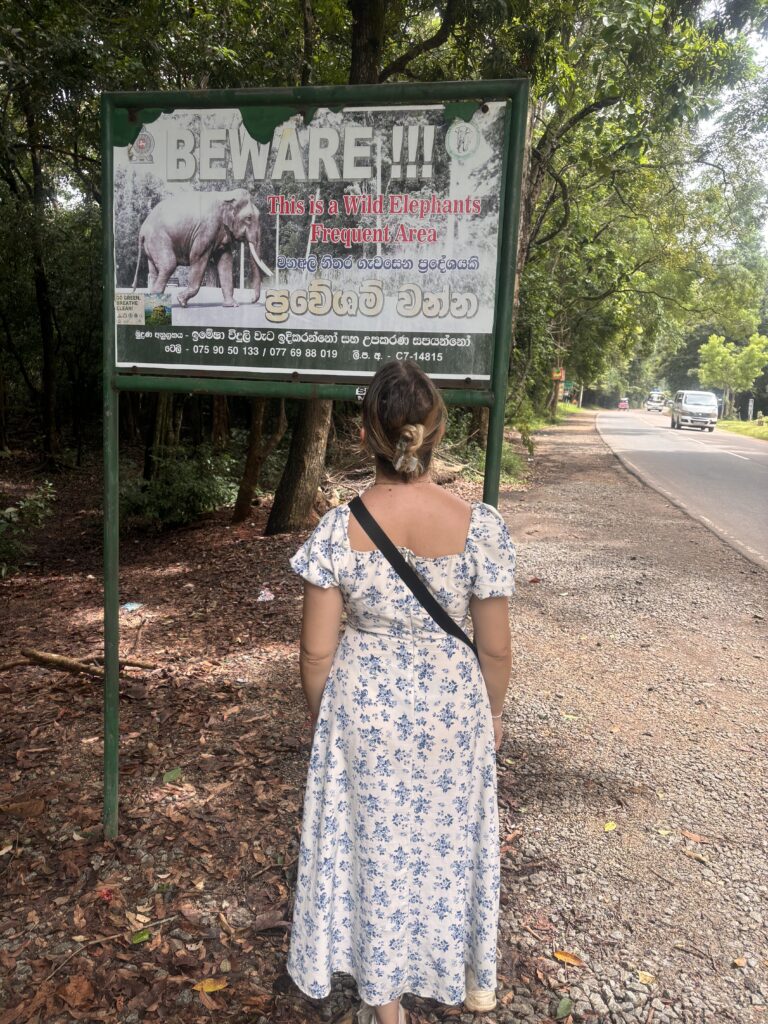
This is their landscape, and the town is built inside their routes. You’ll see warning signs along the roads, and most guesthouse and hotel owners will very reasonably tell you not to walk around alone after dark, especially along quieter stretches. I’ve seen wild elephants right by the roadside here, close enough to remind you that this isn’t a zoo or theme park – it’s a place where people and elephants share the same space, and we’re the ones who need to move carefully.


Sigiriya Lakes & Village Walks
Not every day in Sigiriya has to be about climbing something. On slower days, the lakes and back roads around the village are where everything softens: kingfishers flick over the water, buffalo wallow in the mud, kids cycle past in school uniforms, and the outline of Lion Rock glows quietly in the distance.


You can rent a bicycle or just walk: loop around a nearby lake, follow side lanes through paddy fields, or sit on a low wall and just watch village life take its time. It’s a good way to let your legs recover between big sightseeing days and remember that people actually live here – it’s not just rocks and ruins.


🚲 Lakes & Village Walks – Do & Don’t
- ✅ Do: take a slow bike ride or walk around the lakes, watch birds and buffalo, and enjoy the quieter side of Sigiriya between big “sightseeing” days.
- ✅ Do: support small local cafés, fruit stalls and family-run guesthouses you pass on the lanes.
- ⚠️ Be cautious with “village tours”: some experiences feel very staged (ox carts in circles, “traditional houses” built just for photos). Ask your guesthouse which ones are genuinely community-run and skip anything that feels more like a set than a village.
- 🐘 Remember elephants: this is elephant country. Take the warnings seriously and avoid walking alone after dark on quiet roads or near fields.

Day Trips Deeper Into the Cultural Triangle
Sigiriya sits in the middle of Sri Lanka’s Cultural Triangle, which means some of the country’s most important ancient cities are just a short drive away. With an early start and a tuk-tuk or car, you can explore a whole different side of the island and still be back under Lion Rock by evening.
- Polonnaruwa – about 1–1.5 hours from Sigiriya
A beautifully preserved ruined city with wide grassy spaces, stone temples and long rows of Buddha statues. You can explore by bicycle or tuk-tuk, stopping at clusters of ruins and lakes along the way. - Anuradhapura – about 1.5–2 hours from Sigiriya
A vast, living sacred city with huge white stupas, the famous Sri Maha Bodhi tree and a constant flow of pilgrims. It feels more devotional and spread out, and easily fills a full day. - Ritigala – about 45–60 minutes from Sigiriya
A quieter, more offbeat forest monastery ruin, with mossy stone paths under the trees and far fewer people than the big cities. Perfect if you want atmosphere without bus groups.
🗺️ Cultural Triangle Tours from Sigiriya
If you’d rather focus on ruins, stories and photos than logistics, you can also book a ready-made day tour straight from Sigiriya.
I still like doing some things DIY, but for long days with multiple sites, a good tour can save a lot of heat, haggling and guesswork.
For full, standalone planning details (routes, dress codes, best circuits), check my complete guides to Polonnaruwa, Anuradhapura and Ritigala
Where to Stay in Sigiriya
One of the easiest ways to enjoy Sigiriya is to treat it as a small base with different “pockets” of atmosphere, not just a random guesthouse near the main junction. You’ve got simple places tucked along the Lion Rock road, quieter lakeside stays where frogs and birds are louder than traffic, and then the option to base in Dambulla or Habarana if you’re more focused on buses, trains or resort-style hotels.

I stayed in Sigiriya for five nights and loved being close enough to walk or take a short tuk-tuk to the rocks at sunrise, then escape back to greenery and a pool when the heat hit. For most travellers, sleeping in Sigiriya itself gives the best balance of access + atmosphere, and from there you can decide whether you want village buzz, jungle quiet or something a bit more polished.
To make it easier, here’s an interactive map where you can zoom in on guesthouses, midrange lodges and boutique stays around Sigiriya, then pick the pocket that fits your trip:
🛏️ Sigiriya Accommodation Map
Zoom in to find guesthouses, jungle lodges and boutique stays around Sigiriya, then click through to compare prices and reviews for your dates.
Tip: start by choosing the area that fits you (Lion Rock road, lakeside, or nearby towns), then narrow down by budget, pool and greenery instead of just chasing the absolute cheapest room.
Best Areas to Base Yourself
Where you sleep in and around Sigiriya changes how your days feel – whether you wake up to tuk-tuks and cafés, or frogs and palm reflections.

1. Near the Lion Rock road (Sigiriya village)
This is the strip running between the main junction and the Lion Rock entrance.
- Why stay here:
You’re closest to Lion Rock and Pidurangala, tuk-tuks are easy to grab, and there’s a growing mix of guesthouses, cafés, bakeries and small restaurants. It’s ideal if you want to walk or take a very short ride to your sunrise/sunset climbs. - What it feels like:
A compact traveller village: a bit of traffic, dogs, scooters, juice bars, rice & curry spots and booking desks. Not exactly “remote jungle”, but very convenient.

2. Lakeside stays around Sigiriya
A little further from the main road, around the lakes and paddy fields.
- Why stay here:
Quieter, more green and watery – think birds at sunrise, frogs at night, and Lion Rock or Pidurangala peeking over trees in the distance. Many places have gardens and small pools. - What it feels like:
Softer and slower. You’ll usually rely on tuk-tuks to get to the rocks and back for meals, but you gain space, views and a more “Sri Lanka countryside” feeling. Great if you’re staying 2–3+ nights.

3. Dambulla vs Sigiriya vs Habarana – when to base elsewhere
- Dambulla – better if you’re using buses a lot or only have one night and want to connect quickly onwards (e.g. Kandy, Colombo). It’s a proper town with more local services, markets and bus connections, but it doesn’t have that “wake up under Lion Rock” atmosphere.
- Sigiriya – best for most travellers who want easy access to Lion Rock, Pidurangala and day trips, plus enough cafés and guesthouses to feel comfortable. This is the sweet spot for 2–3 nights or more.
- Habarana – makes sense if you’re focused on safaris or prefer resort-style hotels with bigger pools and grounds. It has a train station and good road links, but you’ll be doing more driving back and forth to the rocks.
If you like the sound of first light on Lion Rock and quick rides to the trailheads, I’d choose Sigiriya village or the lakeside as your base, and then just pop into Dambulla/Habarana for buses, trains or specific hotels if/when needed.
Handpicked Places to Stay in Sigiriya
A mix of budget guesthouses, midrange favourites and eco-boutique hideaways that work well as a base for Lion Rock, Pidurangala and day trips around the Cultural Triangle.

Mashi’s Villa
€ · Budget guesthouse · Garden setting
Simple, family-run stay with clean rooms and a quiet garden – a relaxed, good-value base for exploring Sigiriya and the surrounding rocks on a smaller budget.

EKHO Sigiriya
€€ · Midrange hotel · Close to Lion Rock
Comfortable midrange stay just a short walk from the rock, with a great location for sunrise/sunset climbs and views towards Sigiriya.

Hotel Sigiriya
€€ · Resort-style · Iconic Lion Rock pool view
One of the classic choices in Sigiriya, known for its pool facing Lion Rock, spa services and easy access to both the rocks and village.

Kumbukgaha Villa
€€€ · Boutique eco-villa · Rice fields & wildlife
Atmospheric boutique hideaway among rice fields and nature, with an infinity pool and open-air touches – dreamy for slow Cultural Triangle days.

Jetwing Vil Uyana
€€€€ · Eco-luxury · Wetlands, rice paddies & private pools
High-end eco-resort built around wetlands and rice fields, with villas, private plunge pools and serious wildlife-watching potential – a proper splurge base.
Still choosing your Sigiriya stay?
Compare more hotels, guesthouses and jungle lodges that match your dates and budget here:
I like to check a couple of sites side by side – prices, photos and recent reviews – before I lock anything in.
Eating & Coffee in Sigiriya
Sigiriya used to be “that place with Lion Rock and… maybe one place to eat”. That’s changed. These days you’ll find small local restaurants, simple bakeries, kottu and roti stalls, a couple of legit coffee spots and even smoothie bowls, alongside the classic rice & curry lunches.
It’s still very much a small town – not Colombo or Kandy – so don’t expect a different third-wave café for every day of the week. But if you’re here for 2–3 nights, you can easily rotate between Sri Lankan home-style food, an Indian dinner and a nicer coffee/brunch stop without getting bored.


Local Favourites & Travel-Friendly Spots
Rather than chasing every pin on Google Maps, I’d focus on a handful of places in/around the main strip:
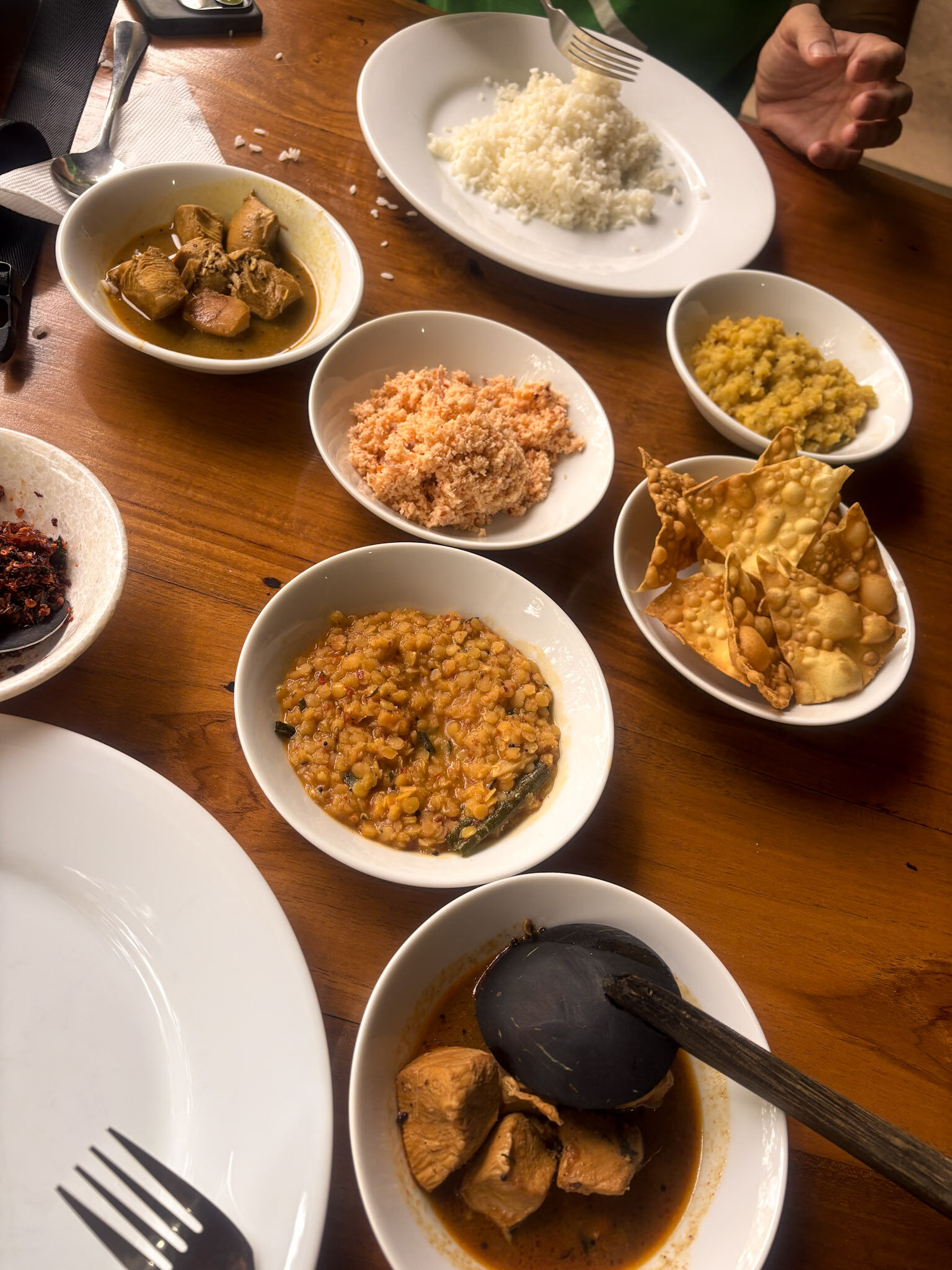
- Kenoli Restaurant – Classic Sri Lankan rice & curry and simple mains, usually with a few good veggie dishes. It’s the sort of place where you can get a big plate for a fair price, and it works well for both lunch and dinner on days when you’re exhausted from the heat.
- CR Indian Food – Good when you’re craving Indian-style curries, naan, dosa or something a bit different from the usual rice & curry rotation. Great for one “comfort dinner” during a longer Sigiriya stay.
- Kottu & roti stalls along the main road – The names change, and some are super basic, but almost every night you’ll hear that familiar kottu chopping sound. This is where you get cheap, filling dinners with egg or veggies, plus milk tea or a soft drink.


For coffee and “I need Wi-Fi and something that isn’t just sugar and milk” moments:
- Coffee with Hawwa – A cosy outdoor spot next to the lake with an amazing view of Lion Rock. Perfect for proper coffee when you want to sit with a book or do a little planning in the afternoon. It quickly became my daily go-to place, and it’s very close to Mapagala Rock, so it’s an ideal stop for an iced latte after the climb.
- Moats Café – Think more brunch-y and traveller-friendly: coffees, juices, a few Western-leaning options like toast, pancakes or smoothie bowls, depending on the current menu. Ideal for a slow post-rock breakfast.
- Barista Café – A familiar chain name if you’ve travelled around Sri Lanka; good for consistent coffee, snacks and AC when you just want something predictable.

💸 How to Eat Well on a Budget
- At lunchtime, look for local rice & curry buffets – they’re usually the best value and most filling meal of the day.
- In the evening, go for kottu or roti on the main road: cheap, tasty and perfect after a hike.
- Save the Western-style coffee and smoothie bowls for one treat day – they’re lovely, but always pricier.
- Carry some small notes for family-run places; many don’t have card machines or change for big bills.


Practical bits:
Tipping: Tipping isn’t mandatory, but rounding up or leaving 5–10% for good service is appreciated in more touristy spots.
Opening times: Most local restaurants focus on lunch and dinner; many don’t stay open very late. Coffee places skew towards late morning and afternoon.
Cash vs card: Card payments are slowly getting more common, especially in café-style places, but I’d still assume cash first and be pleasantly surprised by card.
Getting to Sigiriya & Around
Sigiriya sits in the central-north “dry zone” of Sri Lanka, roughly in the middle of the classic Cultural Triangle. That means it’s easy to slot into most routes – whether you’re coming up from Colombo and Negombo, across from Kandy and Ella, or down from the east coast beaches like Trincomalee or Passikudah.

🚍 Main Ways to Reach Sigiriya
Sigiriya fits easily into most Sri Lanka routes. Here’s a quick overview of typical travel times and routes from the west coast, hill country and east coast, so you can choose what matches your budget and energy levels.
From Colombo / Negombo
Best if you’re flying in or out and want to head straight into the Cultural Triangle.
- Private car & driver: Colombo → Sigiriya ~4–5 hours, Negombo → Sigiriya ~3.5–4.5 hours. Door-to-door, AC and rest stops – ideal if you’re 2–4 people with luggage.
- Bus via Dambulla: Intercity bus Colombo → Dambulla ~4–5 hours, then local bus or tuk-tuk Dambulla → Sigiriya ~30–45 minutes. Cheapest, but can be crowded and bumpy.
Tip: if you’re landing after a long flight, a pre-booked transfer is worth the money for less stress.
From Kandy, Ella & the Hill Country
Perfect if you’re coming from tea country and train rides into temples and rocks.
- Kandy → Sigiriya: Bus or car Kandy → Dambulla ~2–2.5 hours, then bus/tuk-tuk Dambulla → Sigiriya ~30–45 minutes. A private car can do Kandy → Sigiriya direct in about 2–3 hours.
- Ella & tea country (scenic route): Train Ella → Kandy ~6–7 hours (famous, slow, beautiful), then Kandy → Sigiriya as above – good if you want to break the journey with a night in Kandy.
- Ella direct by car: Private car/van Ella → Sigiriya typically ~5.5–7 hours depending on route and traffic. More expensive, but no transfers and you can stop at viewpoints and tea fields.
If you love trains, do Ella → Kandy → Sigiriya. If you hate changing vehicles, book a direct car.
From the East Coast (Trinco, Nilaveli & Passikudah)
Easy inland hop if you’re mixing beach days with ruins, rocks and safaris.
- Trincomalee / Nilaveli → Sigiriya: About ~2.5–3.5 hours by car or van. Buses exist but are slower and less direct.
- Passikudah → Sigiriya: Roughly ~3.5–4.5 hours by car, depending on route and stops.
Works beautifully as a pause between east coast sand and your final night in Colombo / Negombo.
Most travellers arrive by a mix of private cars, buses and the odd train–plus–bus combo. Once you’re in Sigiriya itself, distances are small: think short tuk-tuk rides, easy cycling and quick transfers to the rocks and lakes.

🚙 Getting Around Locally in Sigiriya
Tuk-tuks
Tuk-tuks are the easiest way to get around: you’ll find them near Lion Rock, Pidurangala, Mapagala and along the main road. Short rides within Sigiriya (guesthouse ↔ rocks, lakes, cafés) usually cost the equivalent of a few hundred rupees, depending on distance and time of day. Always agree the price before you get in and clarify if it’s a one-way or return trip.
Bicycles
Many guesthouses can arrange bicycle rentals, which are lovely for quiet roads, lakes and rice fields. The terrain is mostly flat, but the sun is strong – ride early or late in the day, carry water and check brakes, tyres and lights before you set off.
Self-drive (scooters, cars & tuk-tuks)
You’ll see some travellers on scooters or in rental cars, but I’d only recommend it if you’re very confident driving in Asian traffic and have the correct licence + Sri Lankan permit. Roads around Sigiriya are calmer than in big cities, yet you still share them with buses, tuk-tuks, dogs and the occasional cow.
Self-drive tuk-tuks are also a thing in Sri Lanka (usually arranged through specialist rental companies). They can be fun, but only if you get a proper handover and practice drive, carry the right paperwork and feel comfortable with police checks and traffic. For most visitors to Sigiriya, tuk-tuks + bikes + a few hired-car days are the most relaxed combination.
Practical Tips for Sigiriya
Sigiriya is easy-going on the surface, but between temples, rocks, heat and village life there are a few practical things that make your days here smoother: how to dress, how to pay, how to stay online and how to feel safe – especially if you’re travelling solo.
Dress Codes, Culture & Respect

You’ll move between sacred spaces and touristy spots in the same day, so it helps to have one simple rule:
If it’s a temple or shrine, cover shoulders and knees – for all genders.
That includes:
- The temple section at the base of Pidurangala (before the proper hike starts).
- Dambulla Cave Temple and other active shrines on day trips.
Everywhere else (Sigiriya village, cafés, at the top of the rocks), modest shorts and sleeveless tops are fine. I’d still avoid bikini tops and ultra-short shorts away from the beach.
Shoes come off at temple entrances; a small fee to leave them is normal. Around Buddha statues, don’t pose with your back to the statue or climb on anything sacred – even if other tourists are doing it. Think of shrines as living places of worship, not just pretty ruins.
Money, ATMs & Paying by Card
Sigiriya is still more cash-first than big cities, but it’s getting easier.
- You can find a few ATMs in Sigiriya.
- Small guesthouses, local restaurants, tuk-tuks and kottu spots are often cash only.
- Midrange hotels, some cafés and tour operators increasingly accept cards, but I wouldn’t rely on it 100% – always keep some rupees.

Very rough daily budget per person (excluding flights and long transfers):
- Budget backpacker: shared/budget room, local buses, rice & curry, kottu – around €35–50 / $40–55.
- Comfort / midrange: nice guesthouse or hotel with pool, mix of local food and a few coffees/brunches out, some tuk-tuks and a safari or rock tickets – around €60–100 / $65–110.
- Splurge: boutique stays, private transfers, guided tours, spa, eco-luxury – €120+ / $130+.
Prices shift a bit year by year with fuel and inflation, but the pattern stays similar: local food + buses keep things cheap, while Western food + AC hotels + transfers add up quickly.
Travel Insurance & Health
Between rock climbs, heat, tuk-tuks and safaris, travel insurance in Sigiriya isn’t a box-tick – it’s a real safety net.
You’ll likely:
- Climb steep, exposed staircases on Lion Rock, Pidurangala or Mapagala.
- Travel by tuk-tuk or car on busy roads.
- Maybe join an elephant safari or cycle around lakes and ruins.
A good policy should cover medical care, hospital visits, evacuation, and adventure-y activities like hikes and wildlife trips (check the small print if you plan to rent scooters).
Health-wise, the biggest issues are usually sun and dehydration:
Go easy on ice if you have a sensitive stomach.
Climb rocks early or late, not in brutal midday heat.
Carry 1–2 L of water, a hat and high SPF daily.
🩺 Travel Insurance for Sigiriya & Sri Lanka
Make sure your policy covers rock climbs, hikes, safaris and medical care in Sri Lanka – not just lost luggage. It’s one of those things you hope you’ll never need, but you’ll be very glad to have if something happens on a rock or road.
Safety, Solo Travel & Nighttime
Sigiriya generally feels safe and relaxed, with low levels of petty crime compared to big cities. Still, it’s worth a few simple habits:
- Keep passport, main bank cards and spare cash in a safe place at your guesthouse; carry only what you need each day.
- Use zipped bags in busy bus stations or markets.
- Don’t leave phones and cameras unattended on café tables by the road.
For solo travellers – especially solo women – Sigiriya is one of those places where you’ll see lots of couples and small groups, but solo travellers don’t stand out.
- Tuk-tuks are normal to use solo; if a driver feels pushy, it’s fine to walk away and take the next one.
- At night, I prefer short tuk-tuk rides over long walks, mainly because of poor street lighting, stray dogs and – in this area – the possibility of wild elephants on the road edges.
- Around rocks, lakes and quiet paths, avoid being completely alone at dusk or after dark; daytime is much more comfortable.
Most stays and cafés are used to travellers and will happily call you a tuk-tuk, give you a route suggestion or warn you which roads to avoid walking at night. Listening to that local advice goes a long way.
Responsible Travel in Sigiriya & the Cultural Triangle
Sigiriya isn’t just a backdrop for sunrise photos – it’s a living cultural landscape: active temples, villages, wild elephants moving through the fields, families running tiny guesthouses and tuk-tuk businesses. A few mindful choices here make a big difference, not just for “eco points”, but for how welcome you’ll feel as a guest.
A few small choices around temples, wildlife and local businesses make a big difference – and usually feel better for you, too.
Temples & Sacred Spaces
Many spots in Sigiriya and the Cultural Triangle are active places of worship, not just photogenic ruins.
- Avoid posing with your back to Buddha statues or climbing on sacred structures.
- Keep music off and voices low around shrines and cave temples.
- Only fly drones where it’s clearly allowed – never above temples or ceremonies.
- Let worshippers go first at key spots; step aside if people are praying or offering flowers.
Wildlife & Nature
This landscape is home to wild elephants, rich birdlife and fragile rock sites.
- Choose jeeps that observe from a distance; avoid drivers who chase or corner elephants.
- Skip any elephant experiences with riding, bathing, feeding or touching.
- Remember elephants around Sigiriya are truly wild – don’t walk long dark stretches alone or try to approach them by the road.
- Carry a reusable bottle, keep trash in your bag and stay on marked paths to protect rocks and vegetation.
Supporting Local Businesses
A lot of Sigiriya’s charm comes from family guesthouses, small cafés and local drivers.
- Sleep in locally owned guesthouses, homestays and small hotels where you can.
- Hire local guides and drivers for day trips, rock climbs and safaris.
- Eat at family restaurants, kottu spots and rice & curry places, not only hotel buffets.
- Buy fruit, snacks and souvenirs from village stalls and corner shops, not just supermarkets.
Quick Daily Checklist
- Pack one light layer or scarf so you can cover up quickly if you step into a temple.
- Refill your reusable water bottle before rock climbs or long walks.
- Open or download an offline map and save your guesthouse and driver contacts.
- Ask your host or driver if there have been elephants near the roads that evening before walking far in the dark.
- Choose one local business to support that day – a fruit stall, family café or small shop.
- Before taking close-up photos of people, smile and ask first, especially in villages and at temples.
Is Sigiriya Worth It for You?
After five days based in Sigiriya, it stopped feeling like “that place with the rock” and more like a small, easy base where jungle, history and everyday village life overlap. It’s not a big city or a hidden gem – it’s something in between, and that’s exactly why it works.
If you’re the kind of traveller who gets excited by stories carved into stone and big views, Sigiriya is absolutely worth 2–3 nights. Lion Rock at least once in your life, plus a sunrise or sunset on Pidurangala or Mapagala, gives you both sides of the view: standing on the fortress itself, and watching it rise out of the landscape like a mirage.
If you’re on a very tight budget, you might decide to skip the Lion Rock ticket and build your days around Pidurangala, Mapagala, Dambulla and Polonnaruwa instead. You’ll still get ancient monasteries, cave temples, long views over the plains and that feeling of “this used to be a royal city” – just without the biggest single entry fee.
And if you’re someone who loves to slow down, Sigiriya is quietly perfect: lakes at golden hour, birds over the rice fields, the silhouette of the rock changing colour through the day, a safari or two, and those soft, slow mornings when you drink your coffee and realise the view from your guesthouse is already enough “sightseeing” for an hour.
In other words: yes, Sigiriya is worth it – but not just as a quick rock stop. Give it a couple of nights, let it be your Cultural Triangle home base, and it will feel far richer than a single climb ever could.


A few quick answers to the questions I get most often about Sigiriya, Lion Rock and the Cultural Triangle.
How many days should I spend in Sigiriya?
For most people, 2 nights is the sweet spot – you can climb one rock, visit at least one extra site (Dambulla, safari or lakes) and not feel rushed. If you like slow mornings, photography or day trips to Polonnaruwa/Anuradhapura, 3+ nights makes Sigiriya a lovely base.
Is Lion Rock or Pidurangala better?
They do different things. Lion Rock is the UNESCO showstopper: palace ruins, frescoes, terraced gardens – and the highest price. Pidurangala is the classic sunrise hike with the best view of Lion Rock itself. If budget allows, I like to do both on separate days; if not, Pidurangala + Mapagala + Dambulla/Polonnaruwa is a great alternative combo.
Is Sigiriya safe for solo travellers?
Overall, Sigiriya feels calm and low-stress, with less petty crime than big cities. Standard common sense still applies: keep valuables in your room, use tuk-tuks at night rather than long dark walks, and listen if locals mention wild elephants near certain roads. For solo women, modest outfits, choosing familiar cafés and letting your guesthouse know roughly where you’re headed go a long way.
Can I visit Sigiriya as a day trip from Kandy?
You can, but it’s a long, busy day. Think Kandy → Dambulla → Sigiriya and back, often with early start and late return, and less flexibility for heat, queues or weather. If you can spare the time, I’d strongly recommend at least one night in Sigiriya instead – it changes the whole experience.
Do I need a guide for Lion Rock or Pidurangala?
You don’t have to, but it can add a lot. Lion Rock is full of history you might miss without someone to explain the frescoes, palace layout and stories. Pidurangala is straightforward to follow for most people, but a guide or local tuk-tuk driver can be helpful in the dark for sunrise. If you’re on a budget, consider a shared guide at Lion Rock only.
Can I pay by card in Sigiriya?
It’s getting easier, but Sigiriya is still partly cash-first. Some midrange hotels, cafés and tour operators accept cards; many guesthouses, tuk-tuks and local food spots are cash only. Plan to have enough rupees for daily spending + rock tickets, and treat card payments as a bonus rather than a guarantee.


