
Tumpak Sewu is the waterfall that people mean when they say “East Java is unreal.” It isn’t one single drop — it’s a whole curtain of waterfalls pouring into a green canyon like an amphitheatre, with a viewpoint above and (when conditions allow) a dramatic route down to the base where the mist hits your skin and everything feels louder, wetter, and very alive.
It had been high on my list for a long time, one of those places I kept saving and telling myself one day. And when I finally stood there in person, it was genuinely even more beautiful than I’d imagined — bigger, wilder, more cinematic. The kind of view that feels like a little travel dream come true.
This guide is for you if you want to visit smoothly and safely — with the exact route options (viewpoint only vs going down), whether you should go independently or hire a guide, what to wear (so you don’t slip or ruin your shoes), and how to avoid the worst crowds. I’m also sharing a perfect place to stay if you want to wake up right next to the falls and do Tumpak Sewu early, when it’s quieter, and the light is softer.
Because trail and river conditions can change fast here, I’ve included practical safety notes and “what I’d do” logistics so you can plan with confidence — whether you’re coming from Malang as a day trip or staying nearby for the full experience.
Where Is Tumpak Sewu Waterfall?
Tumpak Sewu Waterfall is in East Java, Indonesia, on the border of the Lumajang and Malang regions. In practical travel terms, that means you’ve got two smart ways to plan it: either base yourself in Malang (easy logistics, lots of hotels, good for an East Java route), or stay near the waterfall (best timing, fewer crowds, and a calmer experience).
If you’re building an itinerary: Tumpak Sewu pairs beautifully with other East Java highlights (like volcano routes), but it’s also 100% worth doing as a focused trip on its own — especially if you care about photography and want to see it without the “tour bus rush.”

Closest Bases (Quick Geography)
Malang (most popular base for travellers)
Malang is the most common base because it’s a proper city with plenty of accommodation, cafés, and transport options. It’s also a natural starting point if you’re planning a bigger East Java loop. If you want a simple plan with minimal thinking, Malang makes it easy to arrange a driver or tour and hit Tumpak Sewu as a day trip.
Lumajang (closest region)
Lumajang is the region where Tumpak Sewu sits, and it’s the “closest on the map.” You’ll find more local, low-key stays here and quicker access to the waterfall area. It’s the better choice if your priority is getting there early, not wasting time on longer drives, and keeping your day focused on the waterfall itself.
💡 Insider Tips — Choosing your Tumpak Sewu base
- ⏱️ If you’re short on time, Malang is the convenient base — lots of stays, easy drivers/tours, simple day-trip logistics.
- 🌿 If you want the best experience, stay closer — earlier start, fewer crowds, cooler climb, and softer light at the viewpoint.
If You’re Staying Nearby (Why It’s Worth It)
Staying near Tumpak Sewu is one of those small decisions that completely changes the vibe of your visit. When you wake up close to the falls, you can arrive early — before the crowds stack up, before the heat builds, and before the path gets overly busy.
Why an early start is a cheat code here:
- Fewer crowds → you actually get time at the viewpoint without feeling rushed
- Cooler climb → the stairs back up feel much kinder in the morning
- Softer light → better photos, more atmosphere, less harsh contrast
And because conditions can shift fast (especially after rain), being nearby also gives you flexibility: you can check the weather, see what the trail feels like, and decide whether it’s a “viewpoint-only” day or a “go all the way down” day — without the pressure of a long drive or strict tour timing.
If you want the calm, dreamy version of Tumpak Sewu, the one you’ve been picturing, then I’d say sleeping nearby is the move.
Entrance Fees + Opening Hours Tumpak Sewu
Tumpak Sewu is refreshingly straightforward on the ground: you arrive, pay the entrance ticket, and decide how adventurous you want your visit to be. Still, it’s worth coming prepared with cash, because between tickets, parking, water-shoe rentals, snacks, and small add-on fees, you’ll use it constantly.
🕒 Entrance, hours & practical info (quick reference)
- Entrance ticket: 100k IDR (as of my visit).
- Parking: there’s paid parking on arrival (fee depends on vehicle).
- Opening hours: can vary by season/local rules — if you’re staying nearby, aim to arrive early (best light + fewer crowds).
- Payment tips: bring cash (small notes). Some places may offer QR payments, but cash is the safest option for tickets, parking, snacks, and rentals.
These are reference points from my visit — prices and policies can change.
Guide costs (optional, but worth it for the base):
If you plan to go down to the base (and especially if you want to continue to Goa Tetes), a local guide can make the experience safer and smoother. I hired a local guide named Arif and paid 250,000 IDR, and he was genuinely great — he knew the best lines on slippery sections and helped me get amazing photos and videos.
Goa Tetes add-on fee:
If you continue past the base to Goa Tetes, there’s usually a small extra fee paid locally. (In my case, because I stayed right on-site at Dear Traveller Glamping, I didn’t have to pay that extra fee.)
Opening hours
Opening hours can vary a bit depending on local rules and season, so I always recommend treating this as a place to visit early rather than trying to time it perfectly by the clock. Early morning gives you the best combination of softer light, cooler temperatures, and fewer crowds, and it also leaves you flexibility to make a smart call about going down if conditions look wet.

How to Visit Tumpak Sewu (Independent vs With a Guide)
Tumpak Sewu can be as easy or as adventurous as you want it to be. There’s the viewpoint route (simple, low-stress, and still jaw-dropping), and then there’s the base route (steep, slippery, weather-dependent, and absolutely not something to force on a bad day).
Option 1 — Go on your own (best if you’re staying right next to it)
Ideal for: You’re staying nearby (like Dear Traveller Glamping) so you can arrive early, you only want to see the viewpoint, or you’re genuinely comfortable doing the descent without support.
Going independently works because you can time it perfectly (first light/right after opening), you’re not rushed by anyone else’s schedule, and the viewpoint-only route is straightforward, low-stress, and still very worth it.
Only choose the base route independently if you feel confident on steep stairs and slippery terrain, you’re fit/agile enough to manage careful footing and a solid climb back up, and you’re comfortable making a smart call on the day — including turning back if conditions don’t feel right.
If you’re going on your own, a few things are non-negotiable. Start early and check the weather before you decide on the base route. Wear proper footwear — grip matters more than anything (and you can rent great shoes cheaply at the stalls right before the descent, so you don’t soak or ruin your own). Bring a dry bag/phone pouch. And if the river looks high or it’s raining (even upstream), skip the descent and enjoy the viewpoint instead.
💡 Insider tip: the viewpoint still delivers the full “wow” moment. The base route is a bonus for good conditions — not something you need to “push through” to make the visit worth it, especially in rainy season.
Option 2 — Hire a local guide (best if you want to go down to the base)
Ideal for: You want to do the base route (and possibly the Goa Tetes cave add-on), or you’re not fully confident on steep, wet, slippery terrain.
If the viewpoint is the “wow”, the base is the “adventure.” And this is exactly where a local guide earns their money — not by making it more dramatic, but by making it safer, smoother, and less stressful.
🧑🌾 Local Guide Tip — Worth it for the base route
If you’re planning to go down to the base (and/or continue to Goa Tetes), hiring a local guide can make the whole experience safer, calmer, and more efficient — especially on wet steps and slippery rock.
- I went with a local guide (young guy named Arif) and paid 250k IDR (as of my visit).
- He knew the best photo/video spots and helped me get genuinely amazing shots without wasting time.
- He also helped with timing + choosing the safest lines — exactly what you want if conditions are changeable.
WhatsApp Arif: WhatsApp (+62 856-0455-1411)
Why it’s worth it:
- Guides know the safer lines on wet rock and slippery steps (and what to avoid after rain)
- You’ll feel calmer on steep sections because you’re not constantly second-guessing each step
- If conditions are sketchy (high water, heavy rain, unstable footing), a good guide will tell you what’s smart to skip — and that’s a win, not a fail
💡 Insider tip: At Tumpak Sewu, weather can change fast and so can trail safety. If you’re set on going down, hiring a guide is the simplest way to reduce risk — especially if you’re solo, carrying camera gear, or visiting in a shoulder/rainy period.
Option 3 — Tour / day trip (best for Malang-based travellers)
Ideal for: You’re staying in Malang, you’re short on time, and you want door-to-door logistics without thinking about transport, parking, or timing.
If you’re doing East Java on a tighter schedule, a day trip is the simplest way to see Tumpak Sewu. You can just show up, get driven there, and focus on the experience — which is perfect if you’re juggling early volcano starts, long drives, or you simply don’t want the extra planning.
Downside:
- You’ll have less flexibility on timing and pacing
- Crowds depend on your departure time (many tours arrive around similar windows)
- You may feel rushed if you like slow photography moments or want to wait for the viewpoint to clear
Viewpoint vs Base: Which Route Should You Choose?
If you’re deciding how “big” to make your Tumpak Sewu visit, here’s the simple truth: the viewpoint is the main event. It’s the classic, iconic scene — that full amphitheatre of waterfalls spilling into a deep green canyon — and it delivers the wow even if you don’t go any further.
The base route is a bonus for the right day (and the right energy level). But the viewpoint? Always yes.
🗺️ What to do at Tumpak Sewu (choose your adventure)
1) Viewpoint only
The easiest option — and honestly still the full wow. Perfect if it’s rainy, you’re short on time, or you just want it stress-free.
2) Viewpoint + base
The adventure route. Steep + slippery, but magical when conditions are right — the mist, the scale, the feeling of standing inside the canyon.
3) Viewpoint + base + Goa Tetes
The full experience — base plus the extra cave/waterfall vibes. Best with a guide if you’re unsure on wet terrain or want the best photo spots.
Rule of thumb: Viewpoint is always a yes. Base/Goa Tetes are a yes only when weather + water levels look safe.
The Viewpoint (must-do)
This is the moment people mean when they say “Tumpak Sewu is unreal.” From the viewpoint you see the full curtain of waterfalls — dozens of streams dropping into a deep green canyon, mist floating in the air, jungle walls framing everything like an amphitheatre.
It’s one of the most spectacular waterfalls in Indonesia — and when you catch that full Tumpak Sewu curtain with Mount Semeru rising behind it, the whole scene feels even more epic. In that moment, it’s honestly clear why this place belongs on the must-visit list, not just for Java, but for the world.
The logistics are simple. You’ll arrive at the main entrance, park there, and buy your ticket. From that area, you can either walk down to the viewpoint on a paved road (it’s fairly easy and most people do it without thinking twice), or you can hop on a moto taxi that takes you down (and can bring you back up afterward). It’s a nice option if you’re saving energy for the base route, but it’s not really necessary.
Once you reach the viewpoint area, it’s surprisingly convenient. There are several warungs/restaurants, plus stalls selling fruit, juice, coffee, and simple meals, so you can take a break, hydrate, and decide what you want to do next. This is also where you’ll find stalls that rent water shoes with great grip — honestly one of the smartest little upgrades if you’re considering going down to the base.
If you want a guide, you can arrange one near the ticket counter, but you don’t have to commit immediately. I also saw guides waiting around at the viewpoint, so you can decide after you’ve seen the conditions and simply ask one of them to guide you down.
For timing, a quick stop still delivers the wow — but if you can, linger. Give yourself at least 20–30 minutes at the viewpoint for photos and that first “wow” pause. If you want calmer moments, better angles, or you’re filming content, 45–60 minutes is ideal. And if it’s crowded, don’t panic — the viewpoint often clears in waves, so going for a drink and waiting a few minutes can make all the difference.
💰 Tickets, small fees + practical on-site info
- Entrance ticket: 100k IDR (as of my visit).
- Goa Tetes: if you continue past the base, there’s usually a small extra fee.
- Note: because I stayed on-site at Dear Traveller Glamping, I didn’t have to pay that extra Goa Tetes fee.
Viewpoint area is super convenient: there are lots of little stalls where you can rent water shoes, grab lunch, or just sit with a coffee while you decide whether to go down.
- 👟 Water shoes rental available right at the viewpoint stalls.
- 🍛 I paid around 15k IDR for nasi goreng ayam (cheap + filling).
- ☕ Black coffee about 5k; 🧃 juices/teas about 5k (hot or cold).
- 🥥 Fresh coconut about 10k.
- 🧊 I had a few iced drinks here and had no issues (everyone’s different, but it was fine for me).
Prices and rules can change — treat these as real-world reference points from my visit, not a promise.
Going down to the Base of Tumpak Sewu
Going down to the base is the “inside the canyon” version of Tumpak Sewu — louder, wetter, more intense. You’re not just looking at the falls anymore… you’re standing under them, surrounded by mist and echo, with water everywhere and jungle walls closing in.
It’s not the hardest hike in the world — but it’s definitely not a casual walk. Expect a lot of stairs, humidity, and sections that can be not only slippery, but with water actually pouring over the steps (also, one of the reasons for renting the shoes, and not taking your own). Whether you go down should be a decision you make honestly, based on your own fitness and confidence on uneven terrain.
What it feels like
- The air gets cooler and wetter the further you descend
- Mist hits your skin, your hair and clothes gets damp, or totally wet depending how close to the waterfalls you get; and everything sounds amplified
- The scale feels even bigger from below (you’ll look up and just… wow)
Time estimate (down & up)
- Down: usually ~20–40 minutes depending on crowds, stops, and conditions
- At the base: ~20–45 minutes (photos, soaking it in, quick rest)
- Up: usually ~30–60 minutes (this is the part that burns)
- Total for viewpoint + base: 2–4 hours (more if you’re filming a lot!)
💡 Insider Tips — Tumpak Sewu base route
- It’s slippery even in dry season (mud + wet stone + mist = constant slick surfaces).
- The route can feel tight and busy if a lot of people are moving both ways.
- You’ll sweat on the climb up — it’s humid and the stairs are steep.
- If you have any knee (or similar) issues, or you’re not confident with footing, you’ll enjoy the day more with a guide or by sticking to the viewpoint.
My safety rule
If it’s raining, the river looks high/fast, or you feel even slightly unsure → don’t force it. The viewpoint still makes the trip worth it.
Goa Tetes Cave add-on
I actually did the full route — viewpoint → base → Goa Tetes → up the metal stairs — and I’m so glad I did. If you have the energy and conditions are stable, I’d 100% recommend continuing to Goa Tetes. It’s a totally different experience from Tumpak Sewu: less “grand panorama,” more “close-up jungle magic.” Wet rock, dripping walls, little cave sections, and natural water curtains you can stand under. And honestly it’s equally amazing in its own way.
Together, they make the perfect combo:
Tumpak Sewu = the iconic amphitheatre view.
Goa Tetes = the immersive, exploratory, sensory experience.
What to expect :
- Cave-like openings with water constantly dripping and flowing over rock
- Spots where you can take a natural “shower” under a small waterfall/water curtain
- A few photo corners people love (including the “forever young” spot inside the cave)
How far is it from Tumpak Sewu?
Once you’re already at the base, it’s a very short continuation further along ( 5 – 10 minutes ) — not a separate destination, just the “keep going” version of the same adventure.
Extra fee:
There’s usually a small extra fee to continue to Goa Tetes (paid locally and can change). In my case, because I stayed right there at Dear Traveller Glamping, I didn’t have to pay that extra Goa Tetes fee.
💡 Insider tip: If you continue to Goa Tetes, you don’t need to return back to Tumpak Sewu to exit. You go up via the metal stairs (they’re steep — this is the workout), and the path brings you up directly to the warung and into the Dear Traveller Glamping. It felt like the most satisfying little loop: adventure down, magic in the caves, then straight back up to food and a cold drink
Best Time to Visit Tumpak Sewu
Tumpak Sewu is one of those places where timing doesn’t just help — it completely changes how the experience feels. The three things that matter most are the softness of the light at the viewpoint, how crowded the paths are, and whether the base route is actually safe that day. If you want one simple rule that almost always works, it’s this: go early, and treat the descent as optional.
📅 Tumpak Sewu weather by month (rain + temps + waterfall power)
This is a practical planning chart for the Lumajang / Tumpak Sewu area. “Waterfall power” is a simple guide based on rainfall patterns: more rain usually = stronger flow (but also more slippery trails).
| Month | Rainfall (mm) | Avg high (°C) | Avg low (°C) | Waterfall power | Trail notes |
|---|---|---|---|---|---|
| Jan | 264 | 29 | 22 | 💦💦💦 Very strong | Higher slip/river risk |
| Feb | 259 | 29 | 22 | 💦💦💦 Very strong | Base only if safe |
| Mar | 208 | 29 | 22 | 💦💦💦 Very strong | Often wet + busy |
| Apr | 137 | 29 | 22 | 💦💦 High | Nice balance month |
| May | 74 | 29 | 22 | 💦💦 Medium | Better footing |
| Jun | 51 | 28 | 21 | 💦 Medium | Good for base |
| Jul | 28 | 28 | 20 | 💦 Low | Drier + clearer |
| Aug | 13 | 28 | 20 | 💦 Low | Safest footing |
| Sep | 20 | 29 | 21 | 💦 Low | Great for photos |
| Oct | 48 | 30 | 22 | 💦 Medium | Shoulder season |
| Nov | 117 | 30 | 23 | 💦💦 High | Flow up, watch safety |
| Dec | 208 | 29 | 22 | 💦💦💦 Very strong | Slippery + misty |
Data notes: rainfall values follow the Lumajang area monthly rainfall pattern; temperatures are typical day/night averages for Lumajang. “Waterfall power” is a practical indicator based on rainfall.
Dry season vs rainy season (what changes)
In the dry season, the paths are usually more manageable and you’re less likely to deal with deep mud or water running over the steps. The waterfall can still be stunning, but the flow may feel a little less intense compared to the peak rainy season. The upside is that everything tends to be easier: less slippery terrain, clearer visibility, and a much better chance that the base route is doable if you’re fit and confident on uneven ground.
During the rainy season, the waterfall often looks more powerful and dramatic, with heavier flow and more mist hanging in the canyon. It can be absolutely magical from the viewpoint. The trade-off is that the route down can become genuinely risky: wet rock gets slick fast, stairs turn muddy, and river levels can rise quickly. That’s why the rainy season is when you plan for the viewpoint as your must-do, and you only decide about the base once you’re there and you can see conditions with your own eyes.

Best time of day
Early morning is the sweet spot for almost everyone. The viewpoint feels calmer, the air is cooler, and the light is softer and more flattering for photos and video. It also makes a big difference if you plan to go down, because the climb back up is much kinder before the heat and humidity fully kick in. If you’re staying nearby, this is exactly why it’s worth it: you can arrive early without the stress of a long drive and you can move at your own pace.

When to skip the base route
There are days when the smartest choice is simply not going down, and that doesn’t mean you’re missing out. If it’s raining, if it has rained heavily recently, or if you can see the river looking fast and high, it’s a clear sign to stay up top. The same goes if you notice water pouring over the steps like crazy or the route looks muddy and slick before you’ve even started. And finally, trust your body: if you feel unsure on slippery terrain, don’t negotiate with that feeling. The viewpoint alone still gives you the full “East Java is unreal” moment, and choosing safety is always the right call here.
🛟 Safety Notes (practical + responsible)
The viewpoint is straightforward. The base route is only a “yes” when conditions are safe — and when you feel confident on wet, uneven terrain.
- Slippery rock + steep stairs: expect wet steps (sometimes with water running over them) and slick stone, even in dry season.
- Flash-flood risk: if it’s raining (or has been raining upstream), don’t force the descent “for content.”
- Solo travellers: viewpoint is easy; the base is often better with a local guide if you’re unsure.
- Respect closures + local advice: if staff say don’t go down, that’s the decision made for you — and it’s usually for a good reason.
Safety checklist
- 📱 Dry bag / phone pouch (mist + splashes happen constantly)
- 👟 Grippy shoes (this matters more than anything)
- 💧 Water + electrolytes (the climb back is the test)
- 🌦️ Weather check before you commit to the base route
- 🚫 Don’t go down if it’s raining upstream (river levels can rise quickly)
What to Wear + What to Bring
Tumpak Sewu can go from “best day ever” to “why did I wear this?” in about ten minutes — mostly because of wet steps, mist, and slippery rock. This is the exact setup I recommend so you stay comfortable, safe, and able to enjoy it without stressing about soaked shoes or ruined gear.
🎒 What to wear + what to bring (the essentials)
The base route can be wet and slippery, and sometimes water is literally running over the steps. Dress for getting a little damp, and you’ll enjoy it so much more.
- Shoes (the #1 difference): wear water shoes or hiking sandals with grip. Even better: you can rent water shoes right at the stalls near the viewpoint.
- Clothing: swimsuit or bikini, quick-dry outfit, light layers, and a thin rain jacket/poncho if the forecast is mixed.
- Bring list: towel, change of clothes, cash (small notes), snacks, and insect repellent.
One more real-life tip: don’t wear (or bring) anything you don’t want to get wet — including bags. I literally saw girls spending more time worrying about their leather bag getting splashed than enjoying the experience. That only really works if you’re doing viewpoint-only.
Where to Stay Near Tumpak Sewu
Where you stay can completely change how Tumpak Sewu feels. If you base yourself in Malang, it’s convenient for a bigger East Java route. But if you stay near the waterfall, you get the version most people think they’re going to get: calmer, earlier, softer light, and no pressure to rush back to a driver. For photography and overall experience, staying close is the move.
Staying in Malang (best for a broader East Java route)
Malang is the classic base if you’re building a bigger itinerary. It’s a proper city with plenty of accommodation options, cafés, and easy transport links, so it works well if you’re pairing Tumpak Sewu with other East Java highlights. If you’re doing Bromo, moving around by driver, or you just want more restaurant choice and city comfort at night, Malang keeps things simple.
The trade-off is that visiting Tumpak Sewu from Malang usually feels more like a day trip mission. You’ll care more about departure times, you’ll be more affected by crowds, and you’ll have less flexibility to decide on the base route based on conditions.
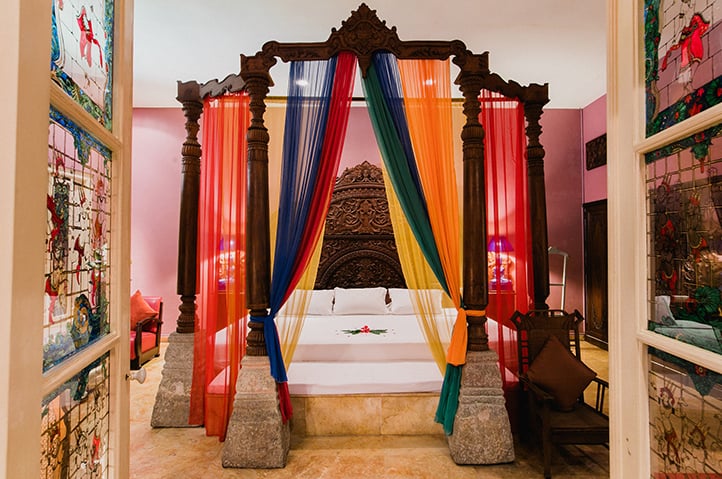
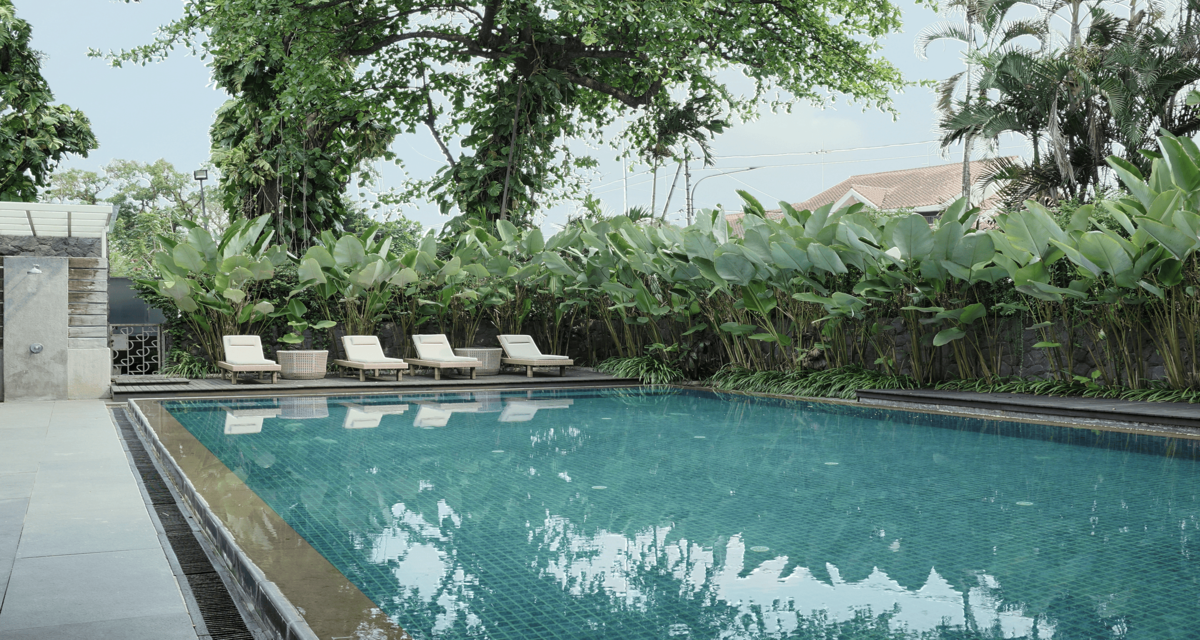
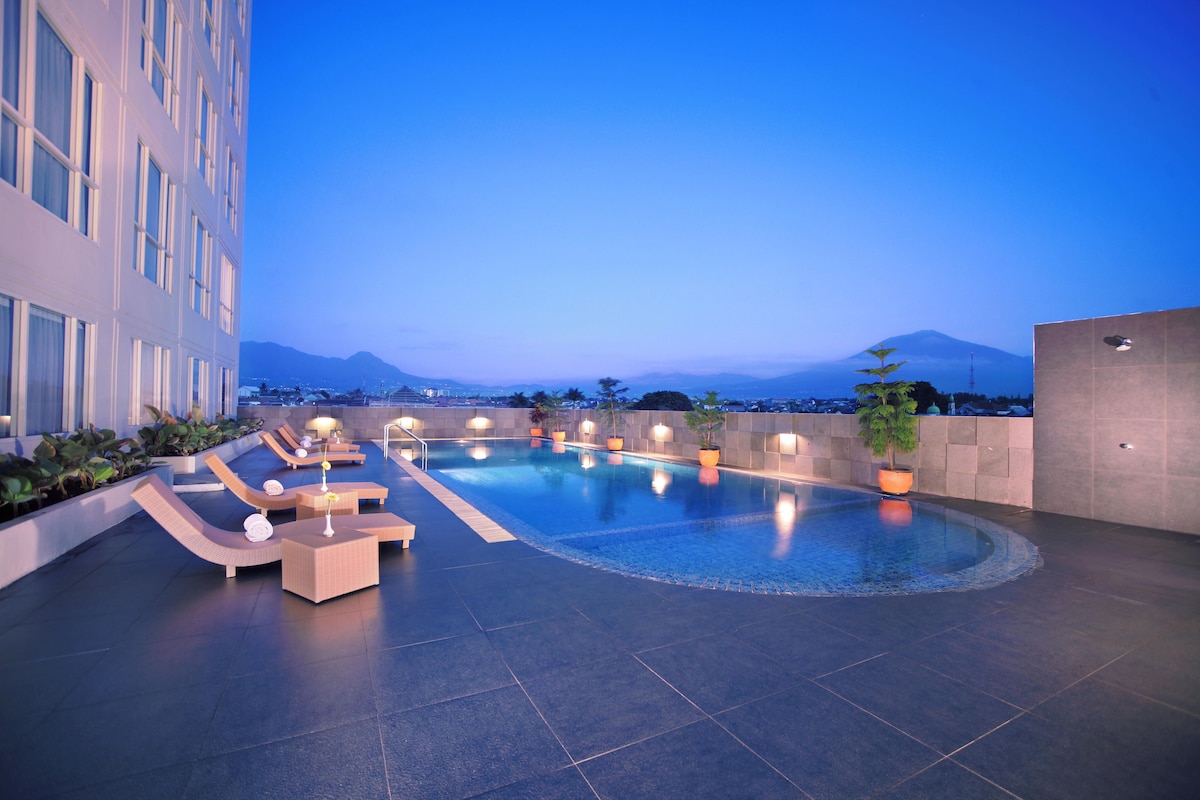
🏨 Where to stay in Malang (easy base for East Java)
If you’re building a wider East Java route (Bromo, cafés, city comforts, transport links), Malang is the convenient base. These are three solid picks depending on the vibe you want.
Staying closer (quiet, practical, early start)
Staying near Tumpak Sewu suits travellers who want the experience to feel unhurried. It’s ideal for photographers, couples, and anyone who likes a slower rhythm — wake up, arrive early, take your time at the viewpoint, then decide if the base and Goa Tetes make sense that day.
The biggest win is simple: when you’re close, you can time it perfectly. You’re not fighting traffic, you’re not arriving with the peak crowd wave, and the climb back up is much kinder in cooler morning air. It’s also easier to make a smart safety call because you’re not thinking, “We drove all this way, so we have to go down.”
Dear Traveller Glamping
This is where I stayed, and it was honestly the perfect base for Tumpak Sewu. It nails that slow travel feeling: nature around you, calm mornings, and the freedom to visit without the day-trip chaos.
Why it’s such a great base:
- You’re close enough to go early (the biggest advantage for crowds + light)
- The vibe is calm and nature-filled — you can enjoy the experience without rushing
- It’s perfect if you want to do Tumpak Sewu + Goa Tetes in one smooth flow, then come back for food and downtime
🌿 My pick near Tumpak Sewu: Dear Traveller Luxury Glamping


If you want the best timing (quiet trails + softer light) and the least stress, this is the move: sleep right next to the waterfalls, wake up early, and go before the day-trippers arrive.
- Perfect for early starts: you can hit the viewpoint/base before crowds build.
- Slow-travel vibe: calm mornings, nature all around, no rushing schedules.
- Logistics win: it’s an easy base for doing Tumpak Sewu + Goa Tetes as one smooth combo.
One very practical detail I loved: if you do the full route and continue to Goa Tetes, the steep metal stairs up can bring you back toward the warung and right into the glamping area again — it feels like a satisfying loop instead of backtracking.
If you’re deciding between a day trip from Malang vs staying nearby, staying nearby wins for comfort, timing, and photos.

Tumpak Sewu had been on my list for so long — one of those places I’d saved, imagined, and quietly hoped would be as beautiful in real life. And somehow, it was even better. Standing down at the base with the mist on my skin and the canyon roaring around me felt like a tiny, private dream come true.
If you’re planning your visit, keep it simple: go early, move with the weather, and let the day tell you how far to go. The viewpoint is always worth it — and the base is only worth it when it feels safe.
And when you get there… pause for a second. Breathe it in. This is one of those places you’ll remember with your whole body.
❓ FAQs — Tumpak Sewu Waterfall
▸
Is Tumpak Sewu worth it?
Yes — it’s one of the most unreal waterfall scenes in Indonesia. The viewpoint alone gives you that full “amphitheatre of waterfalls” moment, and if you add the base (only when conditions are safe), it becomes even more immersive.
▸
Can you do it without a guide?
You can do viewpoint-only independently very easily. For the base route (and especially Goa Tetes), a local guide is worth it if you’re not confident on wet, slippery steps or you want help with the best lines and photo spots.
▸
Is it safe in rainy season?
The viewpoint is usually fine, but the base route depends on the day. Rain can make stairs muddy and rock slick, and river levels can rise fast. In rainy season, treat the descent as optional and only go down if conditions look calm and locals say it’s okay.
▸
Viewpoint only — do you still get the wow?
Absolutely. The viewpoint is the iconic scene people come for — the full curtain of waterfalls into the canyon. If conditions are sketchy, doing viewpoint-only is still a complete, worth-it visit.
▸
How hard is the hike down/up?
It’s not the hardest hike in the world, but it’s not a casual walk. Expect lots of steep stairs, humidity, and sections where water can run over the steps. Going down is manageable; the climb back up is usually the real test.
▸
Can you go if you’re staying nearby?
Yes — and it’s honestly the best setup. Staying nearby lets you start early for softer light and fewer crowds, and you can decide calmly whether to do the base route based on real conditions instead of feeling pressured by a long drive or tour timing.
Tip: click the little ▸ arrows to expand each answer.


