
Hikkaduwa probably isn’t the most beautiful beach town in Sri Lanka at first glance — but somehow, it became one of the places I kept returning to.
I stayed in Hikkaduwa twice during my two-month trip around Sri Lanka: first right after arriving from Colombo, and then again at the very end of my journey. The first time, much of Sri Lanka was being hit by heavy rains and flooding during the Ditwah monsoon period, so my days shifted between tropical downpours, grey skies, sudden sunshine, and rough waves. That is exactly why I wanted to return later and experience Hikkaduwa in more normal coastal conditions.
And even during those imperfect first days, there was something about Hikkaduwa that felt easy to settle into.


The town itself can feel busy, especially along the main Galle Road, with tuk tuks, buses, surf shops, cafés, fruit stands, guesthouses, and beach restaurants all packed close together. It is not an untouched hidden paradise, and it is not trying to be. But the moment you step away from the road and onto the sand, the rhythm changes completely.
Mornings are slow and salty, with surfers heading into the waves, cafés opening quietly behind the palms, and sea turtles sometimes appearing close to the shore. By evening, the beach softens into golden light, the smell of grilled seafood drifts through the air, and people gather barefoot for sunset drinks, beach walks, and long dinners by the ocean.
Compared with places like Mirissa or Hiriketiya, Hikkaduwa feels less polished and less focused on being “Instagram perfect”. It is more casual, more developed, more affordable, and a little rough around the edges — but in a way that can feel very real once you stop expecting it to look like a postcard.
You will not find endless boutique viewpoints or perfectly curated photo spots here. But you will find long beach walks, beginner-friendly surfing, sea turtles, casual cafés, sunset beach bars, affordable places to stay, and a laid-back coastal rhythm that makes it very easy to stay longer than planned.
Hikkaduwa felt best in the simple moments: listening to the waves at night, watching storms roll across the ocean before sunrise, sitting in beachfront cafés with nowhere urgent to be, and seeing the sunset change the color of the sea every evening.

This Hikkaduwa travel guide is for travelers who want to know what the town is actually like before visiting — not just the pretty version. I will cover the best things to do in Hikkaduwa, where to see turtles responsibly, what the beaches are like, where to stay, how to get there, travel costs, cafés, surfing, practical tips, and my honest thoughts after staying here twice.
I think Hikkaduwa is best for slow travelers, beginner surfers, couples, backpackers, digital nomads, and first-time visitors to Sri Lanka who want an easy beach town to settle into for a few days. If you are looking for somewhere more aesthetic, boutique-style, or compact, Mirissa or Hiriketiya may suit you better.
Personally, I would recommend staying at least 3–5 days in Hikkaduwa. It is not really a place to rush through in a few hours — it is a place that starts to make sense when you slow down and let yourself fall into its rhythm.
Hikkaduwa at a Glance
A lively yet laid-back beach town on Sri Lanka’s south-west coast, known for sea turtles, surfing, sunsets, beach cafés, and easy slow travel days.
Where Is Hikkaduwa?
Hikkaduwa is located on the south-west coast of Sri Lanka, along the island’s famous coastal railway and main beach road connecting Colombo with Galle and the rest of the southern beaches.
It is around 115 km south of Colombo and only about 20 km north of Galle, making it one of the easiest beach towns to reach in Sri Lanka — especially if it is your first stop after landing in the country.
For me, Hikkaduwa felt like a very easy introduction to Sri Lanka’s south coast. After the bigger, busier energy of Colombo, arriving here immediately felt more coastal and relaxed, with surfboards, beach cafés, guesthouses, fruit stands, tuk tuks, and the ocean all part of the same everyday rhythm.

One of the things I loved most is that the train line runs directly through town, sometimes only a few meters from cafés, guesthouses, and beach roads. You hear trains passing throughout the day, especially near the beachside parts of Hikkaduwa, and after a while, that sound becomes part of the atmosphere.
Traveling to Hikkaduwa by train is also one of the nicest ways to arrive, especially once the railway begins following the coastline and the views open toward the ocean. It is not the most luxurious way to travel, but it feels very connected to the landscape — slow, local, and scenic in the best way.
Because of its location, Hikkaduwa is also a very convenient base for exploring Sri Lanka’s south coast. You can easily take a day trip to Galle, visit nearby beaches, or continue further toward places like Unawatuna, Mirissa, or Hiriketiya.
What Hikkaduwa Actually Feels Like
Hikkaduwa has a very specific feeling. It is not a quiet, hidden beach village, and it is not one of those perfectly styled coastal towns where everything feels curated for photos. It is more lived-in than that — a little busy, a little imperfect, but also easy, warm, and very relaxed once you find your rhythm.


The first thing most travelers notice is the contrast. On one side, there is Galle Road, with buses, tuk-tuks, scooters, shops, restaurants, surf schools, guesthouses, and everyday life moving constantly. It can feel noisy and chaotic, especially when you first arrive. But just behind that busy road, the beach opens up into something much softer.
This is where Hikkaduwa starts to make more sense. The town feels best when you stop looking for a polished beach escape and simply let it be what it is: a casual Sri Lankan beach town with surfboards, sea turtles, beach cafés, sunset bars, and long stretches of sand.
In the mornings, Hikkaduwa often feels calm and slow. Surfers walk toward the waves with boards under their arms, cafés begin opening for breakfast, dogs sleep in the shade, and the sea feels cooler and quieter before the day fully begins. If you are staying close to the beach, it is easy to fall into a routine of coffee, ocean walks, swimming, surfing, or doing very little at all.


By the afternoon, the town becomes livelier. People move between the beach and the cafés, tuk tuks wait along the road, surf lessons start and finish, and the sound of traffic mixes with waves, music, and the occasional train passing through town. Hikkaduwa is not silent or untouched, but that is part of its character.


Evenings are when I think Hikkaduwa feels most beautiful. The light becomes softer, the sea changes color, beach restaurants set up for dinner, and people slowly gather along the sand for sunset. It is not dramatic in the way Mirissa can be, and it is not as compact and trendy as Hiriketiya. Hikkaduwa feels more spread out, more casual, and more everyday.


That is also what makes it easy to stay longer. You do not need a full sightseeing plan here every day. Some of the best moments in Hikkaduwa are very simple: a slow breakfast near the beach, watching turtles from the shore, walking along Narigama Beach, taking a surf lesson, hearing the train pass in the distance, or sitting by the ocean after sunset.
Hikkaduwa is best understood as a place that grows on you. It may not impress everyone immediately, especially if you arrive expecting a quiet tropical paradise. But if you want somewhere affordable, relaxed, social, easy to navigate, and close to both the beach and transport, Hikkaduwa can be a very comfortable base on Sri Lanka’s south-west coast.


Is Hikkaduwa Worth Visiting?
Yes, I do think Hikkaduwa is worth visiting, especially if you are looking for an easy, relaxed beach town with surfing, sea turtles, cafés, sunsets, and good transport connections.
I would not describe Hikkaduwa as the most beautiful or polished beach destination on Sri Lanka’s south coast. If you are looking for dramatic viewpoints, boutique-style hotels, or a perfectly aesthetic beach town, places like Mirissa, Hiriketiya, or some parts of Unawatuna may impress you more at first.


But Hikkaduwa has a different kind of appeal. It is practical, affordable, social, and easy to settle into, which makes it a good choice if you want to slow down for a few days instead of constantly moving from one place to another.
The biggest reason Hikkaduwa is worth visiting is how easy daily life feels here. You can stay close to the beach, walk to cafés, take a beginner surf lesson, watch turtles from the shore, catch the train to Galle, and end the day with dinner by the ocean. It does not require a complicated itinerary to enjoy it.

Hikkaduwa is also a good option if you are visiting Sri Lanka for the first time because it has plenty of tourist infrastructure without feeling too difficult to navigate. There are guesthouses, restaurants, ATMs, tuk-tuks, surf schools, small shops, and transport connections nearby, which makes travel feel simple and comfortable.
That said, Hikkaduwa is not for everyone. The main road can be noisy, some beach sections are narrow, the town can feel touristy in parts, and the sea can be rough outside the best season. If you want a very quiet, remote, untouched beach escape, this probably is not the right place.


But if you want a beach town where you can surf, swim, eat well, watch sunsets, see turtles responsibly, and settle into a slower coastal rhythm, then Hikkaduwa is absolutely worth adding to your Sri Lanka itinerary. For me, it felt less like a place to quickly tick off and more like a place to stay, breathe, and let the days become simple.
Best Reasons to Visit Hikkaduwa
Hikkaduwa is not the most polished beach town in Sri Lanka, but it has a practical, easy-going charm that makes it especially good for travelers who want beach days without complicated planning.
One of Hikkaduwa’s biggest draws is the chance to see sea turtles near the beach, as long as you observe them respectfully.
There are surf schools, board rentals, and beginner-friendly conditions during the right season, especially around Narigama Beach.
Hikkaduwa is a good place for slow beach evenings, sunset walks, and casual dinners by the ocean.
You will find enough cafés, smoothie bowls, seafood restaurants, and beach bars to make longer stays feel easy.
Compared with some more polished beach towns, Hikkaduwa can still feel relatively affordable, especially for guesthouses and longer stays.
The coastal train, buses, tuk tuks, and nearby Galle make Hikkaduwa one of the easiest south coast beach towns to include in an itinerary.
Best Things to Do in Hikkaduwa
The best things to do in Hikkaduwa are not complicated. This is not really a destination where you need a packed sightseeing itinerary or a long list of attractions to chase every day. Hikkaduwa is more about slow beach days, sea turtles, surfing, cafés, sunsets, and easy day trips along Sri Lanka’s south coast.

What I liked most is that most experiences here fit naturally into the rhythm of the town. You can start the day with a beach walk or surf lesson, spend a slow morning in a café, watch turtles near the shore, and still have time for sunset by the ocean without feeling rushed.
Below are the things I think are most worth doing in Hikkaduwa, especially if you want to experience the town slowly rather than just tick off a few quick stops.
Walk the Beach at Sunset
One of the simplest but most beautiful things to do in Hikkaduwa is to just walk along the beach around sunset. This is when the town feels softer, slower, and much more atmospheric than it does during the busy middle of the day.


The light changes quickly in the evening. The sea turns silver, then gold, then deep blue, and people slowly start gathering along the sand — some swimming, some walking, some sitting at beach bars with drinks, and others just watching the waves. It is not a dramatic viewpoint sunset like in some other parts of Sri Lanka, but it has a very easy, lived-in kind of beauty.


I especially liked the feeling of Hikkaduwa in the evening because it made the whole town feel calmer. After a day of traffic, surf lessons, cafés, and movement, the beach becomes the place where everyone seems to slow down at the same time.
If you are staying near the beach, I would make sunset part of your daily routine. You do not need a plan. Just walk, swim if the sea is calm enough, choose a casual beach restaurant, or sit somewhere with your feet in the sand and let the evening unfold.
These slow sunset walks were one of the moments when Hikkaduwa made the most sense. It is not about chasing one perfect view — it is about letting the beach become part of your day.
See the Sea Turtles Responsibly
One of the most memorable things to do in Hikkaduwa is seeing the sea turtles close to shore. This is one of the experiences the town is best known for, and if you are lucky, you may see turtles swimming near the beach, especially around the calmer sections close to Turtle Beach.

Seeing turtles in Hikkaduwa was beautiful, but it also made me very aware of how important responsible wildlife tourism is. Because the turtles often come close to shore, it can be tempting for people to move too close, touch them, feed them, or crowd around them for photos. But these are still wild animals, and the experience should always be about quiet observation, not interaction.
The best way to enjoy the turtles is to keep some distance, stay calm, and let them move naturally. If a turtle comes close by itself, that is special enough. You do not need to touch it, follow it, or try to get the perfect photo.


I would also avoid feeding the turtles. Even if it looks harmless in the moment, feeding wild animals can change their natural behavior and make them dependent on people. Hikkaduwa is already a very popular tourist area, so small individual choices really do matter here.
The best time to look for turtles is usually earlier in the day, when the beach feels calmer and there are fewer people around. Conditions can change depending on the sea, weather, and season, so it is never something you can fully guarantee — but that is also part of what makes seeing them feel special.
Responsible Turtle Watching Tips
Seeing sea turtles in Hikkaduwa can be an incredible experience, but it’s important to remember these are still wild animals. A respectful approach helps protect them and creates a much calmer experience for everyone.
If a turtle approaches naturally, simply observe quietly and give it space to move freely.
Touching turtles can cause unnecessary stress and may damage their sensitive skin and shells.
Feeding wild turtles changes their natural behavior and encourages dependence on tourists.
If too many people are surrounding a turtle for photos, it’s usually better to step away and let the animal move peacefully.
For me, the most beautiful turtle moments in Hikkaduwa were the quiet ones: standing back, watching from the shore at sunrise, and letting them move freely between the waves. If you visit for the turtles, please make sure your experience does not come at their expense.
Learn to Surf in Hikkaduwa
Hikkaduwa is one of the most popular places for beginner surfing in Sri Lanka, especially if you want an easy beach town where surf schools, board rentals, cafés, and accommodation are all close together.

The surf scene here feels casual and accessible. You do not need to be an experienced surfer to try it, and there are usually plenty of instructors around the main surf areas offering beginner lessons. If it is your first time surfing, Hikkaduwa can be a comfortable place to start because everything is easy to arrange once you arrive.

The main thing to know is that surf conditions depend a lot on the season, weather, and exact beach section. During the drier south coast season, usually from December to April, the sea is generally better for surfing and swimming. Outside that period, especially during monsoon months, the waves can become stronger and rougher, so it is important to check conditions before going in.
Narigama Beach is usually one of the better-known areas for surfing in Hikkaduwa. It has a long stretch of sand, a more open beach feeling, and many surf schools and board rental places nearby. This is also where you will find more of that relaxed surfer atmosphere, with people moving between the waves, beach cafés, and guesthouses throughout the day.
If you are a complete beginner, I would recommend taking at least one lesson instead of just renting a board and trying alone. An instructor can show you where to enter the water, how to read the waves, where the safer beginner area is, and what to avoid. The ocean in Sri Lanka can be powerful, and even beginner-friendly beaches can feel very different depending on the day.


Surfing is one of the things that gives Hikkaduwa its rhythm. Even if you do not surf yourself, you will notice it everywhere — boards leaning against cafés, people walking barefoot along the road, early sessions before breakfast, and that slow post-surf feeling in the afternoon.
If surfing is one of the reasons you are visiting Hikkaduwa, I would stay at least a few days. That gives you more flexibility with the weather and sea conditions, and it lets you enjoy the surf scene without rushing everything into one morning.

Go Snorkeling Around the Coral Reef
Hikkaduwa is also known for snorkeling, especially because of the coral reef and marine life close to shore. If the sea is calm and visibility is good, snorkeling can be one of the easiest ways to experience the underwater side of Hikkaduwa without needing a full-day boat trip.
That said, I think it is important to have realistic expectations about snorkeling in Hikkaduwa. This is not the kind of untouched, pristine coral reef where everything looks perfect and colorful. Parts of the reef have been damaged over time, and depending on the weather, season, and sea conditions, visibility can vary a lot.
On calm days, you may see reef fish, coral formations, and sometimes turtles nearby, especially around the more protected sections. But on rougher days, the water can become cloudy, the waves can feel strong, and snorkeling may not be worth it or safe. This is especially true outside the best South Coast season.

Snorkeling in Hikkaduwa is something I would treat as a nice extra rather than the main reason to visit. If the conditions are good, go slowly, enjoy what you see, and keep your expectations gentle. If the sea looks rough or visibility is poor, it is better to wait for another day or simply enjoy the beach from shore.
The most important thing is to snorkel responsibly. Do not stand on coral, do not chase turtles or fish, and avoid touching anything underwater. Coral reefs are fragile, and even small actions can cause damage, especially in popular tourist areas like Hikkaduwa.

If snorkeling is important to you, try to go earlier in the day when the sea is usually calmer, and ask locally about the safest place to enter. Conditions can change quickly, so it is always better to listen to people who know the beach well rather than choosing a spot just because it looks nice from the sand.
Enjoy Cafés and Slow Mornings
One of the things I liked most about Hikkaduwa was how easy it was to have slow, simple mornings near the beach. This is not a town where you need to wake up early and rush straight into sightseeing. Some days, the best plan is just coffee, breakfast, a walk by the ocean, and seeing where the day naturally goes.


Hikkaduwa has plenty of casual cafés, beachfront restaurants, smoothie bowl spots, and small breakfast places, especially around the main beach areas and Narigama. Some feel more touristy, some are very simple, and some are hidden slightly behind the palms or along the side roads. But overall, it is an easy place to find somewhere relaxed to sit for a while.
Café mornings are part of what made Hikkaduwa feel comfortable for a longer stay. You can start the day slowly, watch people heading to the surf, listen to the road and the sea mixing in the background, and ease into the day without needing a strict plan.


This is also one of the reasons Hikkaduwa works well for slow travelers and digital nomads. It has enough places to eat, drink coffee, open a laptop for a short work session, or simply sit and people-watch between beach walks and swims. It may not have the polished café scene of somewhere like Canggu or the compact trendy feeling of Hiriketiya, but it has enough variety to make daily life feel easy.

I would not come to Hikkaduwa only for the cafés, but they do add a lot to the town’s rhythm. After a few days, it becomes very natural to have your favorite breakfast spot, your usual walk to the beach, and your own small routine by the sea.
Visit the Tsunami Museum
For a deeper and more sobering experience, I think the Tsunami Museum near Hikkaduwa is worth visiting. It is not a light beach-day activity, but it adds important context to this part of Sri Lanka’s coast and the history of the communities living here.

The museum focuses on the devastating 2004 Indian Ocean tsunami, which affected many coastal areas across Sri Lanka, including the region around Hikkaduwa. It is a simple, emotional place rather than a polished museum experience, but that is also what makes it feel powerful.
Inside, you can learn more about what happened, how the tsunami impacted local families, and how much this coastline has had to recover from. Some of the displays can be difficult to look at, so I would not visit expecting something easy or touristy. But if you want to understand Hikkaduwa beyond beaches, cafés, surfing, and sunsets, this is an important stop.
I always think places like this should be visited slowly and respectfully. It is a reminder that travel is not only about beautiful views, but also about understanding the stories, losses, and resilience of the places we pass through.
The Tsunami Museum is especially worth considering if you have a scooter, driver, or tuk-tuk for a few hours, or if you want to combine it with other nearby stops outside the main beach area. It does not take very long to visit, but emotionally, it may stay with you longer than expected.
Take the Train to Galle
One of the easiest and most worthwhile day trips from Hikkaduwa is taking the coastal train to Galle. Because Hikkaduwa sits directly on the railway line, you can reach Galle quickly without needing to arrange a driver or spend much money on transport.

The journey is short, simple, and scenic in that everyday Sri Lankan way — train sounds, open windows, small stations, ocean glimpses, palms, houses, and daily life moving along the tracks. It is not a long epic train ride like some of the mountain routes, but it still has that local rhythm that makes train travel in Sri Lanka feel special.
Galle is only about 20 km south of Hikkaduwa, so it is very easy to visit for a half-day or full-day trip. You can spend a few hours wandering around Galle Fort, walking along the old walls, visiting cafés and small shops, and watching the sea from the ramparts before returning to Hikkaduwa later in the day.
I especially like this as a day trip because it gives a completely different feeling from the beach towns. Hikkaduwa is relaxed, casual, and surfy, while Galle feels more historic, architectural, and atmospheric. Together, they make a really nice contrast.
If you are staying in Hikkaduwa for several days, I would definitely leave one morning or afternoon for Galle. It is one of the easiest ways to add culture, history, and a change of scenery to your Hikkaduwa itinerary without making the day feel complicated.
Best Beaches in Hikkaduwa
Hikkaduwa is often talked about as one beach town, but the coastline actually changes quite a bit depending on where you stay. Some areas feel busier and more central, some are better for turtles, some are more popular with surfers, and some nearby stretches feel quieter and better for long walks.

This is one of the reasons I think choosing the right area matters in Hikkaduwa. If you stay near the wrong part for your travel style, you may find it too busy, too narrow, or too exposed to waves. But if you choose the right beach area, Hikkaduwa becomes much easier to enjoy.
In general, I would think of Hikkaduwa’s beaches in four main ways: Main Hikkaduwa Beach for central access, Turtle Beach for turtles and first-time visitors, Narigama Beach for surfing and longer stays, and quieter nearby beach areas if you want more space and fewer people.
Main Hikkaduwa Beach
Main Hikkaduwa Beach is the most central and convenient beach area in town. This is where you are close to many guesthouses, restaurants, cafés, shops, tuk-tuks, and the main tourist infrastructure, so it works well if you want everything within easy reach.


The beach here can be lively, especially during the day and around sunset. You will find people swimming, walking, eating at beach restaurants, arranging surf lessons, or simply moving between the road and the sea. It is not the quietest part of Hikkaduwa, but it is one of the easiest areas to base yourself if you are visiting for the first time.
What I liked about this part of Hikkaduwa is that it feels very practical. You do not need to plan much. You can walk out for breakfast, go to the beach, find a tuk-tuk, check the sea conditions, or choose a place for dinner without needing to travel far.


That said, Main Hikkaduwa Beach is not always the widest or most peaceful stretch of sand. Depending on the season, tide, and sea conditions, some parts can feel narrower than expected. If you are dreaming of a huge, empty, postcard-perfect beach, this may not be the section that impresses you most.
But for convenience, sunsets, restaurants, and easy access to everything, Main Hikkaduwa Beach is a good choice for first-time visitors who want to stay central and understand the rhythm of the town quickly.
Turtle Beach
Turtle Beach is one of the most popular areas in Hikkaduwa, mainly because this is where many travelers hope to see sea turtles close to shore. It is one of the easiest and most memorable experiences in town, especially if you have never seen turtles in the wild before.

This area feels more central and touristy than some other parts of the coastline, but it is also very convenient. You are close to beach restaurants, cafés, guesthouses, tuk-tuks, and the main road, so it works well if you want to stay somewhere easy and accessible.
The main reason to come here is, of course, the turtles. If conditions are good, you may see them swimming near the shore, especially in calmer water. But because this is such a popular spot, it is also where responsible behavior matters most. Do not touch, feed, chase, or crowd the turtles, even if other people are doing it.

Turtle Beach is best when you treat it as a quiet observation spot rather than an activity to control. Stand back, watch the water, and let the turtles move naturally. If they come close, it feels special exactly because it happens on their terms.
The beach itself can be beautiful, especially in the morning or around sunset, but it can also feel busy depending on the time of day. If you want a calmer experience, I would try visiting earlier rather than in the busiest afternoon hours.


I think Turtle Beach is a good area for first-time visitors to Hikkaduwa, especially if seeing turtles is one of your main reasons for coming. Just go with realistic expectations, respect the animals, and remember that the best wildlife experiences are always the ones where the animal stays wild.
Narigama Beach
Narigama Beach is the part of Hikkaduwa I would look at if you want more space, surfing, and a slightly more relaxed beach-stay feeling. It stretches south of the main Hikkaduwa area and feels more open than some of the central beach sections.


This is one of the most popular areas for surfing in Hikkaduwa, especially during the right season. You will find surf schools, board rentals, beachfront restaurants, guesthouses, and travelers spending longer periods of time here. It has that easy surf-town rhythm where people wake up, check the waves, have breakfast, surf, rest, and slowly repeat the same simple routine.
Compared with the area around Turtle Beach, Narigama feels a little more spread out and less crowded in places. It is still developed and tourist-friendly, but it can feel better for longer walks, slow beach days, and staying close to the ocean without being right in the busiest part of town.


The beach can be beautiful, especially around sunset, when the wider stretch of sand gives you more room to walk and watch the light change over the sea. It is also a good area if you like having beach restaurants nearby but still want the feeling of a more open coastline.
The main thing to keep in mind is that the sea at Narigama can be strong, especially outside the best season or when the waves are bigger. If you are not surfing, always check the conditions before swimming and avoid going too far out when the ocean looks rough.

Narigama Beach is one of the best areas to stay in Hikkaduwa if you want surfing, sunsets, beach cafés, and a more spacious coastal feeling. It may not be as central as Turtle Beach, but that is exactly why many travelers prefer it.
Quieter Nearby Beach Areas
If you like Hikkaduwa’s easy location but want a little more space, it is worth exploring some of the quieter beach areas just outside the busiest parts of town. Hikkaduwa is not only one small beach — the coastline stretches beyond the central section, and the atmosphere can change quite a lot as you move away from the main tourist areas.


These quieter stretches are better if you want longer walks, fewer people, and a more peaceful feeling than you usually find around Turtle Beach or the central restaurants. You may still be close enough to reach cafés, surf schools, and transport by tuk-tuk, but the beach itself can feel more open and less crowded.
These areas are especially nice in the morning or close to sunset, when the light is softer and the beach feels more spacious. They are not necessarily packed with famous attractions, but that is exactly the point. Sometimes the best thing to do is simply walk, listen to the waves, and enjoy a slower side of the coast.
The main thing to keep in mind is that quieter does not always mean better for swimming. Some beach sections can have stronger waves, fewer people around, or less obvious safe swimming areas, so it is important to check the sea before going in. If you are unsure, ask your guesthouse or someone local where it is safest to swim that day.

I would choose a quieter nearby beach area if you want more space, slower walks, fewer crowds, and a softer beach atmosphere, while still staying close enough to enjoy Hikkaduwa’s cafés, restaurants, turtles, surfing, and transport connections.
Best Area to Stay in Hikkaduwa
Choosing the best area to stay in Hikkaduwa mostly depends on what you want to be closest to: turtles, surfing, restaurants, transport, or quieter beach areas. The town stretches along the coast, so your exact location can change the whole feeling of your stay.

I would not overthink it too much, but I would choose your base carefully. Staying near Turtle Beach feels very different from staying around Narigama Beach or slightly outside the busiest part of town.
Use this as a simple guide before booking:
Where to Stay in Hikkaduwa: Quick Area Guide
Hikkaduwa is spread along the coast, so the best area to stay depends on whether you want turtles, surfing, easy transport, beach cafés, or a quieter base.
Best for first-time visitors, sea turtles, central beach access, restaurants, cafés, and an easy introduction to Hikkaduwa.
Best for surfing, longer stays, beach cafés, sunset walks, and a slightly more spacious coastal feeling.
Best for convenience, short stays, train access, ATMs, restaurants, tuk tuks, shops, and easy transport connections.
Best for slower mornings, fewer crowds, more space, and a calmer stay while still being close to Hikkaduwa by tuk tuk.
Overall, I would choose Narigama Beach if you want surfing and a more spacious beach feeling, Turtle Beach if seeing turtles is your priority, and central Hikkaduwa if you want the easiest access to restaurants, transport, and services.
If you are planning a longer slow travel stay, I would personally lean toward Narigama Beach or a quieter nearby area, depending on how close you want to be to cafés, surf schools, and the main beach scene.
Find stays in Hikkaduwa
Tip: You can move the map, zoom in on different parts of Hikkaduwa, and compare stays by location and price. This is especially helpful here because staying near Turtle Beach, Narigama Beach, or the main road can create a very different experience.
Where to Stay in Hikkaduwa
Hikkaduwa has a wide range of places to stay, from simple guesthouses and surf stays to beachfront boutique hotels and more comfortable apartment-style options. But after staying here twice, I think the most important thing is not only choosing a nice hotel — it is choosing the right location and the right style of stay.
Some places in Hikkaduwa feel better for short stays, some are more convenient for surfing, and others are better if you want a slower, more spacious base where you can settle in for a few days.


For me personally, the places that stand out most are not necessarily the biggest or most luxurious hotels. I tend to prefer stays that feel comfortable, relaxed, well located, and easy to actually live in — especially when I am traveling for longer than just a night or two.
Below are a few places I would personally consider in Hikkaduwa, depending on your travel style. Some are better for beachfront atmosphere, some for comfort and space, and some for travelers who want a more polished hotel experience.
My Selected Places to Stay in Hikkaduwa
These are a few places I would personally look at depending on the kind of stay you want — from spacious apartment-style comfort to small beachfront hotels and more polished beach stays.
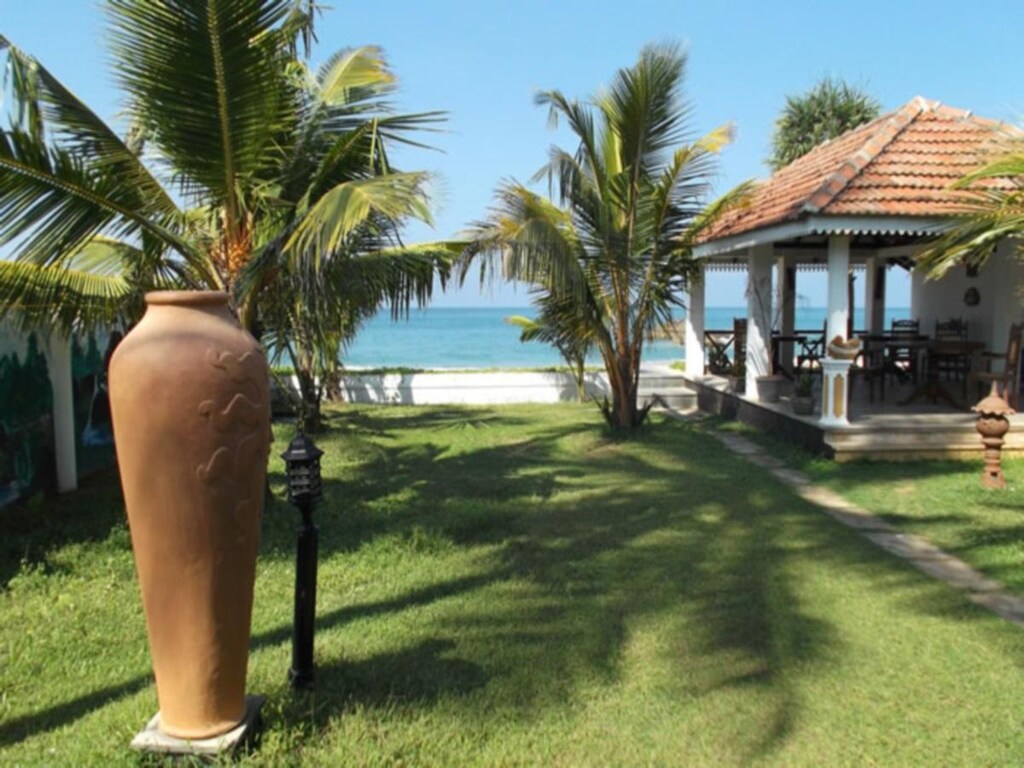


Cafes & Restaurants in Hikkaduwa
Hikkaduwa is not a destination I would describe as a major foodie hotspot, but it is very easy to eat well here in a simple, relaxed way. You will find beach restaurants, smoothie bowl cafés, coffee spots, seafood places, local rice and curry, and casual bars for sunset drinks.

The best part of the food scene in Hikkaduwa was not one specific restaurant, but the ease of it. You can wake up, walk somewhere for breakfast, spend the day by the sea, and find a simple dinner by the ocean without needing to plan too much.
If you are staying for several days, I would mix your meals instead of eating only in beachfront tourist restaurants. Try a few slow café breakfasts, at least one proper Sri Lankan rice and curry, some fresh seafood, and a simple sunset dinner near the beach.
Breakfast and Coffee
Hikkaduwa has plenty of casual breakfast spots, especially around the main beach areas and Narigama. You can usually find smoothie bowls, eggs, pancakes, fruit plates, fresh juices, coffee, and simple brunch-style meals.


This is one of the easiest ways to start the day slowly here. I liked the kind of mornings where there was no big plan — just coffee, breakfast, the sound of the road behind you, and the ocean somewhere close by.
For breakfast, I would choose places based on location and atmosphere as much as the menu. If you are staying near the beach, look for somewhere you can sit for a while rather than rushing through the meal.
Beachfront Restaurants and Sunset Drinks
For sunset, beachfront restaurants are part of the Hikkaduwa experience. They may not always be the most refined places to eat, but the atmosphere is what makes them enjoyable: warm air, sand, waves, music, and the beach slowly changing color in the evening.
I would choose these places for casual dinners, seafood, drinks, or just sitting by the ocean after a long day. This is not where I would expect fine dining — it is more about easy beach-town evenings.


Local Sri Lankan Food
I would also make sure to eat some local Sri Lankan food while you are in Hikkaduwa. Rice and curry is always one of my favorite meals in Sri Lanka, especially when it comes with several vegetable curries, dhal, sambol, and fresh rice.


Some of the best local meals are not necessarily in the most polished restaurants. Small, simple places can often be more memorable than the restaurants directly on the beach. If you see a busy local spot or your guesthouse recommends somewhere nearby, it is usually worth trying.
Healthy Food and Smoothie Bowls
Because Hikkaduwa is a surf town, you will also find lighter meals like smoothie bowls, juices, salads, fruit plates, and simple healthy breakfasts. It is not as developed as somewhere like Bali for wellness cafés, but there are enough options for a comfortable longer stay.
This is especially useful if you are surfing, working remotely, or spending a lot of time in the sun and want something fresh during the day.

My Food Tip for Hikkaduwa
My biggest tip is to keep your expectations relaxed. Hikkaduwa is best for simple, easy meals rather than a perfectly curated restaurant scene.
Mix beach restaurants with small local places, choose cafés that feel good to sit in, and not judge everything by how polished it looks. Some meals will be about the food, some will be about the ocean view, and some will simply be part of the slow rhythm of staying in a Sri Lankan beach town.


Places to Check in Hikkaduwa:
A few places I kept going back to during my two stays in Hikkaduwa were Olin’s at Suite Lanka, Casa Mia, Sea Salt Society, The Island Curry Hub, Sky Gate, Nan Roty, and Coconut Club.
Don’t treat this as a strict “best restaurants in Hikkaduwa” ranking, because the food scene changes and everyone looks for something different. But these are places that stood out to me for different reasons — some for beach atmosphere, some for easy meals, some for local food, and some simply because they fit into the slow daily rhythm of staying in Hikkaduwa.
The best approach to me is to mix it up: have a slow breakfast or coffee somewhere comfortable, try a proper Sri Lankan meal, enjoy at least one sunset dinner by the beach, and leave space for simple local places you find while walking around.
How Many Days in Hikkaduwa?
I would recommend spending 3–5 days in Hikkaduwa if you want to experience it properly without rushing. This gives you enough time for slow beach mornings, sea turtles, surfing, cafés, sunset walks, and an easy day trip to Galle.
If you only have one day in Hikkaduwa, you can still get a quick feeling for the town by visiting the beach, looking for turtles responsibly, having a meal near the ocean, and staying for sunset.

Within two or three days, Hikkaduwa starts to feel much more relaxed. You can add a surf lesson, spend time around Narigama Beach, visit the Tsunami Museum, or take the train to Galle without making the trip feel too packed.
For a longer slow travel stay, five days or more can make sense, especially if you want a comfortable beach base with cafés, affordable accommodation, and easy transport connections along Sri Lanka’s south coast.
Hikkaduwa Itinerary: 1, 2 or 3 Days
You can visit Hikkaduwa quickly, but I think it works better when you give it at least a little time. One day is enough to get a first feeling for the beach, turtles, and sunset, but 2–3 days in Hikkaduwa gives you more space to surf, slow down, try different cafés, and take an easy trip to Galle.
Here is a simple way to plan your time, depending on how long you stay:
Hikkaduwa Itinerary at a Glance
A simple, flexible way to plan your time in Hikkaduwa, whether you are only passing through or staying for a few slow beach days.
1 Day in Hikkaduwa
Best if you are passing through or adding Hikkaduwa as a short stop on Sri Lanka’s south coast.
- Walk along the beach
- Look for turtles responsibly
- Have lunch or coffee near the sea
- Stay for sunset
2 Days in Hikkaduwa
Best if you want to experience the beach town properly without staying too long.
- Spend time around Turtle Beach
- Take a beginner surf lesson
- Explore Narigama Beach
- Try a beach restaurant for dinner
3 Days in Hikkaduwa
Best if you want a slower stay with beach time, cafés, surfing, and an easy day trip.
- Enjoy a slow café morning
- Go snorkeling if conditions are good
- Visit the Tsunami Museum
- Take the train to Galle
If you only have one day in Hikkaduwa, I would keep it simple and focus on the beach, turtles, food, and sunset. With two days, add surfing and Narigama Beach. With three days, you can slow down properly and include Galle or the Tsunami Museum without making the itinerary feel rushed.
How to Get to Hikkaduwa
Hikkaduwa is one of the easiest beach towns to reach on Sri Lanka’s south-west coast. It sits directly on the coastal railway between Colombo and Galle, so you can get here by train, private driver, taxi, bus, or tuk tuk from nearby towns.
For most travelers, the best option depends on where you are coming from, how much luggage you have, and whether you want the cheapest route or the most comfortable one.
From Colombo to Hikkaduwa
The easiest and most scenic way to get from Colombo to Hikkaduwa is by train. Trains run along the coastal line from Colombo Fort toward Galle and Matara, and Hikkaduwa has its own railway station. Sri Lanka Railways has an official online schedule search where you can check current times and ticket prices before traveling.

The journey usually takes around 2–2.5 hours by train, depending on the service. It is not always the most comfortable option if you have a lot of luggage, but it is affordable, local, and scenic once the railway starts following the coastline.
You can also travel by private driver or taxi from Colombo, which is more comfortable and faster door-to-door, especially if you are arriving tired or carrying heavy bags. By road, the journey is usually around 2 hours, depending on traffic and where in Colombo you start.
The bus is usually the cheapest option, but I would only choose it if you are comfortable with local transport and do not have too much luggage.
From Colombo Airport to Hikkaduwa
From Bandaranaike International Airport, the most comfortable way to reach Hikkaduwa is by private transfer or taxi. The airport is around 138 km from Hikkaduwa by road, and private transfers often take around 2 hours, depending on traffic.
This is what I would choose if Hikkaduwa is your first stop after landing in Sri Lanka. After a long flight, it is simply much easier to go directly to your accommodation instead of changing between airport transport, Colombo Fort station, and the train.
The cheaper option is to travel from the airport toward Colombo, then take the coastal train from Colombo Fort to Hikkaduwa. This can be a nice experience if you are not in a rush, but it is less convenient with luggage or after a long flight.

From Galle to Hikkaduwa
Galle is only about 20 km south of Hikkaduwa, so this is one of the easiest routes. You can travel by train, bus, tuk tuk, or taxi.
The train is simple and affordable, with some services taking around 20–40 minutes between Galle and Hikkaduwa, depending on the train. A tuk-tuk or taxi is also easy to arrange and gives you more flexibility if you are traveling with luggage or stopping along the way.
If you are staying in Hikkaduwa for several days, Galle is also one of the easiest day trips to add to your itinerary.
From Mirissa, Unawatuna, or Hiriketiya to Hikkaduwa
If you are traveling along the south coast from places like Mirissa, Unawatuna, or Hiriketiya, you can reach Hikkaduwa by train, bus, taxi, or private driver, depending on your budget and comfort level.
From Unawatuna or Galle, the journey is short and easy. From Mirissa, it takes longer but is still straightforward, especially if you travel via Galle. From Hiriketiya or Dickwella, I would usually choose a private driver or taxi if you have luggage, because it is more comfortable and avoids multiple changes.
If you are traveling slowly and want a more local experience, buses and trains can work well. If you are trying to move efficiently between beach towns, a driver is usually the easiest option.

My Recommended Way to Arrive
If you are coming from Colombo city, I would choose the coastal train to Hikkaduwa for the experience, especially if you are traveling light. It feels slow, local, and scenic in a way that fits the south coast.
If you are coming directly from the airport, I would choose a private transfer for comfort.
If you are coming from Galle, Unawatuna, or nearby beach towns, I would choose the train or a short taxi/tuk tuk ride, depending on how much luggage you have.
The most important thing is to check current train times before travel, because schedules can change and some routes may be affected by weather, holidays, or local delays.
Best Time to Visit Hikkaduwa
The best time to visit Hikkaduwa is usually from December to April, when Sri Lanka’s south-west coast has its drier season, better beach weather, and generally calmer sea conditions.
For the best overall mix of sunshine, swimming, surfing, and beach days, I would personally aim for January, February, or March. December and April can also be good, but they may feel a little more transitional depending on the year.


You can still visit Hikkaduwa outside the main season, but it is important to have realistic expectations. During the monsoon and wetter months, the sea can be rougher, rain is more likely, and swimming or snorkeling conditions may not always be ideal.
Hikkaduwa Month-by-Month
Hikkaduwa is warm year-round, but the feeling of the beach changes a lot with the rain, sea conditions, and surf season.
Quick guide: green means best beach months, yellow means mixed conditions, and orange means wetter or more unpredictable periods. Tropical weather can change quickly, so always check the sea before swimming, surfing, or snorkeling.
For me, this seasonal difference was very clear because I visited Hikkaduwa twice: once in November, during heavy rains and rougher sea conditions, and again in January, when the coast felt much calmer, brighter, and more suitable for beach days.
That is why I would personally choose January to March as the best time to visit Hikkaduwa if you want the highest chance of good beach weather, calmer sea, surfing, and sunset evenings. December and April can also be lovely, but they feel a little more transitional.
If you visit during the wetter months, Hikkaduwa can still be atmospheric and less crowded, but I would not plan the trip around perfect swimming or snorkeling conditions. This is when it helps to stay flexible, choose a comfortable place to stay, and let the weather decide the rhythm of your days.
Hikkaduwa Travel Costs
Hikkaduwa can be a budget-friendly beach town, but how much you spend depends a lot on your travel style. You can keep things simple with guesthouses, local food, train rides, and slow beach days, or spend more on beachfront hotels, private transfers, surf lessons, seafood dinners, and nicer cafés.

Hikkaduwa felt easier on the budget than some of Sri Lanka’s more polished beach towns, especially if you stay a little longer and avoid moving around too much. Slow travel naturally helps with costs here: you find your usual breakfast place, walk more, take the train, choose accommodation with a kitchen, and stop feeling like every day needs to be packed with paid activities.
As a rough guide, these are the kinds of costs to expect in Hikkaduwa:
Hikkaduwa Travel Costs at a Glance
Approximate costs for planning a relaxed stay in Hikkaduwa. Prices can change by season, location, comfort level, and how locally you travel.
Tip: I would use these as planning ranges rather than fixed prices. Hikkaduwa changes with season, demand, exchange rates, and where exactly you choose to eat or stay.
If you want to keep Hikkaduwa affordable, the easiest way is to travel slowly. Stay a few nights instead of constantly changing towns, choose a comfortable guesthouse or apartment-style stay, eat a mix of local food and cafés, and use the train when it makes sense. The coastal train is especially good value: official Sri Lanka Railways fare tables list Colombo Fort to Hikkaduwa as a low-cost train route, while third-party booking platforms often charge more for reserved or agency-booked tickets.


Surfing, beachfront dinners, and private transfers are the things that can raise your budget quickly. A private Colombo–Hikkaduwa transfer is much more comfortable but can be far more expensive than the train, while surf lessons booked through tour platforms are often priced higher than arranging something locally.
Hikkaduwa works best when you do not try to make every day expensive. Some of the nicest moments here are free or very low-cost: walking along the beach, watching sunset, looking for turtles responsibly, taking the train to Galle, sitting with a coffee, or simply letting the day move slowly around the ocean.
Practical Tips for Visiting Hikkaduwa
Hikkaduwa is an easy place to travel, but a few small things can make your stay much smoother. It is not a complicated destination, but it helps to understand the beach conditions, transport, money, turtles, and local rhythm before you arrive.
Practical Tips for Hikkaduwa
A few simple things to know before visiting Hikkaduwa — especially if you want a smoother, slower, and more responsible stay.
Hikkaduwa stretches along the coast, and staying near Turtle Beach, Narigama Beach, or close to Galle Road can feel very different.
The ocean can change quickly depending on season, tide, and weather. If the waves look strong, ask locally where it is safest to swim.
Do not touch, feed, chase, or crowd the turtles. Watch quietly and let them move naturally in their own space.
ATMs are available, but smaller cafés, tuk tuks, surf rentals, local restaurants, and some guesthouses may still prefer cash.
Hikkaduwa is directly on the coastal railway, making it easy and affordable to reach Colombo, Galle, and other south coast towns.
Tuk tuks are useful for short rides, nearby beaches, and luggage days. Agree on the price before getting in to avoid confusion later.
Galle Road is busy, and traffic is part of Hikkaduwa’s daily life. For a calmer stay, avoid booking directly on the main road.
Tropical weather can shift quickly. A rainy morning does not always ruin the day, and sunshine does not always mean calm sea conditions.
For me, Hikkaduwa is easiest to enjoy when you do not try to control it too much. Choose a good base, check the sea, respect the turtles, keep your days flexible, and let the town slowly become part of your routine.
Hikkaduwa vs Mirissa vs Unawatuna vs Hiriketiya
If you are planning Sri Lanka’s south coast, you may be wondering whether to stay in Hikkaduwa, Mirissa, Unawatuna, or Hiriketiya. They are all popular beach towns, but they have very different personalities.


For me, Hikkaduwa is the easiest and most laidback of the four. It may not be the most scenic or boutique-feeling, but it works well if you want surfing, turtles, cafés, beach walks, affordable stays, and easy transport connections.
Mirissa feels more dramatic and photogenic, Unawatuna is better for a calmer bay and easy access to Galle, and Hiriketiya has a younger, trendier surf-café atmosphere.
Hikkaduwa vs Mirissa vs Unawatuna vs Hiriketiya
A quick comparison to help you choose the right beach town for your Sri Lanka itinerary.
My honest choice would be this: choose Hikkaduwa if you want the most laidback beach base; Mirissa if you want the most photogenic scenery; Unawatuna if you want calmer swimming and Galle nearby; and Hiriketiya if you want a smaller, trendier surf-café atmosphere.
For slow travel, I would not necessarily choose only one. These places are close enough that you can experience more than one, especially if you are spending a couple of weeks on Sri Lanka’s south coast. Hikkaduwa works especially well at the beginning or end of a route because the train connections make it so easy.
My Honest Thoughts on Hikkaduwa
Hikkaduwa is not the beach town in Sri Lanka that impressed me the fastest. It is not the most polished, not the quietest, and not the most dramatic-looking place on the south coast. But it is one of those places that slowly becomes better the longer you stay.
At first, it can feel a little busy. The road is loud, the town is developed, and some areas feel touristy. But once I stopped comparing it to prettier or more curated beach towns, I started to appreciate Hikkaduwa for what it actually is: an easy, lived-in coastal town where daily life can feel surprisingly comfortable.


What I liked most was the simplicity of it. Slow breakfasts, beach walks, turtles near the shore, surfboards everywhere, trains passing through town, casual restaurants by the sea, and sunsets that made the whole coast feel softer in the evening. Hikkaduwa is not a place that needs a perfect itinerary. It works best when you let the days become simple.
I also liked that it felt practical. After moving around Sri Lanka for weeks, there was something comforting about being somewhere with easy transport, good cafés, affordable stays, ATMs, restaurants, beaches, and everything close enough to figure out without much effort. It felt like a place where you could pause for a while.

That said, I would not recommend Hikkaduwa to everyone. If you are dreaming of a quiet, untouched tropical escape, this is probably not it. If you want luxury aesthetics, boutique perfection, or a beach town that feels beautiful from every angle, you may prefer Mirissa, Hiriketiya, or a smaller place further along the coast.
But if you want a relaxed, affordable, easy beach base with turtles, surfing, cafés, sunsets, and enough everyday comfort to stay longer than planned, Hikkaduwa is absolutely worth visiting.
For me, Hikkaduwa became less about being the “best” beach town and more about how easy it felt to live there for a few days. And sometimes, while traveling, that is exactly what you need — not the most perfect place, but a place where you can breathe, slow down, and let the ocean quietly shape your days.
FAQ About Visiting Hikkaduwa
A few quick answers to the most common questions travelers have before visiting Hikkaduwa, especially if you are planning your first trip to Sri Lanka’s south-west coast.


