
When the sun sets over Bali and the gamelan orchestra begins to play, one of the island’s most enchanting cultural treasures comes to life: the Legong dance. Known for its refined movements, elaborate costumes, and captivating storytelling, Legong is one of the most iconic traditional dances of Bali. It is a performance that embodies the island’s unique fusion of spirituality, art, and community.
Origins of the Legong Dance
The Legong dance dates back to the 19th century, when it was performed in royal courts. It was a form of entertainment for kings and noble guests. Legend has it that a Balinese prince once dreamed of celestial maidens dancing gracefully to gamelan music, and upon waking, commissioned a performance that mirrored his vision. From that dream, the Legong was born.
Originally, Legong dancers were prepubescent girls. It was believed that they embodied purity and innocence, and their training often began at a very young age. Today, the dance is performed by both girls and young women, yet it continues to carry the same aura of elegance and sacred artistry.
The Dance Movements
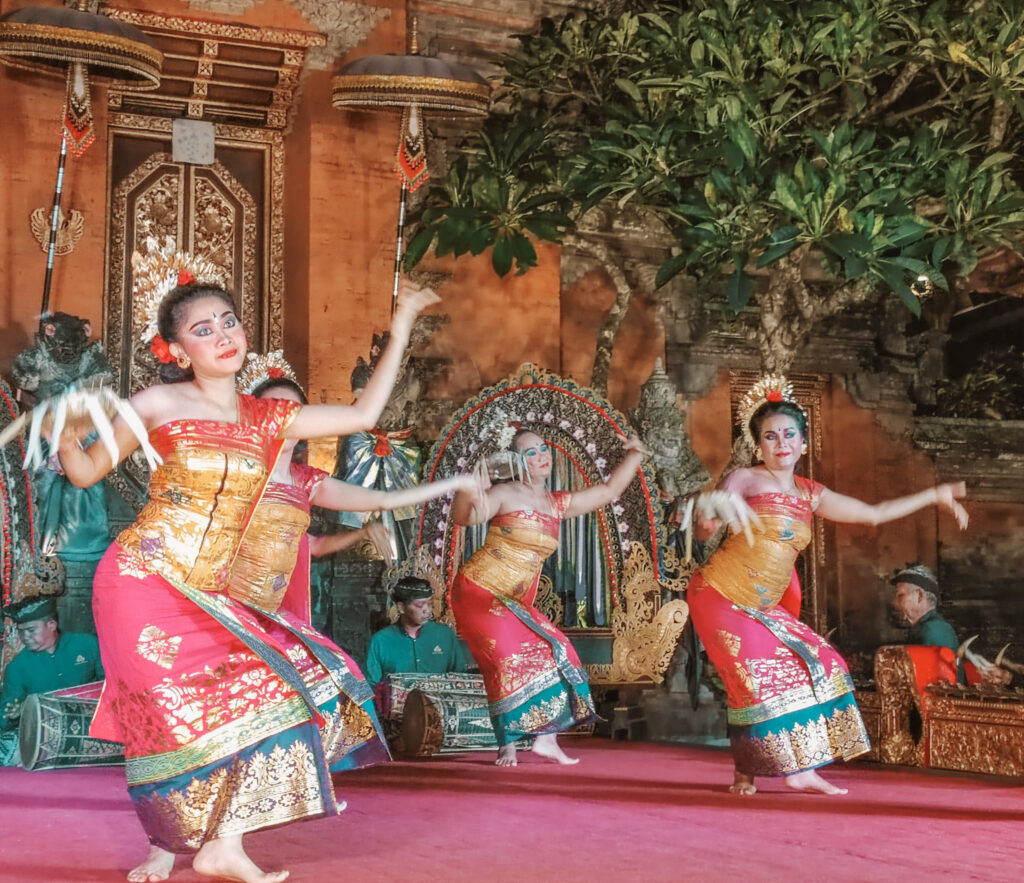
Legong is instantly recognizable by its delicate, highly stylized gestures. Dancers move with astonishing control, shifting their eyes rapidly from side to side, bending their wrists at dramatic angles, and gliding across the stage with precise footwork. Every movement tells part of a story, often drawn from traditional epics like the Ramayana or local Balinese legends.
Unlike other Balinese dances that can be forceful and dramatic, Legong is characterized by its graceful, fluid beauty. The synchronization of hand gestures, eye movements, and subtle facial expressions with the rhythms of the gamelan creates a performance that feels both ethereal and hypnotic.
Costumes and Music
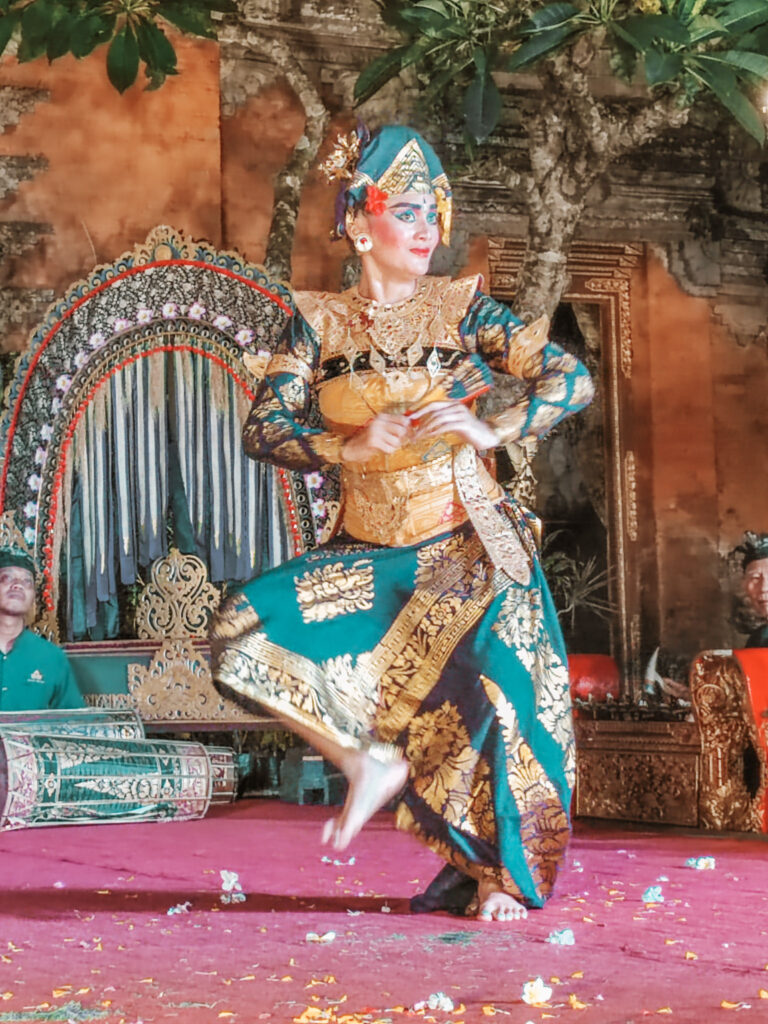
The Legong dancers wear some of the most dazzling costumes in Balinese performance art. Intricately patterned silk sarongs, gilded sashes, and layers of gold brocade shimmer in the light, while ornate headdresses adorned with fresh frangipani flowers crown the dancers’ heads.
Accompanying the dancers is a gamelan orchestra. The traditional Balinese ensemble of bronze gongs, metallophones, and drums. The music, with its rising and falling layers of rhythm, not only sets the pace but also heightens the drama of the performance.
Where to See Legong Dance in Bali
Legong performances can be seen across the island, often staged for visitors but still deeply rooted in Balinese culture. Some of the most popular venues include:
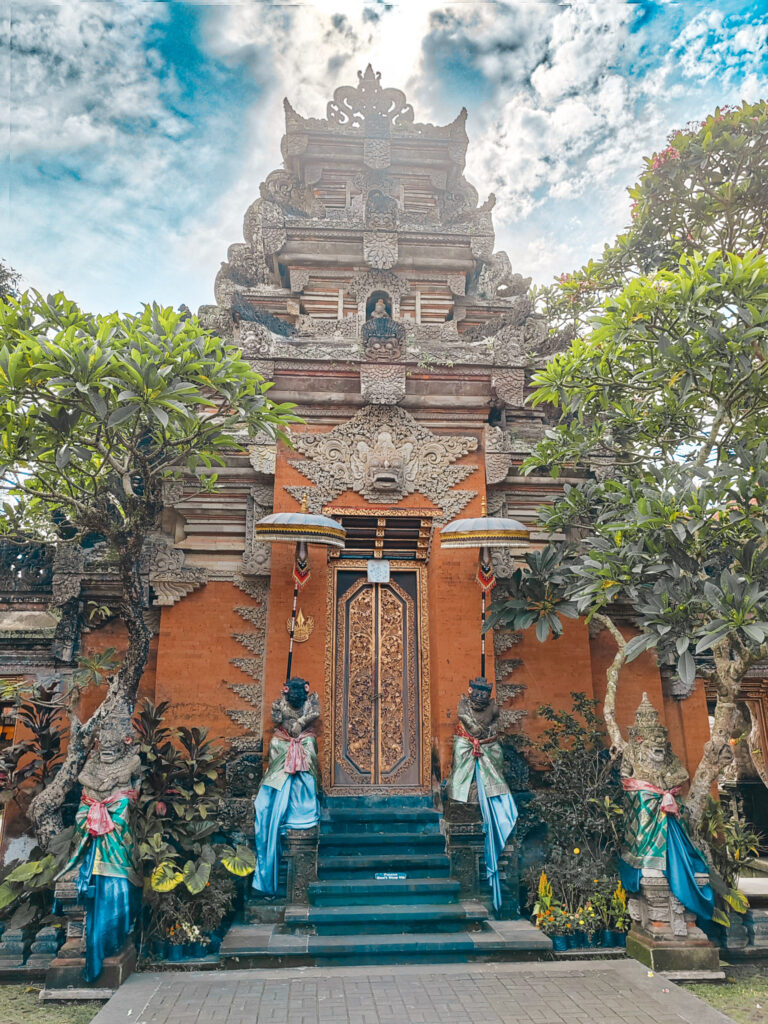
- Ubud Palace – Perhaps the best-known spot to witness Legong in an intimate, atmospheric setting. Performances are held several nights a week in the open-air courtyard, surrounded by ornate temple carvings.
- Pura Dalem Temple, Ubud – Offers a combination of Legong and other classical Balinese dances in a traditional temple backdrop.
- Cultural Centers in Sanur, Denpasar, and Uluwatu – Regular performances are staged for both tourists and locals, often tied to festivals and ceremonies.
Visiting Ubud? Read next: Ubud Travel Guide
The Meaning Behind the Performance
For Balinese people, dance is more than just entertainment. It is an offering, a form of devotion, and a way to preserve cultural identity. Watching Legong is not simply about admiring beautiful movements, but about entering into the spirit of Bali itself. The dance bridges the earthly and the divine, keeping alive stories and traditions passed down through centuries.
💡 Tips for Travelers
- Arrive early: Popular performances in Ubud can get crowded, so arriving 20–30 minutes early ensures good seats.
- Support local culture: Ticket sales often go directly toward supporting the gamelan orchestras and dancers, many of whom are local villagers.
- Combine with a temple visit: Many Legong shows take place in temple courtyards, allowing you to explore the sacred architecture before the performance begins.
The Legong dance is more than just a performance — it is an invitation to step into the heart of Balinese culture. With every flick of the wrist, every dart of the eyes, and every note of the gamelan, the island tells its stories of gods, legends, and human emotion. For travelers seeking to experience Bali beyond its beaches, witnessing a Legong performance is a must — a timeless window into the island’s soul.
Read next: Bali Travel Guide: Where to Stay, What to See & How to Explore the Island
FAQ: Legong dance Bali
Q: What is Legong dance in Bali?
A: Legong is a traditional Balinese dance known for its graceful movements, colorful costumes, and storytelling, accompanied by gamelan music.
Q: Where can I watch Legong dance in Bali?
A: The best places are Ubud Palace, Pura Dalem Temple in Ubud, and cultural centers in Denpasar, Sanur, and Uluwatu.
Q: How old is the Legong dance?
A: The dance originated in the 19th century and was first performed in Balinese royal courts.
Q: What makes Legong different from other Balinese dances?
A: Unlike dramatic dances like Barong, Legong emphasizes refined gestures, eye movements, and synchronized grace.


